
The Reserve Bank of India proposed interconnecting the central bank digital currencies (CBDCs) of the BRICS group, which now encompasses Brazil, Russia, India, China and South Africa, among other nations. This plan aims to put aside the influence of the dollar and digital assets such as bitcoin (BTC) just as new threats of tariffs arise from the president of the United States, Donald Trump.
Sources familiar with the matter revealed to Reuters on January 19, 2026 that the plan aims to simplify and streamline cross-border payments for both commerce and tourism within the bloc. And if accepted, this proposal would lay the groundwork for the first formal discussion at the leadership level about the interconnection of CBDC within the group.
India’s approach arises despite the fact that Trump threatened, on several occasions, to impose 100% tariffs on the BRICS nations, in case they advance in the development of alternatives to the dollar as a reserve currency.
Currently, no nation in the BRICS group has fully implemented a CBDC, although all key members are running active pilot programs. India’s digital rupee or e-rupee, launched in December 2022, has already attracted about seven million users retailers, while China continues with its plans to expand its digital yuan internationally, as NoticiasVE has been reporting.
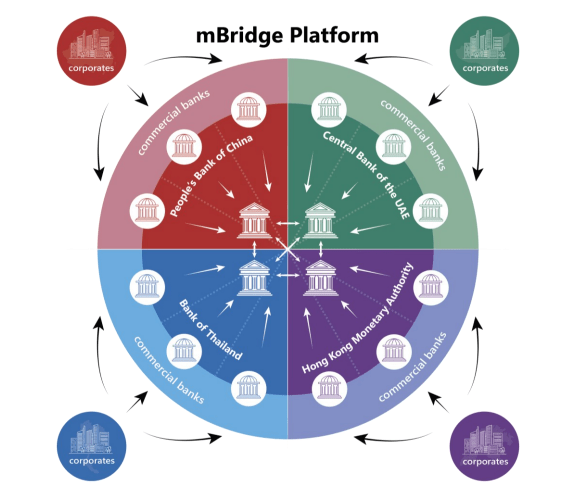
India’s move aligns with a broader effort by emerging economies to build alternatives to dollar-based payment systems. In this context, the Chinese platform mBridge has demonstrated notable progress.
As of November 2025, mBridge processed more than 4,000 cross-border transactions worth approximately $55.49 billion. This volume represents a 2,500-fold increase since its initial pilots in 2022, when it handled 164 transactions for $22 million.
Analysts point out that these platforms are creating “parallel rails” that, gradually, reduce dependence on dollar-based systems in specific corridors and sectors, without necessarily challenging its global dominance directly.
India’s BRICS proposal could extend this digital connectivity to an even broader group of emerging economies, marking a significant step in reshaping the international financial landscape.
Beyond this, the Indian government has repeatedly consulted regulators and specialists about the viability of a possible general ban on cryptocurrencies in the country, arguing that central bank digital currencies, such as the digital rupee, offer similar advantages in transfers and payments without the risks inherent to private cryptoassets. However, until January 2026, digital assets like bitcoin (BTC) maintain their legal status in India, although they operate under a strict regulatory regime.