
-
Domínguez clarifies that there are no reliable statistics on the universe of Venezuelan taxpayers.
-
The specialist says that Binance is not reporting the movements of its users to Seniat.
The bitcoin (BTC) and cryptocurrency ecosystem in Venezuela has ceased to be an exclusive refuge for technological enthusiasts to become a fundamental piece of the national economic machinery.
With a transaction volume that will exceed $40 billion in 2024, according to data from Chainalysis, the country is establishing itself as a regional leader in cryptocurrency adoption.
This massification, driven largely by the need for companies to overcome the shortage of traditional currencies during 2025, has put the tax liability of cryptocurrency users before the public administration under the microscope.
Despite the dynamism of the market, Information opacity continues to be the biggest obstacle for taxpayers. Citizens do not have public and official information about the universe of natural and legal persons that operate with digital assets, which generates a feeling of a «gray area.»
However, the current legal framework in Venezuela, although it lacks a specific law for each cryptocurrency subsector, clearly establishes that any increase in assets derived from the sale or exchange of these assets constitutes taxable enrichment under the Income Tax Law (ISLR). The latter must be declared before the Seniat before next March 31.
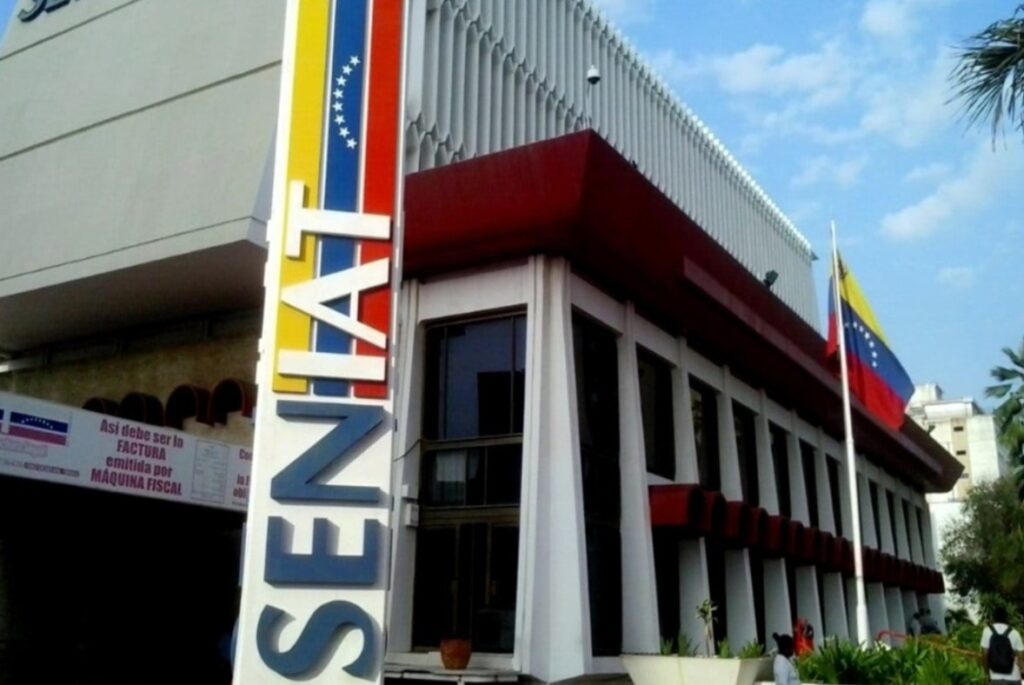
Technical confusion is the common denominator among taxpayers. Jan Domínguez, who is a Venezuelan public accountant and the CEO of the tax management platform with crypto assets Cointable, affirms that many users, both individuals and corporates, make the mistake of treating their operations in crypto assets as simple exchange differentials, omitting that accounting regulations require treating them as realized profits.
As you can see, this lack of precision is especially risky for Special Taxpayers, who face a severe sanctioning regime that can reach up to 500% of the omitted tax, exposing the financial health of companies to possible inspections and objections.
At NoticiasVE we asked Domínguez 9 key questions with the aim of understanding the Venezuelan fiscal landscape and its link with crypto assets. This is what he told us:
- Is there an estimate of how much could be declared for the year 2025, taking into account the rise of the sector in Venezuela?
Jan Domínguez (JD): We do not have reliable statistics, like any other public institution or public entity, that allows us to know the universe of taxpayers, natural persons in Venezuela, and even less do we have statistics on those sanctioned.
In Venezuela there is a lot of opacity about the official figures and this is no exception. We only have from the international blockchain traceability firm, Chainalysis, that in fiscal year 2024 more than $40 billion in crypto assets were traced in Venezuela. For this reason, at the moment we occupy 18th place globally and second in Latin America.
We do not know the report on 2025, but we are very convinced that, evidently, with the incorporation of the demand from commercial companies and businesses, that figure was exceeded.
And we are also almost certain that neither in 2024 nor in 2025 did the tax administration make any type of collection through the declaration of those profits on the sales of cryptoassets.
- What are the penalties for not declaring?
JD: The sanctions for not declaring are a range of between 100% to 300% of the tax omitted by the natural or legal person. In the case of legal entities with special taxes, the penalty reaches 500%.
- Are remittances also included in the ISLR declaration?
JD: The issue of remittances has always generated some controversy and a clash of criteria, but basically it could be said that if the remittance does not represent a loan or a return nature on the part of the recipient, the Tax Administration of the Income Tax Law sees it as taxable, that is, you should pay for the income that you receive under the remittance formality.
- If I have saved BTC for three years, how do I declare it?
JD: If you have bitcoin saved and you have not yet realized it, sold it, swapped it or exchanged it, then you should not declare it, because holding it is not taxed at this time under the Venezuelan tax framework.

- A company that trades USDT, but had losses, is it reported?
JD: If the company had losses from USDT exchanges, they can actually also be taken advantage of, as they would say in tax jargon, since they are deductible from the profits they obtain through other means, or even from the same profits in crypto assets.
- What are the doubts that natural persons have when declaring their cryptocurrencies? And how do you respond to that?
JD: The main doubt among natural persons arises when they mistakenly assimilate operations with cryptoassets to simple exchange differentials. Contrary to this belief, accounting regulations establish that these movements must be treated as a gain from disposal or exchange, which directly impacts the taxpayer’s taxable enrichment. Likewise, there is a false perception that a new exclusive tax has been created for cryptocurrencies, when in reality these operations are already subject to current taxes.
- And what are the doubts that companies have? And how do you respond to that?
JD: In the corporate sphere, the dynamic is similar, since during 2025 the shortage of currencies in traditional channels forced many companies to operate with crypto assets to maintain their operations. However, after the close of the year, it has become clear that these transactions should not be treated as simple exchange differentials, but rather as realized gains that increase taxable enrichment.
This omission is particularly critical for Special Taxpayers who have already submitted their returns, since, by not having incorporated these benefits into their tax base, they are exposed to severe sanctioning procedures and tax objections in the event of an audit that tracks said operations with digital assets.
- Is Binance reporting movements to the Venezuelan government or is it just the local exchanges?
JD: Binance is not reporting the movements of its users to the Venezuelan government, nor to the tax administration, the Seniat. That, in that case, is not implemented. Local exchanges could do it, but I insist: it is not implemented.
- Beyond the spot market, what about derivatives, staking or NFTs? Do they declare themselves?
JD: Regarding operations such as staking, farming and digital mining, the tax analysis presents greater complexity due to the absence of a specific regulatory framework and the coexistence of conflicting technical criteria.
On the one hand, standard accounting regulations suggest that enrichment is only perfected at the time of realization of the asset (its conversion from crypto to fiat); On the other hand, various specialists maintain that, under the general principles of taxation and the Income Tax regulations (ISLR), the availability of income could be configured from the moment the taxpayer has control over the benefit obtained.
This collision of perspectives between professionals highlights the current legal uncertainty, where the interpretation of the availability of income versus unrealized assets continues to be the nerve point of the debate.