
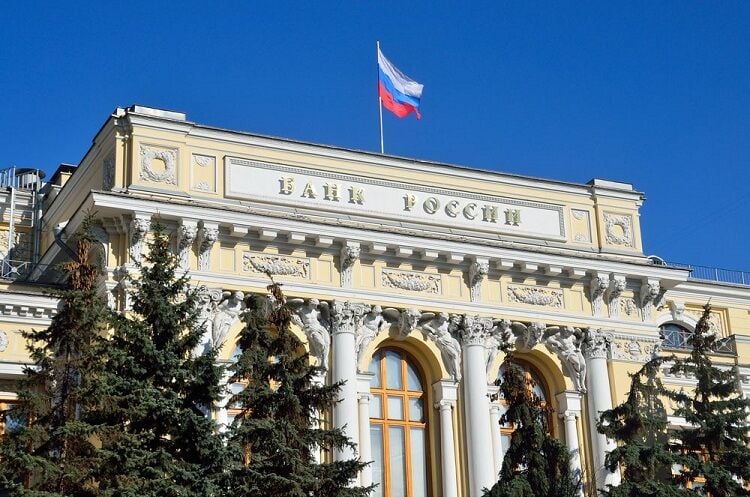
Spanish exports have felt the consequences of these restrictions, not only for the loss of Russia as a potential market, but also because of the need to adapt to a new commercial dynamic that affects numerous sectors.
The new commercial scenario after three years
The application of tariffs to Russian products has significantly reduced commercial flow between Russia and the EU. According to Eurostat, the bilateral trade between the EU and Russia fell 38% in 2022 compared to the previous year, reflecting the direct impact of commercial sanctions.
This fall was also reflected in the Spanish figures, where exports to Russia descended more than 40% in the same period. In the case of Spain, the export of industrial products, machinery, technological components and consumer goods has suffered a significant fall.
Russia, that until 2021 was maintained as one of the emerging markets for certain Spanish products, It has practically disappeared from the usual commercial routes.
The sectors that depended to a greater extent on the Russian market, such as agri -food or winemakers, have had to look for new opportunities in other countries. This situation has implied an increase in the logistics and adaptation costas well as greater competition for position themselves in alternative markets already saturated by other exporting countries.
The role of sanctions in the value chain
The sanctions have not only affected direct trade with Russia, but also the international value chain. Many Spanish companies operating in sectors such as automotive or pharmacist have encountered Difficulties to access raw materials or components from Russia or from countries that maintained commercial links with it.
This interruption has generated delays in production, increases in input prices, especially in sectors such as motoring, which has seen access to key electronic components, or agricultural, where it has increased obtaining fertilizers imported from Russia.
According to data from the Chamber of Commerce of Spain, 37% of the companies affected by these disruptions have reported a decrease in their volume of operations and an increase in their costs of supply. and an urgent need to look for alternative suppliers.
He economic impact It has been especially visible in small and medium enterprises, which do not have the same maneuvering capacity as large corporations.
Adaptation and strategies for continuity
Despite the difficulties, the Spanish business fabric has demonstrated a notable adaptation capacity. Many companies have opted to diversify their export destinations, Seeking opportunities for Latin America, Asia Africa.
This strategy, although more demanding in terms of initial investment, allows to reduce the dependence of specific markets and improve resilience to future crises.
Likewise, collaboration with the Chambers of Commerce and public agencies such as ICEX, which offer support and advice to companies in the opening of new markets.
The trade digitalization He has also played a key role, allowing many SMEs to maintain their activity and expand their international presence through online platforms.
Impact on bilateral relations
The political and economic situation has also influenced bilateral relations between Spain and Russia. Although exports were not so significant in absolute terms, they represented a gateway to a growing market.
In 2021, Spanish exports to Russia reached an approximate value of 2,213 million eurosaccording to ICEX data, highlighting sectors such as equipment, chemical and food goods.
This figure, although it did not represent a large percentage of the total exports, indicated a progressive growth potential that It has been abruptly interrupted after the imposition of sanctions. The suspension of many agreements and general uncertainty have stopped the joint projects, leaving investments that were already planned in the air.
This new framework has forced Spain to rethink its foreign relations strategy, focusing on markets with greater stability or with which democratic and commercial values are shared. In this way, it seeks to strengthen strategic alliances that guarantee greater economic security.
Where does Spain look?
As the international situation evolves, Spanish exports are faced with the challenge of consolidating their presence in alternative markets. According to the latest ICEX report «Strategic Panorama of Internationalization 2024«, This diversification is mainly oriented towards Latin America, sub -Saharan Africa and Asia, regions where emerging opportunities are identified in sectors such as renewable energies, medical technology and agribusiness.
The change of scenario has also served as a catalyst to boost innovation and sustainability in many export sectors, which now bet on products with greater added value and a more efficient logistics.