
There is no doubt that Indexed management It is part of many investors today. In 2025 their opportunities They are very relevant and their possibility of access to international markets positions it as a key strategy in the current financial environment. Now, it is essential know what and how it works.
Indexed management is a form of passive investment in which decisions are not taken by a manager, but follow some Automatic rules. In the case of indexed funds, these They mimic an index stock market such as IBEX 35 or S&P 500, investing in the same values and in the same proportion. Its objective is not to overcome the market, but to match its performance. Therefore, an indexed background is considered effective when its profitability is very similar to that of the index it replicates.
Is it time for indexed management now?
With the panorama we have now, uncertainty and volatility, is this indexed management recommended?
The expert’s response is clear, and it is a Yes resounding and complementary to active management. In fact, Domingo Barroso, Director of ETFs and indexed for Spain and Portugal in Fidelity International comments that «in practice, The most common and efficient is to combine both strategies According to the time of the cycle and the objectives of the investor, as is done by diversifying between different types of assets ”.
In State Street To opt for it, be final in the performance of active management against passive, which is cyclic. The new market environment, with less support from central banks and more differences between actions, could benefit active managers again. And according to the regionone strategy can be more appropriate than another: the US favors the liability for its efficiency; Instead, emerging markets may be more conducive to active management.

Using indexed funds or low -cost ETFs allows you to build diversified wallets, adapted to the customer risk profile and objectives, therefore, therefore, Pablo Bernal, Country Head of Vanguard in Spainit goes further stating that indexed management is especially adequate in the current context. “These strategies are Easy to understand, fiscally efficient and help maintain a stable exposure to the market. More than competing with active management, indexed management complements it, offering a solid, economical and reliable base to invest in the long term ”.

In Amundi, Juan San PíoHead of sales Iberia & Latam en Amundi ETF, Indexing & Smart Beta believes that passive indexed investment is a Powerful toolespecially when it is aligned with individual objectives, risk tolerance and temporary horizons.
OPPORTUNITIES AND RISKS OF INDEXADA MANAGEMENT
Although passive investment offers advantages As lower costs and simplicity, we must be clear that it also entails Risks such as concentration and lack of protection in bearish markets.
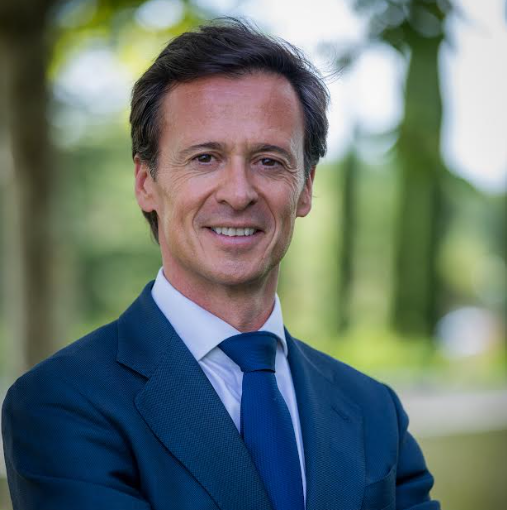
Domingo Barroso of Fidelity International opina que “The risks and opportunities of an indexed fund or ETF are the same as those of the index or set of values that replicate. On the other hand, active management seeks to differentiate itself from passive management trying to generate higher performance (ALFA), which may be successful or not, depending on whether it manages to overcome the index or not ”.
Although it is true that they offer opportunities different. Pablo Bernal de Vanguard develops them commented that indexed funds offer predictability when replicating an indexwith less variability than active funds. In addition, they allow diversify widely and have low costswhich improves long -term profitability. And also, They encourage discipline by avoiding impulsive decisionshelping the investor to maintain a constant strategy and increase their chances of financial success.
As for Risks concrete, from State Street They point out that It can increase exposure to very concentrated indiceswhich does the most vulnerable portfolios to specific falls. And besides They do not offer market corrections and has little flexibility to adapt to changes or take advantage of concrete opportunities.
Like any investment, the Indexed management also has risksalthough They are usually more predictable compared to active management.
But is it for all wallets?
The answer to this question is not so clear. From Fidelity International, Amundi or Vanguard They believe that es useful and has a place in almost any type of portfolio because it is a versatile tool that adapts well to long -term (strategic) or short -term (tactical) strategies; although it will always be essential to know what you expose. The ideal here and that will change will be the weight assigned, according to the investor’s profile.
Los approaches With respect to active management will be differentbecause one seeks to replicate an index and the other overcome the market through active selection, but both can be complemented to achieve a diversified strategy. Indexed and ETFs funds replicate an index investing in all or in a representative part of their assets, which makes them efficient in costs and fiscally attractive by generating less tax operations. And also the latter, allow acting quickly to market changes, for their liquidity, and serve to adjust portfolios or apply investment ideas in an agile and efficient way.
For its part, from State Street They think that Passive investment is not valid for all portfolios equally. And, his convenience It depends on factors such as the type of market and how assets behave within him. In very efficient markets, such as the US, it may make more sense to invest passively. If the indices are very concentrated or there is little difference between the yields of the actionsit can also be more appropriate. However, in markets with greater dispersion or inefficiencies, active management can offer better opportunities. Hence The ideal is usually combining both approaches according to the market situation and the objectives of the investor.
For all this, everyone’s advice is always to have the support of a professional financial advisor Guide you on the way.
In short, the indexed management has evolved to adapt to the demands of a globalized and technologically advanced market. Your ability to offer solutions to efficient, personalized and sustainable investment It makes it an attractive option for a wide range of investors in 2025.
New Bulletin and WhatsApp channel for professionals
Investment strategies launches its canal de WhatsApp Asset Managersaimed at investment professionals, private bankers, selectors and distributors of funds, and professionals in the financial sector.
You can also sign up for free so that all Wednesdays come to you Bulletin with exclusive content for professionals.