

He preferred inflation indicator of the Reserva Federal (FED)he Basic Personal Consumption Expenditure Index (PCE)has reflected a deceleration in price increase in April. Although inflation keeping above 2% And the fears of the effects of tariff war, according to Josh Schafer en Yahoo Finance.
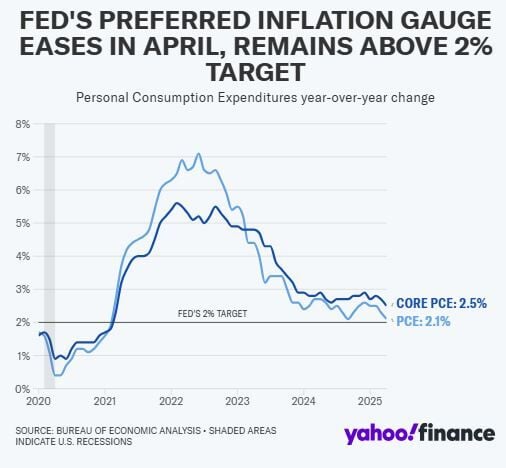
The basic personal consumption expense index (PCE), which excludes food and energy costs and is closely monitored by the Central Bank, increased a 2.5% Annualin line with expectations and below the 2.7% registered in March. Basic prices uploaded a 0.1% In April with respect to the previous month, in line with the expectations and the monthly increase recorded in March.
Annually, the PCE increased a 2.1%, below the 2.2% planned by economists.
The publication is another sign that, although both economists and consumers expect Trump tariffs to boost upward prices, the Inflationary impact of these policies is not largely reflected in specific economic data. Friday morning publication reflects the month of April, the first month in which a large part of Trump’s tariffs was in force.
It does not include the impact of the 90 -day tariff pause between the US and China.
«The increase in tariffs has not yet been reflected in consumer inflation readings, but we anticipate that the tendency to improve inflation will be reversed in the second half of the year, since companies will be forced to start transferring a part of the increase in tariffs to protect their benefit margins,» he wrote Kathy Bostjancic, Nationwide chief economistin a research note on Friday.
On Wednesday, the Minutes of the May Reserve Meeting of the Federal Reserve They revealed that officials are increasingly concerned about how Trump’s policies could affect their fight against inflation.
«Almost all participants commented on the risk that inflation is more persistent than expected,» reads the minutes.