
-
Kristian CSEPCSAR says that modular design is not a novel idea of block.
-
Proto Rig still has to demonstrate its effectiveness, says the CMO of Brains.
Kristian CSEPCSAR, CMO DE BRAINS, has analyzed in detail the new Mining of Bitcoin Proto Rig, developed by Block under the direction of Jack DORSEY. In his analysis and technical opinion, CSEPCSAR points out a series of deficiencies that threaten the viability of this new Bitcoin ASIC in which the hopes of US miners are placed.
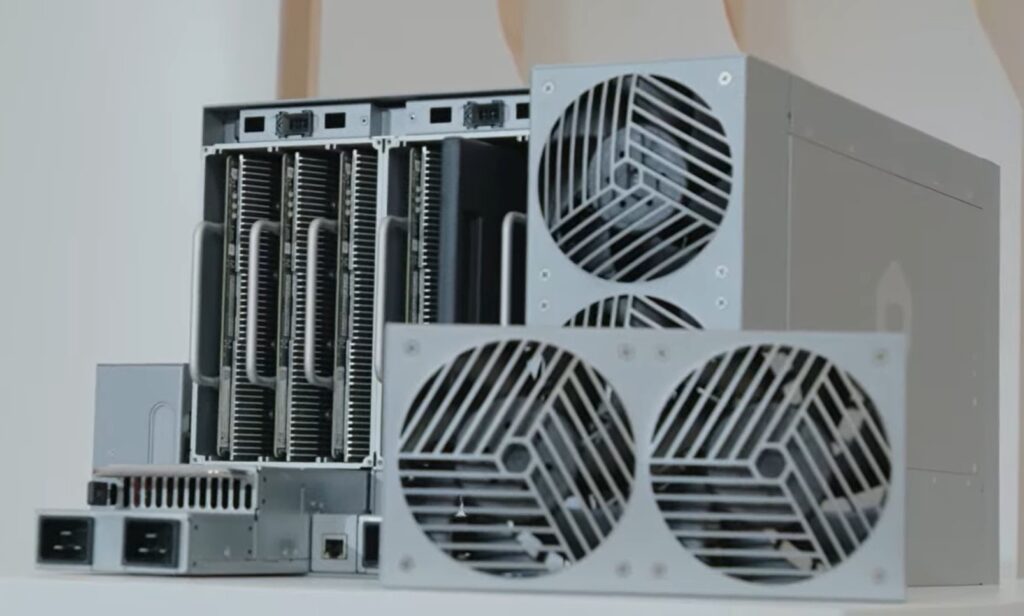
Among the most critical points for CSEPCSAR is the design of the fans, reduced in number and placed only on one side, which in their opinion could c couldOMPROMETER REFRIGATION IN Extreme Conditions such as Texaswhere much of the global hashrate is concentrated.
The modularity of these fans implies that a failure in one of the two per module forces to replace the set, raising maintenance costs.
«There is a reason why all other manufacturers place them at both ends. I have never heard any mining to complain about excessive refrigeration, ”said the Brainsion Executive, who also criticized the decision to expose the hashboards abroad. This exposure would make vulnerable during transport.
It also questions the efficiency of the chips, announced in 14.1 J/TH Preliminary. However, he believes that this announcement accuses vagueness and there are not enough data to support it. As Cryptonotics reported, Proto Rig chips boards can contain 91 th/s per printed circuit plate and up to 819 TH/S with the 9 hashboards. For Kristian CSEPCSAR, this creates a problem of names, limits and definition of capabilities of an ASIC.
A clear model name as S21 XP indicates the hash rate, energy consumption and reputation. Mixing different generations of hashboards in a proto RIG will be a new challenge.
Kristian CSEPCSAR, CMO of whites.
While it is true that the variety of chips that may contain the printed circuit plates (PCB) creates a problem of definitions, this design decision is in line with the philosophy of block modularity. The conceptual challenge involved in modularity at the level of the PCB is not sufficient reason to abandon it. Bet on more customizable and «recyclable» miners It seems a more rational decision, even when it involves difficulties.
Another problematic aspect, says CSEPCSAR, is the design of the sources of power, prone to accumulate dust when they are encased in the physical structure, and the absence of handles in the device, making it difficult to handle the weight of the equipment.
However, what generates the most distrust in CSEPCSAR is the informative vagueness that it perceives in the marketing of proto RIG, ensuring that it contains diffuse promises, as a launch «at some point 2026» and a prototype presented as a box without plugging the currentwhich reminds him of a history of overvalued products that ended up disappointing. In addition, he refers to the ASIC Modular Bitfury B8 of 2017, whose design philosophy failed to impose himself and ended up being a commercial failure.
At the time of writing, this ASIC is not available for sale in a hardware market as important as Asic Marketplace.
The critical opinions towards the CSEPCSAR analysis did not miss. Skot, the creator of the first Mini Asic Bitaxe, argued that the text reflects a kind of «Stockholm Syndrome towards Bitmain», pointing out that the industry knows that there is a better approach than antminers, but is trapped by the domain of that company And in the inability of competitors to challenge him, suggesting that Proto Rig could be a necessary change.
Wilson Mining, after observing the equipment in operation in Core Scientific in Georgia, defends that the product is real and operational. He explains that 48V fans, compared to the 12V of antminers, reduce the need for more units, and that with adequate packaging the exposure of hashboards during shipping does not represent a problem, counteracting the criticism of CSEPCSAR as an effort to find minor failures.
Wilson also values modularity as true innovation, since it avoids discarding the complete chassis in each updatesaving costs, and highlights Block’s experience, with a team from Square who designed payment terminals resistant to hard conditions such as crowded bars, which dismisses the comparison with Bitfury as unfair.
In his reply, CSEPCSAR recognizes the possibility of improvements, but insists that the lack of concrete data and the competition of Bitmain, market leader, hinder the success of the RIG proto in its current form.
The debate puts in perspective the expectations deposited in a team that seeks to break the Bitmain monopoly, but also highlights the reserves of the sector to a design that still does not prove its effectiveness.
With the launch scheduled for 2026, the positions vary between those who see potential and those who believe that technical problems and informative opacity could limit their impact. The resolution will remain in the hands of its real performance of the ASIC in the field of operations.