
LlyC has participated in 66 operations, with an added value of 36,907 million dollars, strengthening this activity in all markets where it is present thanks to its comprehensive approach and capacity to manage complex operations with special attention to regulation and local sensitivities.
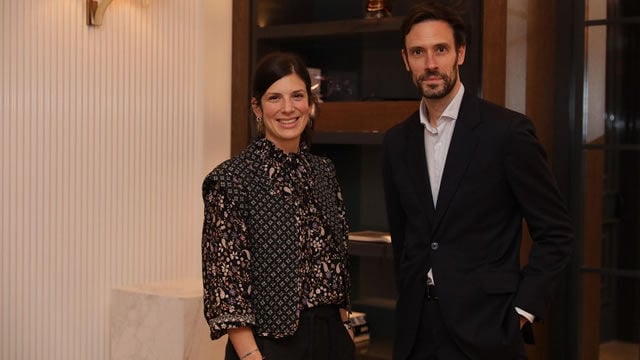
The team of LLYC Financial Communication It is behind some of the main operations that have marked the news of the market in recent years.
2025 was expected as a more lively year in departures, but the first semester has not met expectations. Will this slowdown be maintained in the remainder of the year?
Luis Guerricagoitia: The truth is that the activity in the primary market has been less than expected. In Europe in general, and in Spain in particular, markets do not finish reactivating. The 2024 started well, with a remarkable activity, but the investment feeling cool again after summer due to the uncertainty generated by elections in the United States and the commercial policy promoted by the Trump administration.
However, despite the existing volatility, there are examples of departures from both in Europe and in other international markets that have been sustained. It is true that a massive wave of operations is not expected in the remainder of the year, but interesting movements are also taking place. For example, there is an increase in capital flows from the United States to Europe that represents a significant opportunity.
Valvaner Lech: It is essential to accelerate the reactivation of European capital markets, which are essential to address the financing needs of companies and the challenge of competitiveness in Europe. But this challenge, which we have been talking about so long, requires structural measures to harmonize regulations, more flexible processes, and change the culture of retail investors. Significant steps have been taken in recent years, but you have to maintain the impulse. Although the reactivation has not yet arrived, the market is attentive, the prepared actors and the context could begin to give signals.
Uncertainty is also affecting M&A operations, which lengthen more than usual. What factors are behind this dilation in the processes?
Luis Guerricagoitia: The uncertainty that the market has chronified the mismatch between the expectations of valuation of buyers and sellers. That is the background ratio of tensions in M&A processes, characterized by a more rigorous selection and a generalized caution of investors, so that the different agents have focused on specific and quality active opportunities. In that scenario, how to marry buyer and seller expectations has become very complex. An efficient and very direct way to bring these positions closer is to deploy a coherent story, and there the communication is making its way as a useful tool to approach the market.
What role can communication then play in this context marked by slowing down and uncertainty? Can it be a real strategic lever to accelerate or facilitate operations?
Valvaner Lech: To more turbulence, greater need for strategic communication. In a market for arestilus, companies have also noticed that transcendence. The sale of a company should not start when the process is formally launched, but much earlier. Planning and anticipating always goes on account, and in M&A it is the only shortcut that makes it easier to reach the end. Operations with good assets are those that, in a complex context, end up. Therefore, the tuning of a company is so important, and communication has a lot to contribute there. Based the company, refine its value proposition, explain its rational and build an investment thesis are decisive aspects.
Luis Guerricagoitia: It is necessary to understand each operation well, identify who are the decisors on which it depends (shareholders, creditors, governments, supervisors …) and know what motivates the decisions of each of them … Starting from a deep and accurate analysis, we can define positions management plans and the influence that support the objectives of each operation.
We live in an increasingly demanding regulatory environment. How can companies anticipate regulatory changes to slow their strategic plans?
Luis Guerricagoitia: In the game of mergers and acquisitions, the rules have changed. That is why other strategies, tactics and talents are needed to face any operation. Sometimes, you can move from intensity throughout a process, which increases the importance of planning well and counting better every step. Pandemia increased controls on foreign direct investments in strategic sectors. It was a temporary measure, but it has been internalized as an obligatory factor in many processes. The same goes for competitive or monopolistic risks, which are not merely economic, but require a certain corporate legitimacy, build coherent stories and prevail the social interest of each case.
The need to put the stakeholder in the center has become key. What strategies are best working to maintain a solid and trustworthy relationship with them?
Valvaner Lech: Trust is everything in this activity. The dictionary defines it in a precious way: it is the firm hope of someone or something. Trust is reciprocal by definition. To trust you need to know and appreciate the other party. That is why the deep understanding of the different interest groups will lead us to adequately select which are the most influential channels, formats and profiles for each of them. The way in which professionals, investors, shareholders or customers of a company have changed radically in recent years. The truth is that every time it makes it faster and nothing makes it anticipate that this trend is going to less. On the contrary. Now, financial means are a fundamental platform for the communication of an M&A, but not the only one. There are increasingly influential voices for the investment community in the different social networks. Platforms such as LinkedIn allow to launch segmented content strategies to surgically reach key profiles. Generative artificial intelligence engines are also gaining weight in that interactive process from which trust is nourished.
In a competitive and volatile market, what weight does creativity in effective communication strategies have?
Luis Guerricagoitia: There is usually talk of the story, the rational and the logical framework that must be behind any M&A operation. Undoubtedly all that is necessary, but not enough. We have already referred to the trust between a company and its interest groups. It cannot be exclusively brain, or just logical. Emotion, empathy, affinity and commitment are also necessary. In all these aspects, creativity is essential, because often the spark that consolidates that relationship of trust comes from it. For example, in any OPA advertising campaigns have become a key tool in acceptance periods to influence such a taxative decision for shareholders such as selling or not. Of course, advertising is the most obvious part of creativity, but there are many other factors. A good creative work helps to place an issue on the public agenda, to generate a state of opinion or reinforce certain corporate objectives.