
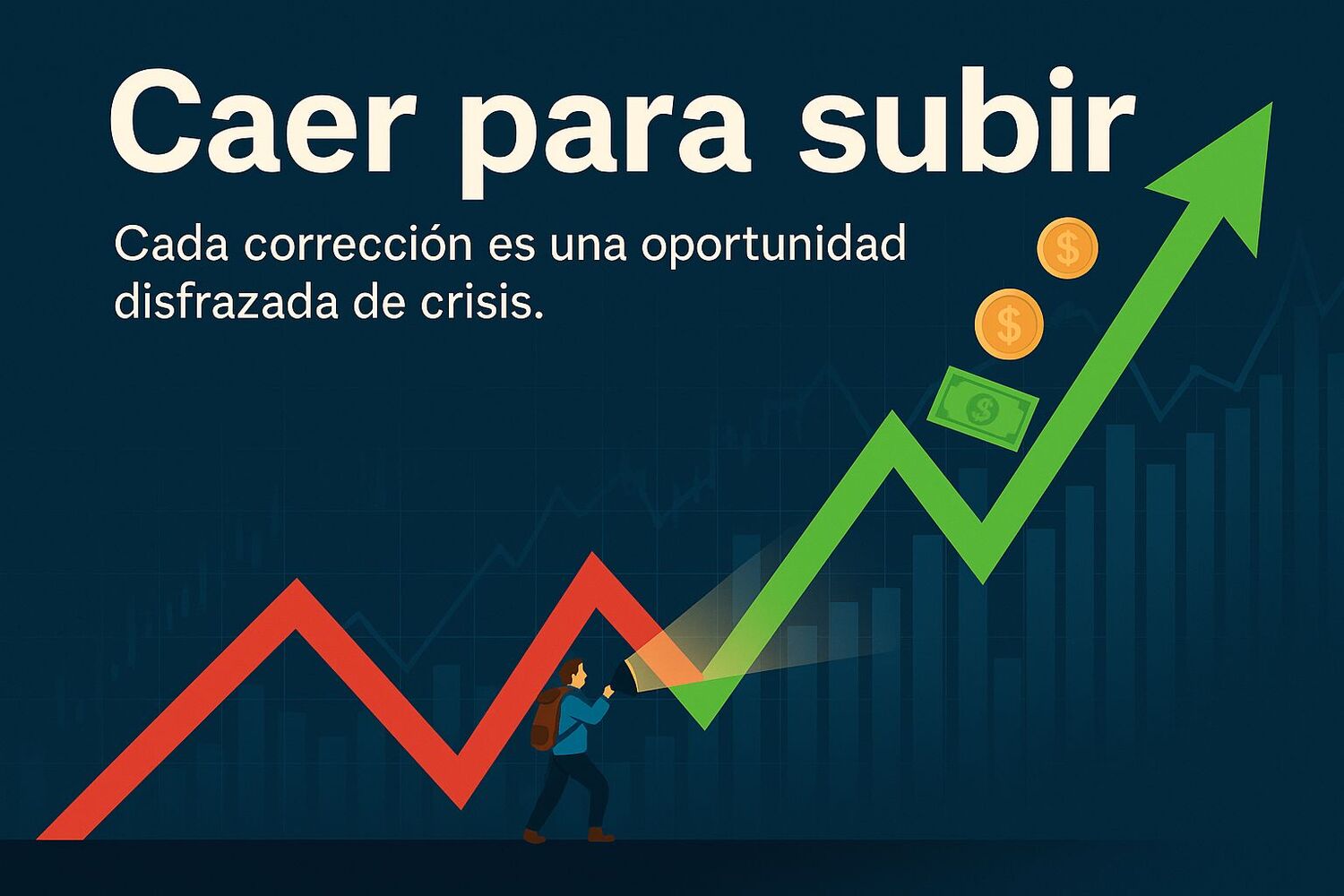
Las falls in the marketsfar from being a drama, are a window of opportunity for long-term ones. Understand what I am going to say, but I am delighted that, from time to time, corrections come. This is how I take advantage of the liquidity that I have been generating to enter with more force. If a certain fund was at +40% and the markets fall, the fund may end up at a poor +15% (and I’m talking about a serious fall). I take the opportunity to get in with more force. Thus, when he raises, he will do so with a greater amount and, in a short time, instead of +40%, he will have +70%.
We already talked in a previous article about the strategy of beating the indices, and here we go deeper and little more into how this is done.
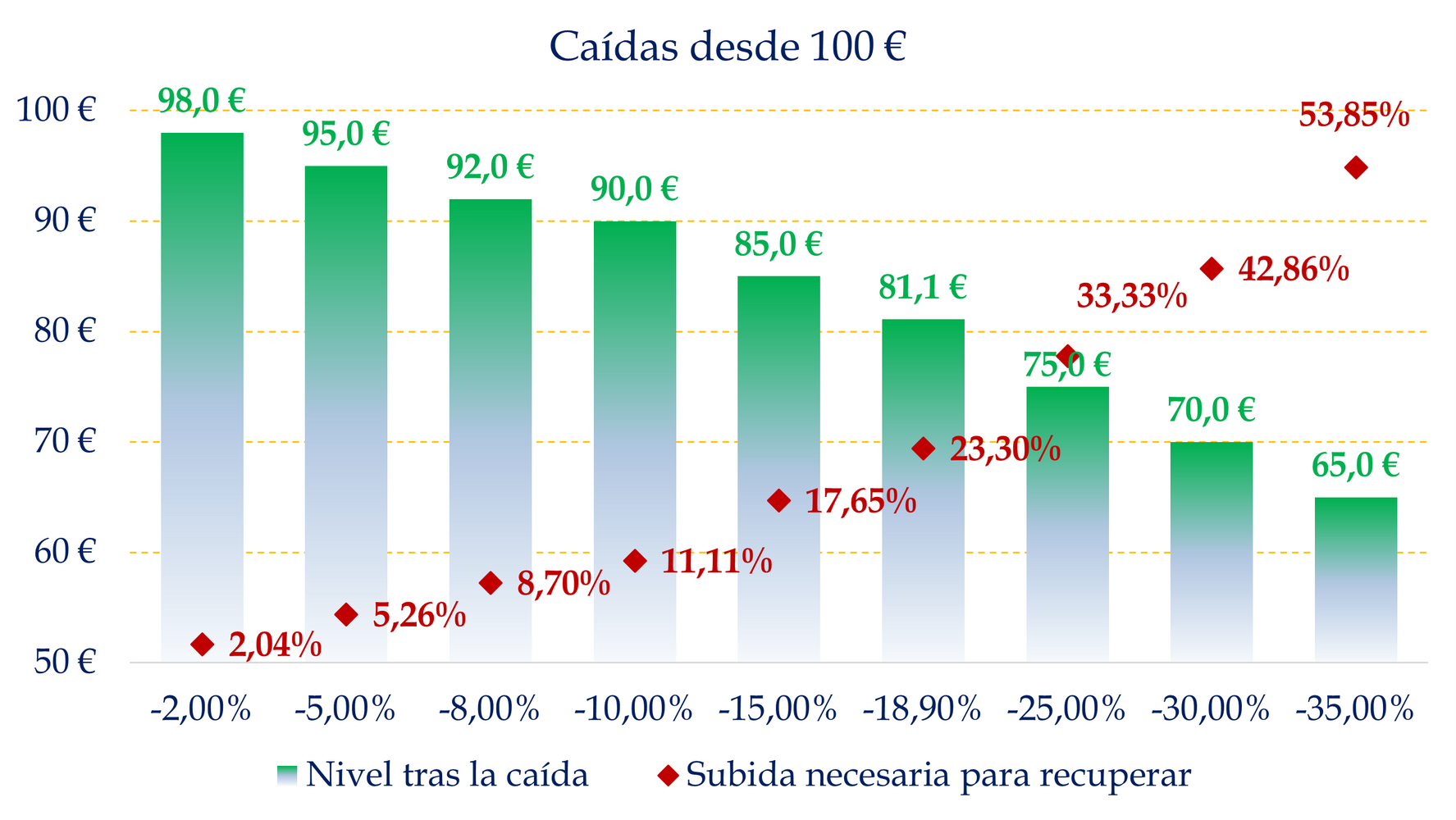
We go step by step. If you fall, How much do you have to raise to recover?
Source: Carlos Arenas Laorga
When an index like the S&P 500 falls -25%many investors panic. But what few calculate is the following: to return to the starting point after a -25% drop, you need a rise of +33.33%. And if the drop is -35%, you already need +53.85%. By the way, something similar to what happened the year of Covid…
If you have €100, and you lose -25%, you have €75 left. If €75 increases by +25%, you do not reach the initial 100, you stay at just under €94. Do the math…
This asymmetry is just what makes the corrections in opportunities. If you buy at minimums, the potential profitability is not simply what the index indicates… but much higher! And every year, the market gives us these opportunities.
Source: Carlos Arenas Laorga
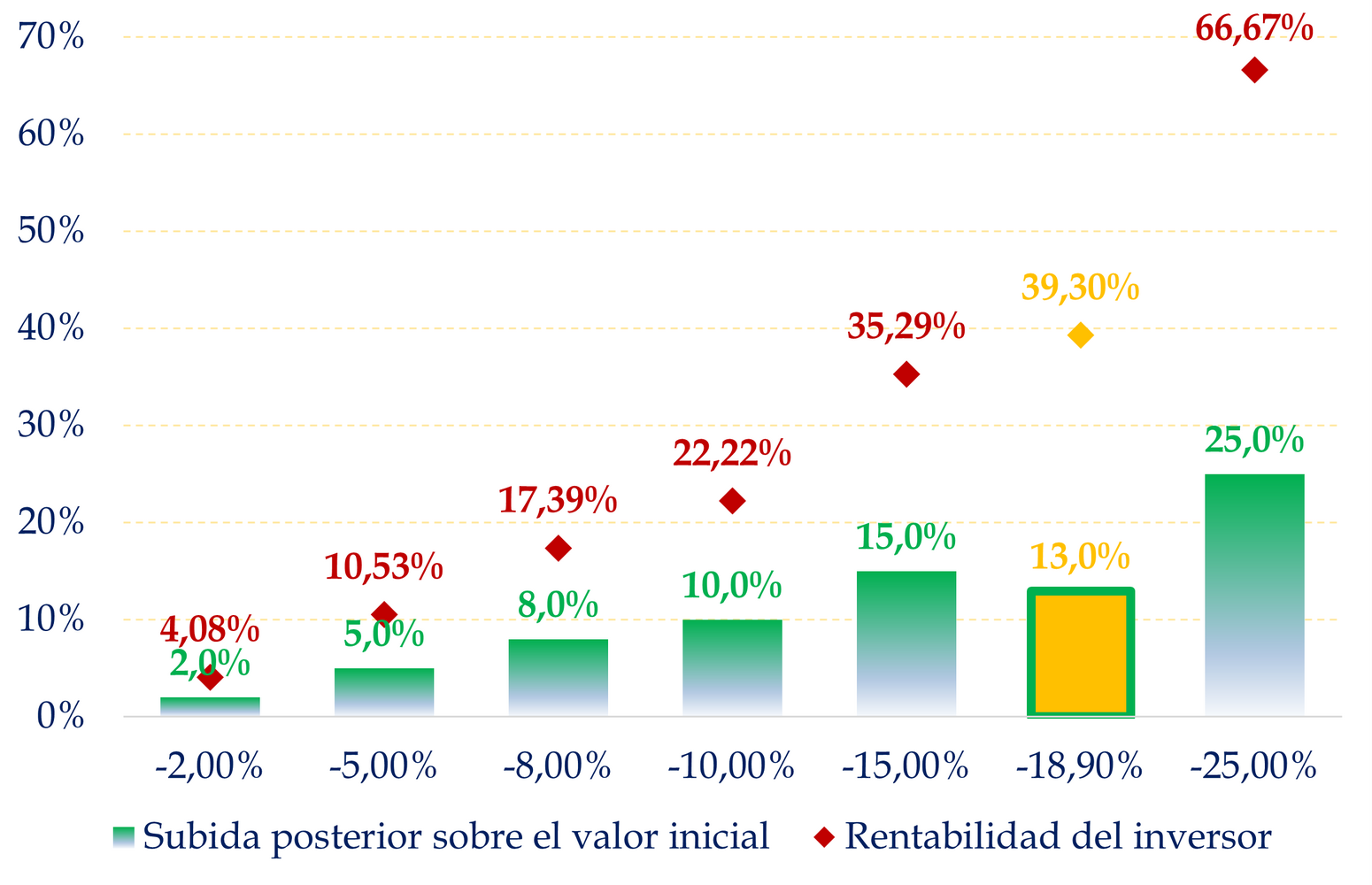
Let’s look at the case of this same year 2025. The S&P 500 fell -18.9% since the beginning of the year. From the base where the year began, the index has risen +12.9%. At first glance it seems like a modest recovery, but if you had invested at the minimums… your profitability would not be +12.9%, but rather +39,3%.
When you buy after a fall, the initial €100 is lower… and everything that comes after multiplies. Instead of climbing from the peak, you are climbing from the valley.
Source: Carlos Arenas Laorga
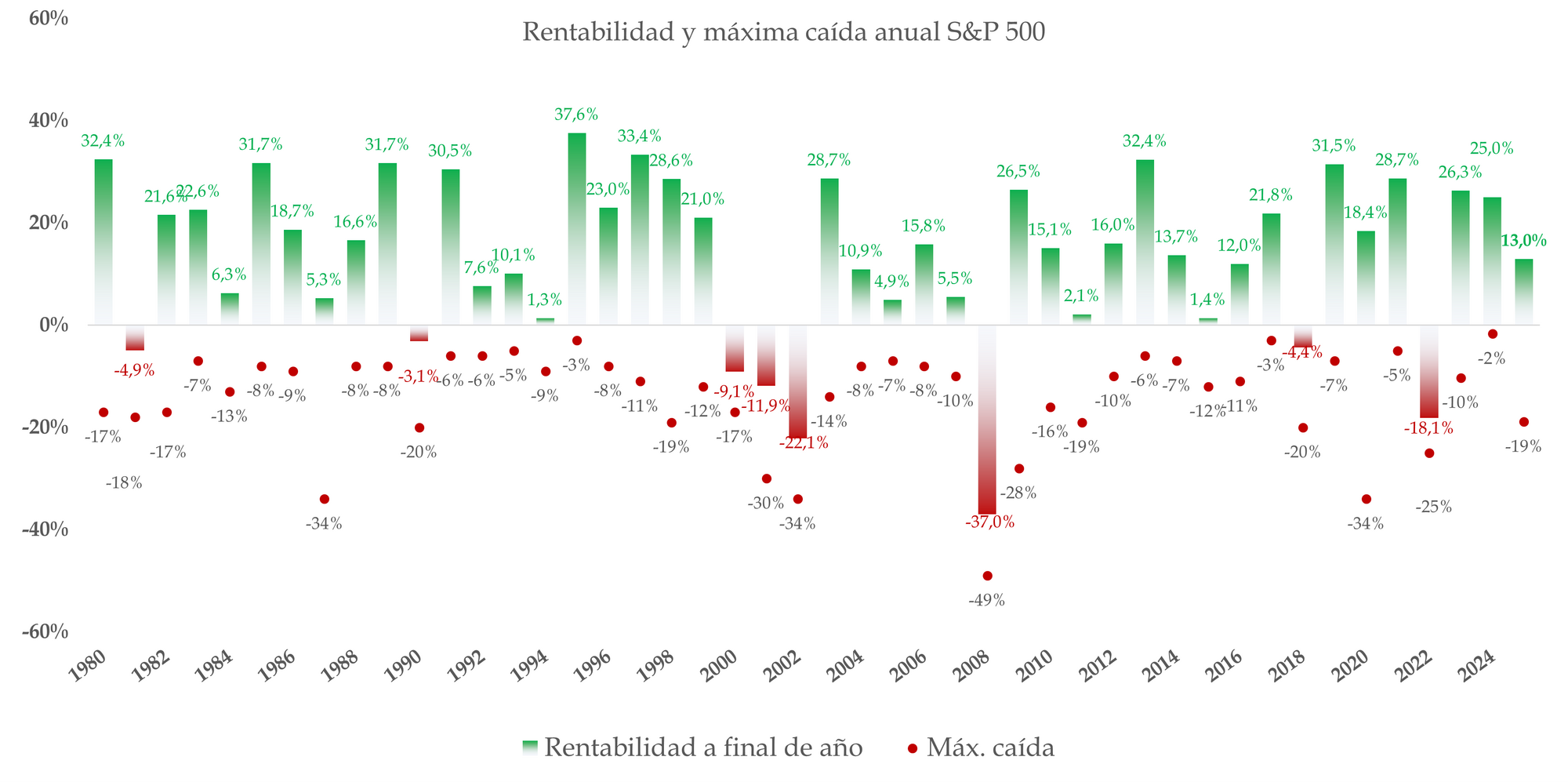
Many investors (and I’m not just talking about newbies) have a common reaction in the face of corrections: get out on your feet. But historical data shows that, over the past 90 years, virtually every market crash has been followed by large recoveries (sometimes within just a few weeks).
Y I’m not saying what to do market timingfar from it. And it’s not about getting the absolute minimum right either. But you have to know that, when there is fear, the price of the markets is usually below their real value.
It is not about guessing floors, but about understanding that, when fear dominates, the price of assets is usually below their real value.
I insist on this year’s example. who invested at minimums, has a profitability of more than 39% in just a few months (not bad).
A well-diversified investment fund, with regular contributions and additional tactical contributions in moments of correction, it can generate spectacular cumulative returns. It is the way to obtain what the index earns and an extra bonus. As Warren Buffett said: be fearful when others are greedy, and greedy when others are fearful.
Some keys to make good use of the corrections:
- Have liquidity available to take advantage of opportunities. For example in a short-term fixed income fund. Let your monthly periodic savings be allocated a small percentage to this semi-liquidity, not all to variable income.
- Diversify your investment: I understand that you are a long-term investor. Variable income, indexed, active, global, regional…
- Keep a cool head: avoid emotional decisions. Falls are part of the cycle. You already know what you have to do. Don’t run away, get in.
- Think long term: Don’t invest in a 15-day bounce. Invest for the next 15 years.
- Don’t put all the liquidity with a 10% drop: then it can drop another additional 10%. If it falls 10%, put in 20% of the liquidity, if it falls another 10%, you put in another percentage… Don’t try to guess the minimum.
We must see the momentary pain of a fall as a golden opportunity. It is the seed of great future profitability. It all depends on your reaction. Understand that every correction is an opportunity disguised as a crisis.
The next time you see a -20% drop, remember this. You are not facing a problem, but rather the opportunity to be richer. You’re at the bottom of the profitability ladder, and you already know how to climb it.