
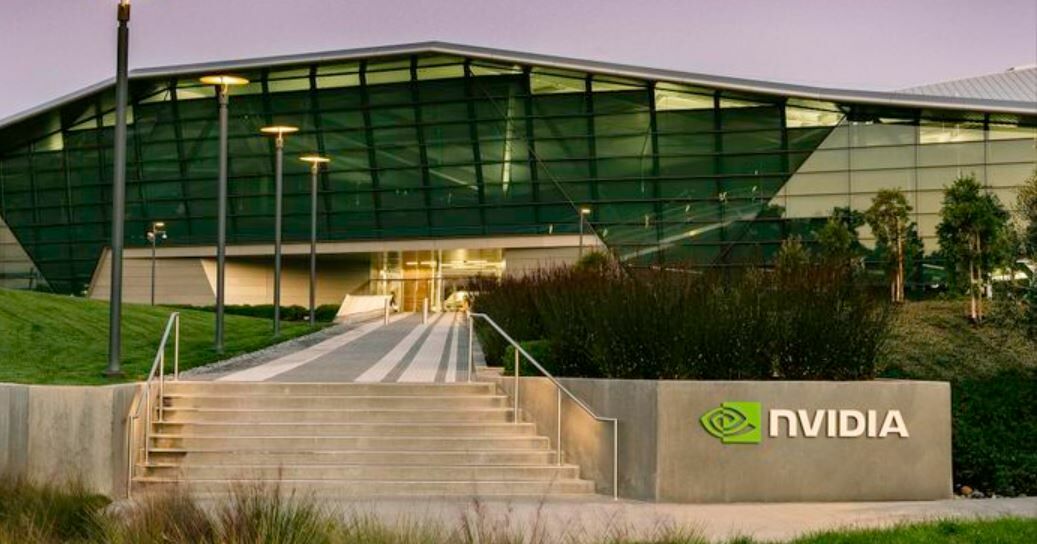
Next Wednesday, November 19, after the close of Wall Street, NVIDIA will once again be at the center of the financial board. The company will publish its results of thethird quarter of fiscal year 2026an event that could trigger a new stock market impulse… or an unexpected correction. The bar is set so high that even a good report may not be enough; Expectation has become your greatest ally and, at the same time, your greatest risk.
Solid growth, high expectations
Over the past decade, Nvidia has gone from being a graphics innovator to establishing itself as the beacon of the artificial intelligence revolution. Its chips supply Amazon, Microsoft, Alphabet and practically all relevant players in the sector.
The company arrives at this event after an impeccable streak: has exceeded analysts’ forecasts for four consecutive quartersdriven by double- and triple-digit growth and gross margins of over 70%.
A future of 400,000 million annually only in chips?
The story behind these expectations is the same one that sustains its meteoric rise: demand that far exceeds supply. Their platforms Blackwell and his successor, Rubinhave become the most coveted product in the AI ecosystem. Jensen Huang, CEO of Nvidia, has acknowledged that the company has orders worth $500 billion until the end of 2026a figure that has surprised even the most optimistic analysts.
The pressure on the supply chain is such that Huang recently traveled to Taiwan to ask TSMC – his key supplier – to increase wafer production capacity. The message was clear: the AI revolution is advancing faster than chips are being made. This overwhelming appetite is supported by hyperscalers such as large cloud providers and Meta Platforms, which have announced significant increases in their capital expenditures dedicated to AI infrastructure.
The figures revealed by Huang have led several analysts to revise their own models. The Motley Fool emphasizes that, if Nvidia distributed those 500,000 million in five quarters, it would be in a position to generate 400 billion dollars annually in chips aloneto which around 20,000 million would be added for other businesses. This would imply income of 420,000 million and, with current margins, profits of 218,000 million.
Optimism for the quarter: revenues exceeding 55,000 million
For their part, large investment houses have been refining expectations as the Nasdaq company continues to reveal more than promising clues about its potential:
- UBS predicts that Nvidia will once again exceed expectations in this fiscal third quarter, estimating income from 56 billion dollarsabove the official guide. In addition, it foresees gross margins that would be around 73.5% in the quarter and up to 75% in the next. The bank also emphasizes that the generation Blackwellwill concentrate more than 70% of income in 2025 and 2026before Rubin takes off in 2027. The increasing availability of inventory, despite supply tensions, would be an additional catalyst.
- Citi points to even higher income: 57,000 million in this quarter and 62,000 million for January. The firm highlights the recent shipment of 6 million GPUs, which it interprets as a sign of immediate upside potential. In addition, it has revised upward its profit estimates for the next three years, in line with a global increase in spending on AI infrastructure.
- Wolfe Research identifies one of the most compelling arguments: Nvidia would already have visibility of $500 billion in cumulative revenue between Blackwell and Rubin until the end of 2026. According to his calculations, only In 2026 these products could generate 300,000 million, 20% above their previous models. Wolfe also highlights the strong increase in the average price per chip – more than 50% between generations – as a direct driver of improvement in margins. Its base scenario contemplates an EPS close to $8 in 2026.
- Bank of America considers that the 500,000 million in data center orders point, to a growth of 50% on sales and 70% in EPS by 2026also with an estimated profit of around $8 per share. BofA maintains that the restrictions on China are short-term noise with no significant impact on financial estimates.
In the stock market… time to buy, sell or hold?
But the euphoria regarding financial forecasts does not eliminate the stock market dilemma: what to do before such decisive results?
Over the last few years, the market has responded enthusiastically to Nvidia’s more than consolidated business: the value accumulates a 44% increase so far this yearand an amazing 1,500% in the last five yearsbecoming the most profitable company of the so-called Magnificent Seven. Its weight already represents 8% del S&P 500. Furthermore, at the end of October it reached a capitalization of 5 trillion dollarsan unprecedented milestone in business history.
Adria Cimino, de The Motley Fool, offers a sensible guide to what to do as an investor:
-
If you need liquidity or are looking to rebalance your portfolio, selling a portion to secure profits is reasonable.
-
If your position is balanced, holding is the strongest option: Nvidia remains a colossus with a long-term trajectory.
Technical analysis also supports this thesis. Analyst José Luis Cava believes that, as long as Nvidia’s stock remains above $183, the upward trend remains intact. A correction, if it occurs, would be limited in time.
For his part, the consensus ofReuters is forceful: recommendation of buy widespread, with a target price of $230.21which means a 19% upside potential.