
I am not going to deny that there is some truth, but I don’t know if being alarmed is the best thing to do in view of other markets. That is more focused than before It’s a fact. I put the graph so you can see it.
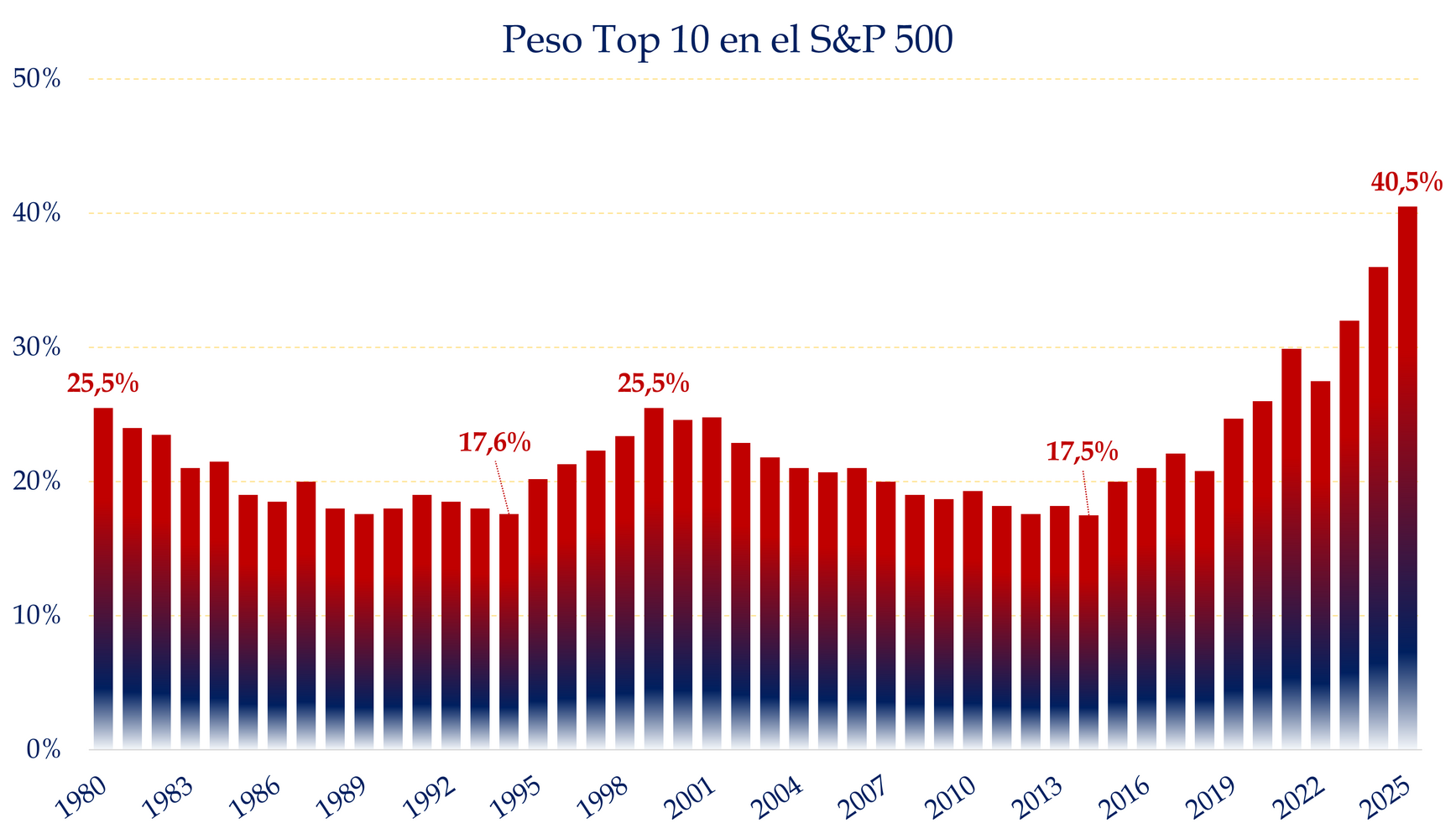
Source: Carlos Arenas Laorga
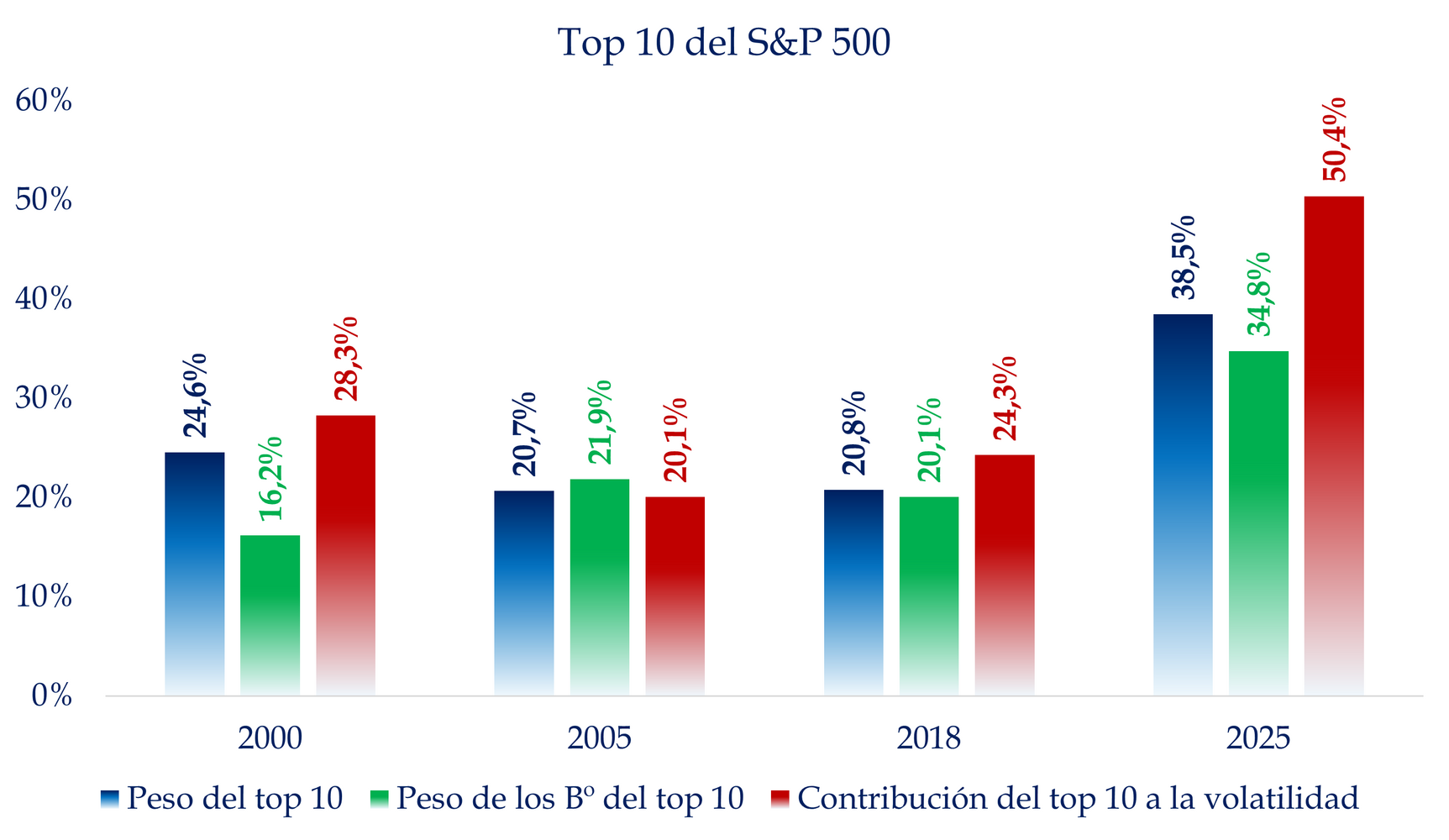
Yes, the weight of a few has increased, but the thing is its benefits have made it even more. He weight of the ten largest stocks in the S&P 500 has risen 56.5% in recent years. Nothing negligible. But, in the same period, the weight that these companies have over the total The profits of the index have grown by 114.8%. More than double. Someone could state without lying that the market is more concentrated, but that same someone could also say without being untruthful that I should be much more focusedin view of the growth in profits. If a company becomes 10% of the index and generates 15% of its total profits, is it really overvalued? Quite the opposite… Controversy served.
What this data debunks is the typical accusation that the S&P 500 is manipulated by the inflated price of a few stocks. These prices reflect a growing concentration of real profits. Or put another way: it’s not that investors are blindly betting on Microsoft or NVIDIA; is that these companies are making more money than ever and at a faster rate than the rest.
Now, it is also true that these giants They contribute a greater part of the volatility of the index. They have gone from representing 28.3% to 50.4%; an increase of 78.1%. This tells us that, when they rise or fall, the index notices it much more.
Curiously, while we usually accuse the American market of concentration, Europa it is freed with occultism. Here there is also increased weightthe 10 greatest valuesalthough only 10.2%. At first glance, it would seem that Europe is more prudent, more diversified, more rational… until one looks at the following fact: in parallel, The weight of the profits of those top 10 has fallen by 6.6%.
This is curious. That is, they weigh more in capitalization, but less in profits. In reality, it is a harmful concentration and worse than that of the US, although Europe is relatively less concentrated. Furthermore, this is still a reflection of lower growth, regulation, inability to compete globally… I don’t know, but it sure isn’t a sign of strength.
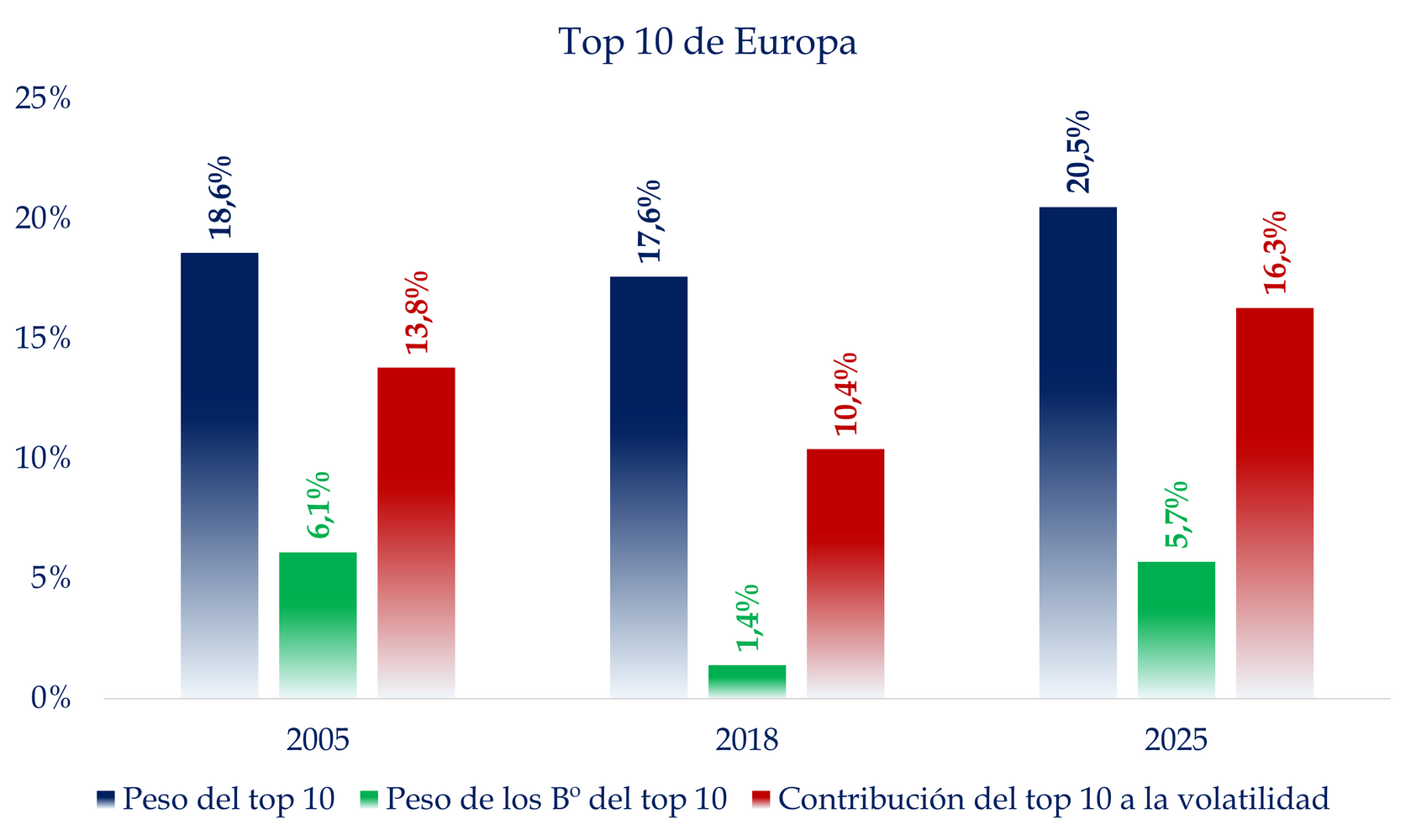
Source: Carlos Arenas Laorga, with data provided by Fidelity
Be careful what we wish for. I prefer a market concentrated in companies that make profits, than one artificially diversified where the peso does not reflect the profitability and income of the companies.
Criticism of concentration usually starts from an egalitarian vision of the market, as if all sectors and companies should weigh equally, as in a equal weight. But that is as absurd as wanting all movies to last the same time or for all daily menus to cost the same (the same for fast food as for Michelin Stars).
Instead of being scared by concentration, you have to understand what causes it. Whether it is because of fashion, market blindness, or if there is really cause for concern. But if it is for real generation of benefits… The thing It is not being scared by concentration, but by not understanding it.
And, to finish, I give you the demystifying and controversial graphic. Not only is the US not a concentrated economy, but it is one of the least concentrated in the world. Specifically, practically half that… Spain!
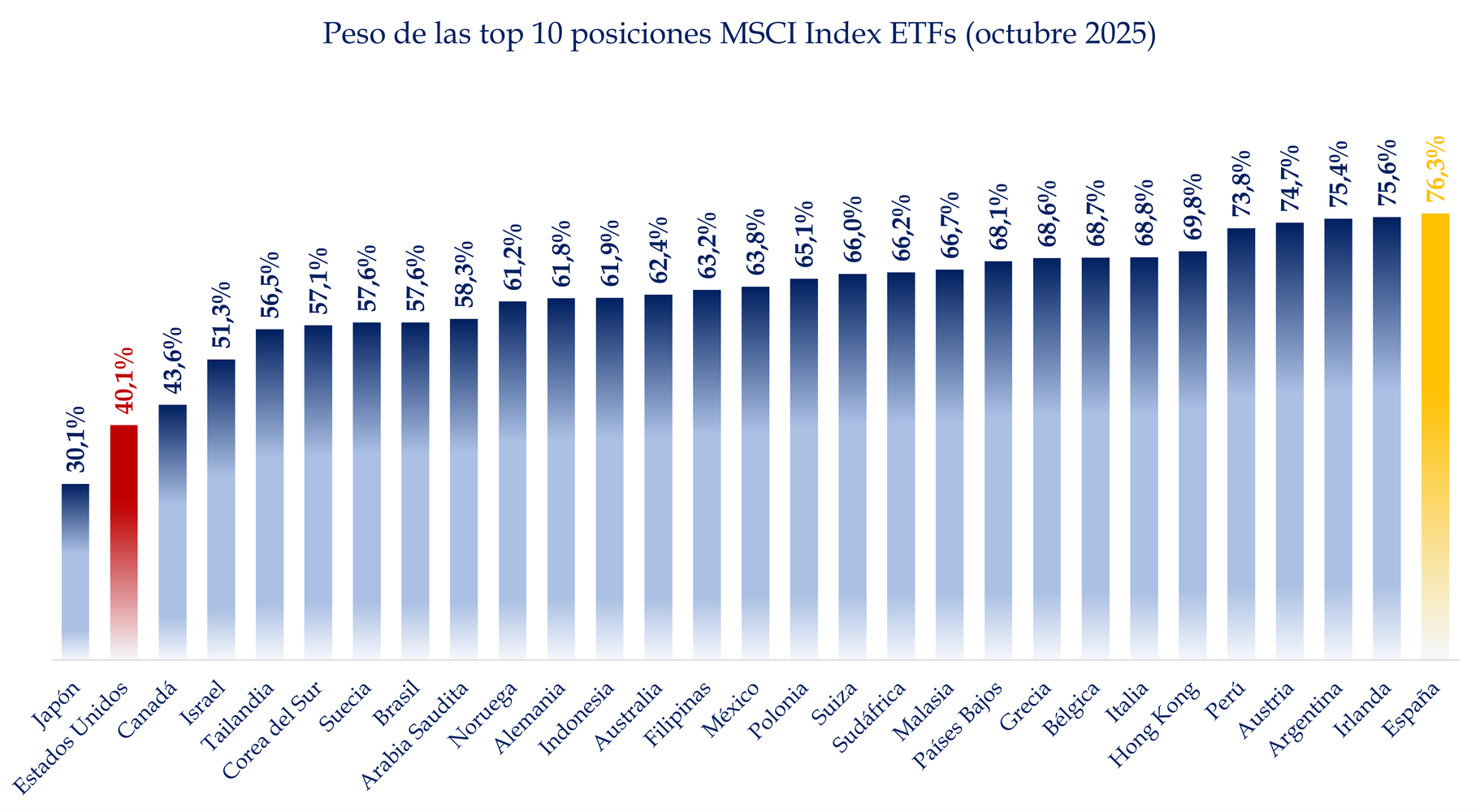
Source: Carlos Arenas Laorga
This is like the fable of the fool who points at the moon and looks at his finger. When a smart investor points out the profit, the dumb investor looks at his weighting in the index. I’m not saying that you shouldn’t keep an eye on it, but neither should you spend the day talking about this as if it were the greatest danger in the world.