
The world’s main bitcoin (BTC) and cryptocurrency exchange, Binance, is going through a phase of uncertainty after a series of events that have put its operational and financial stability under scrutiny.
What started as a technical glitch during a period of high volatility has escalated into a crisis of confidence that affects users’ perception of security.
In this context, it is essential to analyze the 6 keys to understand why fear about Binance skyrocketed, a phenomenon that combines operational problems, accusations of manipulation and an institutional response that seeks to recover lost credibility.
1. The October 2025 incident as a trigger
Binance’s stability was seriously compromised on October 10, 2025. On that date, bitcoin experienced massive selling pressure from institutional and retail sectors.
Binance, which processes the largest trading volume globally, failed to maintain the integrity of its services in the face of what it described as extreme volatility motivated by macroeconomic factors.
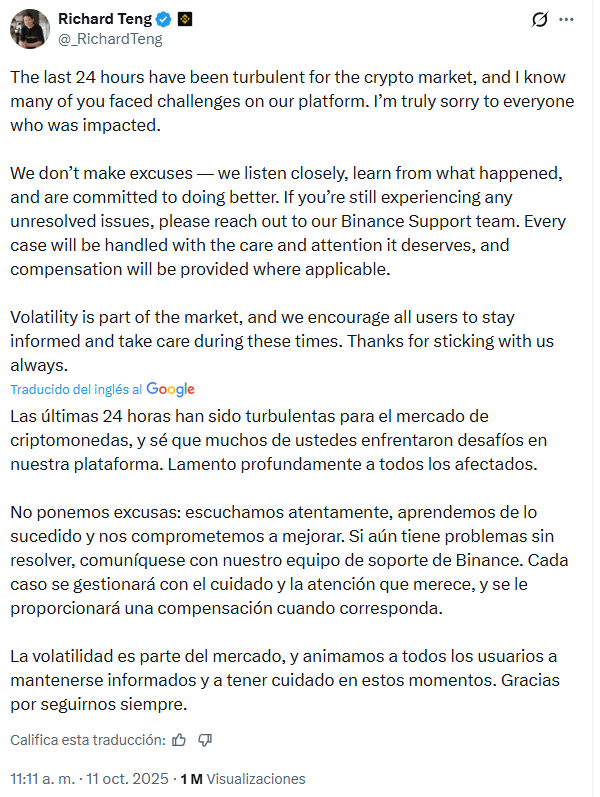
During the most critical hours of the price drop, users reported almost total paralysis in order execution. The exchange’s technological infrastructure showed obvious cracks. Long withdrawal delays, balances disappearing from user interfaces, and inaccessibility of both the mobile app and web version.
Although the company allocated a total of $683 million to compensate those affected, the damage to its reputation had already been done. This technical vulnerability cast doubt on the company’s ability to respond in times of financial stress..
2. Complaints for alleged market manipulation
After the October incidents, the narrative of simple technical errors gave way to more serious suspicions. Various complaints suggest that the exchange allegedly adjusted data internally to avoid its refund commitments.
According to testimonies collected by NoticiasVE on the social network some settlement records would have been modified manually so that user losses would remain outside the eligibility period established for compensation.
These accusations point to alleged market manipulation and a lack of transparency in internal audit processes.
3. The exodus of users and the risk narrative
Distrust has caused a tangible reaction and that is the outflow of capital. A growing number of investors have expressed their decision to close accounts and liquidate their holdings in BNB, the cryptocurrency issued by the platform.
The fear of possible insolvency or the definitive blocking of funds has promoted what is known in the sector as FUD (fear, uncertainty and doubt).
Although figures such as Changpeng Zhao (CZ), founder of Binance, have warned about the existence of smear campaigns orchestrated through fake accounts, negative sentiment persists.
4. Technical problems in withdrawals
Fear intensified due to difficulties in retirement services, which temporarily prevented many users from accessing their fundson February 2, as reported by the exchange itself.
These drawbacks coincided with a sharp drop in the market for bitcoin and other cryptocurrencies. Binance quickly reported that it had identified and resolved the technical issue – an outage that lasted around 15 minutes – allowing normal trading to resume.
However, the company did not offer exhaustive details about the root cause, instead prioritizing the prompt recovery of service and the assurance that the funds remained safe.
Ultimately, episodes like this remind us that, beyond the speed of response, full transparency and proactive prevention remain essential to sustaining user faith in the long term.
5. Alleged cease and desist letters to critics
Another element to understand why fear about Binance skyrocketed is the appearance of alleged termination letters directed at those who accused the exchange of insolvency or contributing to the October collapse. These statements posted on social media suggested attempts to silence dissident voices and fueled narratives about possible bankruptcy.
This is a document, usually drafted by an attorney or an affected party, that one entity or person sends to another to require that the entity or person immediately stop conduct deemed illegal or harmful and not resume it.
Binance categorically denied these versions, calling the documents “forgeries with a very active imagination” and warning about misleading information.
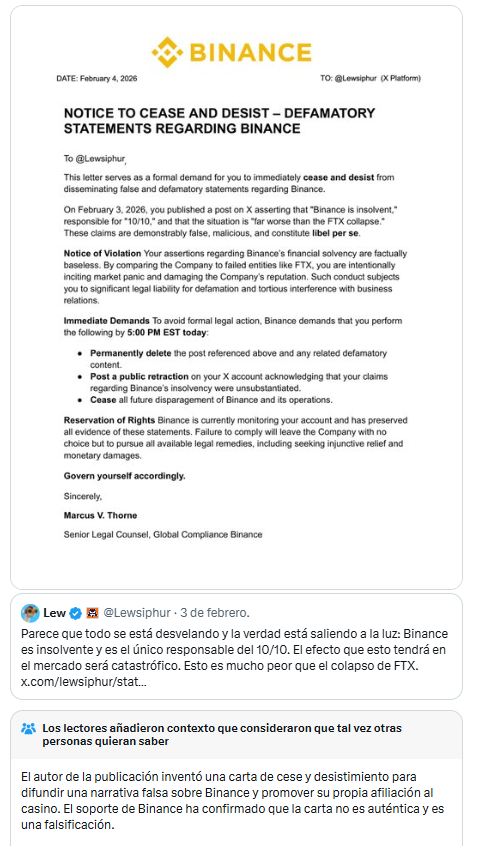
The cryptocurrency sector on social network X played a crucial role in identifying that the letters were specially designed to push a misleading narrative. In fact, several of the posts that shared them received notes from the community which explicitly warned that these were fabricated documents, created with the aim of promoting a false narrative.
6. The scrutiny on Changpeng Zhao
The figure of CZ remains a permanent focus of controversy, even after having left the executive management of Binance in 2023 following the agreement with the US authorities and his brief time in prison, later pardoned by the president of the United States, Donald Trump.
The businessman is accused of being responsible for practices that distort the market. Among the criticisms are alleged price manipulation through massive bitcoin sales by Binance to generate liquidity or influence the market, especially during high volatility events like the one on October 10as reported by NoticiasVE.
He is accused of having historically contributed to Binance accumulating disproportionate dominance in the exchange sector, displacing competitors through aggressive commissions, selective listing and alleged opaque practices that hinder real competition.
CZ has responded forcefully to these allegations, repeatedly calling them “imaginative FUD” or “exaggerated and disconnected versions of reality.”
Binance responds with transparency measures
Binance, to respond to the fear that was triggered about its solvency and financial stability, has taken concrete actions. On January 30, 2026, it announced the total conversion of its Secure Asset Fund for Users (SAFU), valued at $1 billion, from USDC to bitcoin.
The process, which plans to be completed in 30 days, began with transfers such as 1,315 BTC (approximately $100 million) this week. The fund will rebalance if its value falls below $800 million due to fluctuations in the price of BTC.
Additionally, yesterday, February 5, 2026, Binance published its test of reserves update through CoinMarketCap (its proprietary platform).
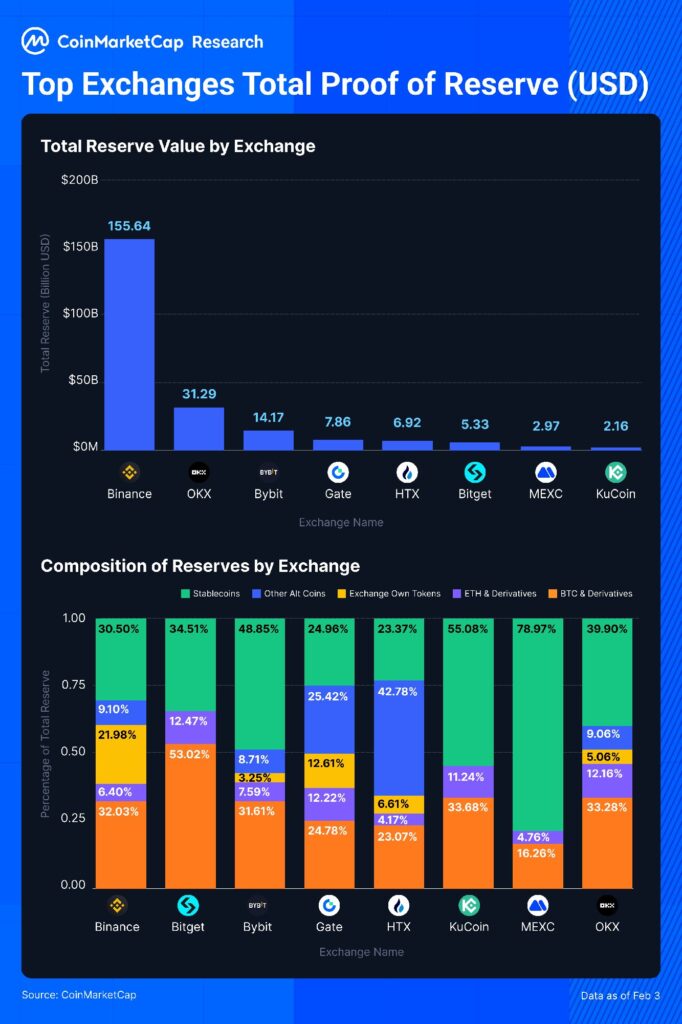
The figures indicate Total reserves of approximately $155.64 billion (reported as 155.6 billion in various media), far exceeding the sum of other major exchanges.
Bitcoin and derivatives represent around 32% (about $49.84 billion), reinforcing its dominant position in the market. These steps seek to restore confidence amid persistent volatility and speculation.
With these reserve numbers in its favor, the future of the platform will largely depend on its ability to demonstrate that its systems can withstand the next cycle of high demand without collapsing.