
-
In an email, Epstein claims that he spoke with the creators of Bitcoin.
-
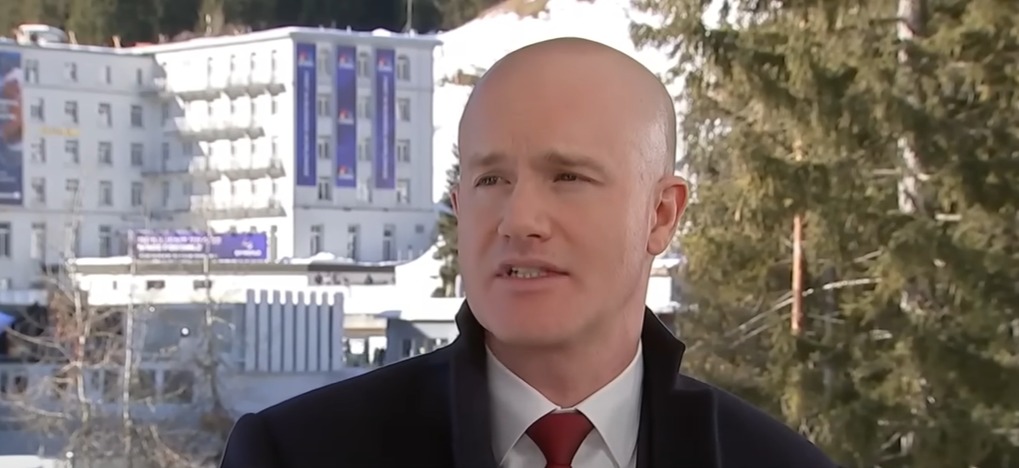
Brian Armstrong (Coinbase) and Adam Back (Blockstream) appear in the archives.
On January 30, the United States Department of Justice released a new batch of the so-called Epstein Files, documents linked to Jeffrey Epstein, the financial magnate accused of sex trafficking, pedophilia and other serious crimes.
These files include emails and logs where References to Bitcoin and well-known figures in the digital asset ecosystem appear.
So far, the material does not provide evidence of crimes linked to digital currency, but it does leave documentary traces of contacts, financing and discussions that are currently reactivating the debate on social networks.
The point that focused the most attention in the bitcoiner community is an email from 2016 in which Epstein claims he spoke to “some of the founders of Bitcoin.”
From there, mentions also emerged of names such as Brian Armstrong, CEO of Coinbase and Adam Back, CEO of Blockstream.
Epstein confirms that he «spoke» with the founders of Bitcoin
The phrase appears in an email dated October 13, 2016 in which Epstein presents ideas that he himself describes as “radical.”
First he proposes a fiat currency called “Sharia”, intended for internal use in the Middle Eastwith an aesthetic inspired by the dollar (including the phrase “In God we trust”, adapted to a religious seal).
He then proposes creating a sharia-compliant cryptocurrency, based on distributed ledger technology, and explicitly mentions Bitcoin as a reference.
In that same message he writes: “I have spoken to some of the founders of Bitcoin and they are very excited.”
He provides no names, there is no independent verification of who he was referring to, and the identity of Satoshi Nakamoto remains unknown. The email also indicates that had not received dates “from the Saudi side” and contains a confidentiality noticedespite the fact that today the document is public.
Armstrong and Back: what Epstein’s emails show
In the case of Brian Armstrong, what usually circulates are emails addressed to investors in 2016, in the midst of a discussion about the scalability and size of Bitcoin blocks. The informative value of these messages is that they reflect how a relevant company in the sector read the technical and political conflict of the moment. In the message, Armstrong, a proponent of increasing the block size, states that he was “working with a number of teams behind the scenes to ensure that Bitcoin continued to scale (and that don’t be retained by any of the early idealists.
The connection with Epstein, according to what emerges from the most widely distributed clippings, is not a proven personal relationship, but rather the trace of a circuit of updates to investors that ended up preserved in his documentary archive.
That may suggest an indirect financial link (by direct investment or through vehicles), but it does not demonstrate Epstein’s operational influence over Coinbase.
In parallel, Back’s name appears linked to emails related to Blockstream. In one such exchange, about a financing round, the email describes the strong demand for the deal and the increased allocation to Epstein. There are two particularly relevant sentences, which show the market context: “We are ten times oversubscribed in a seed round of 18 million dollars” and “it was decided to increase your allocation from 50,000 to 500,000 dollars.” In the same thread, Epstein states the vehicle: “My investment in the operation will be made through Joi Ito’s investment company.”
Part of what is cited are exchanges that show rivalries and positioning against alternative projects (altcoins) and disputes over narrative and technological direction. In journalistic terms, that describes the climate of the time and frictions in the ecosystem.
Among the documents, a 2014 exchange between Epstein and Peter Thiel also went viral. In that email, Thiel asks directly: “Do you think this is the first step to intensify the anti-BTC pressure?”
Epstein’s response is striking because it shows the level of conceptual indefinition that—according to his reading—existed at that time around Bitcoin: “There seems to be little agreement on what bitcoin is: whether it is a reserve or an intrinsic value, a currency, a property, an architecture or a payment system.”
Epstein donations to MIT
Regarding Epstein’s donations to MIT and its indirect connection to developer funding, this point is not new.
It was already known that the financier had made contributions to the Massachusetts Institute of Technology between 2013 and 2017 and that part of those funds were channeled through the MIT Digital Currency Initiative (DCI), an academic program that provided financial support to Bitcoin Core developersas reported by NoticiasVE.
That link was documented and covered at the time, and the new publication of files only provides additional emails and records that expand the context, without modifying the known facts.
What the Epstein Files add up to is, mainly, additional material (emails and internal records) that provides context about how donations were channeled and how the topic was talked about behind closed doors, rather than an unprecedented discovery.
Towards the end of the file, other mentions that circulated on social networks also appear, although with limited informative weight.
Among them is Kevin Warsh, designated by Donald Trump to be the next president of the United States Federal Reserve (FED). Your name appears in an email from a publicist on a list of guests to a social event, without evidence of assistance, direct interaction with Epstein, or allegations of irregularities.
Another name that appears mentioned is that of Michael Saylor in a 2010 document in a social/philanthropic context, with a verbatim phrase that places him as a donor: “he contributed $25,000 for the food and for his name to appear on the invitation.”
Furthermore, he is described in personal terms, noting that “he is completely strange”, that “he has no personality” and that he is “like a zombie on drugs”, in addition to mentioning that there would be an “obvious personal disconnection”. The email does not link these comments with his business activity or with Bitcoin, and is limited to an assessment made by public relations specialist Peggy Siegal in conversation with Epstein.