
-
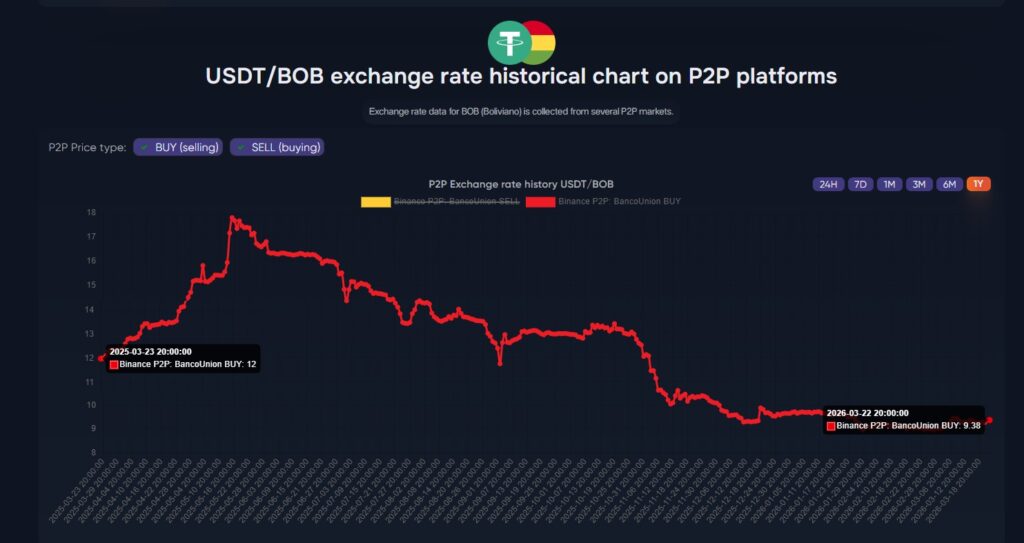
The Tether Limited stablecoin trades at an average of 9.38 bolivianos.
-
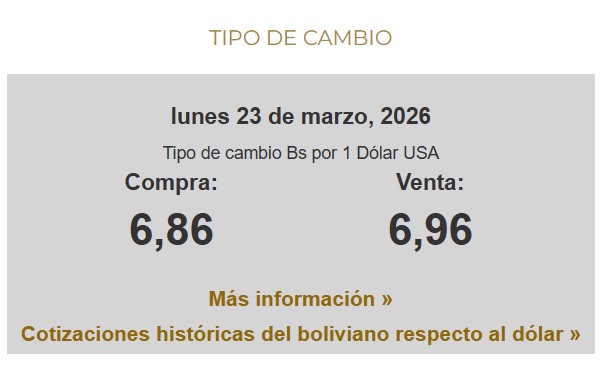
The US dollar is trading at 6.86 bolivianos, remaining relatively stable.
The use of USDT, the stablecoin linked to the value of the US dollar issued by Tether Limited, has been consolidated in Bolivia with an average price of 9.38 bolivianos.
This figure represents 35% higher than the official exchange rate of the US dollar, located at 6.86 bolivianos, according to data from the Central Bank of Bolivia.
The marked price difference between USDT and the US dollar in Bolivia is mainly due to the severe shortage of physical dollars in the formal banking systemwhich has shifted the demand for currencies towards the digital asset market.
Given the impossibility of accessing US banknotes at the state rate, both Bolivian companies and savers use the Tether stablecoin as a substitute for the dollar to make international payments and try to protect their capital from inflation, although with a regulated and centralized asset.
This situation is reinforced by the lifting of state bans on digital assets in 2024, allowing the price of USDT on peer-to-peer (P2P) trading platforms. act as the true indicator of liquidity and the loss of confidence in the official value of the Bolivian.
Álvaro Rosenblüth, treasury and exchange manager at the Banco de Crédito de Bolivia, stated at the event Merge São Paulo 2026 that the Central Bank of Bolivia lifted the ban on operations with these assets out of necessity. Rosenblüth explained that the central bank allowed citizens to take advantage of stable cryptocurrencies as tools to address the lack of foreign currency, highlighting that in 2026 these transactions will already be the norm for foreign trade.
Despite the current gap, the USDT price has seen a downward correction from the previous year. On March 23, 2025, the digital asset was trading close to 12 bolivianos, reaching higher peaks of 17.8 bolivianos during the months of greatest instability.
The 22.5% drop in its valuation against the Bolivian in the last year shows stabilization, but the 35% difference with respect to the official dollar remains massive and affects the cost of imports.
This phenomenon bears similarities to the USDT adoption processes documented by NoticiasVE in Venezuela and Argentina, where the digital asset is not only an investment tool, but a necessity for companies that settle payments and for the citizens themselves. The same thing happens in Bolivia, with growing demand from those seeking to protect themselves from inflation that reached 17.41% annually as of February 2026.
The consolidation of USDT with this overprice confirms that the digital market has supplanted functions that institutions can no longer coverbecoming the real unit of account that begins to govern the economy of the South American country.