
«Venezuela is on fire, my friend». Thus goes the part of a song by the famous Venezuelan performer – unfortunately now deceased – Tyrone González, alias Canserbero. And although the lyrics of that piece deal with other events that characterize my country, I am convinced that that phrase can easily be applied to the bitcoin (BTC) and cryptocurrency ecosystem that, in the last 3 months, has experienced notable intensity.
From an exchange distortion reminiscent of that experienced in the previous decade, through measures to promote the adoption of cryptocurrencies, to the confirmation of the omnipresence of the USD Tether (USDT) stablecoin, the Caribbean country experienced, during the first quarter of 2026, movements that shook – and woke up – a sleeping giant.
NoticiasVE, as usual, has been there. Following every update and news about the oil country, he has reported how the Venezuelan cryptocurrency ecosystem has shaken up in the last 12 weeks, drawing the attention of the largest cryptocurrency companies in the world, such as Binance and Bybit, in addition to Bitfinex.
Join me on this tour of the first quarter of the year in Venezuela:
The “exchange bicycle” and the ghost of Cadivi quotas
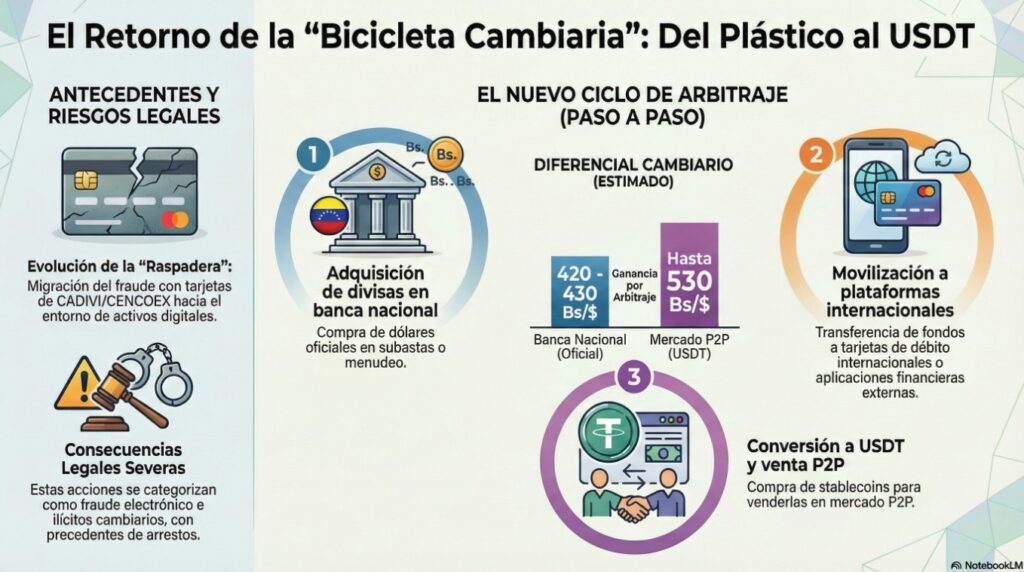
During the first three months of the year, a phenomenon popularly known as the «exchange bicycle» has become widespread. This practice, which has operational similarities with the old «scraper» of quotas (allocated dollars) of the defunct Foreign Exchange Administration Commission (Cadivi) in 2014, consists of an arbitration cycle that takes advantage of the gap between the official exchange rate of the US dollar and the parallel market.
Users acquire electronic currencies in national banks (such as Banco de Venezuela or Bancamiga) at rates close to the official one. Subsequently, they mobilize these funds to Panamanian wallets such as Zinli or Wally to buy USDT on P2P platforms. By liquidating these assets back to bolivars in the informal market, Operators obtain profit differentials that have exceeded 30%.
Specialists consulted by this medium, such as economist Daniel Peláez, warn that this massive speculation generates dangerous «noise» before regulators.
The saturation of these channels caused the cost of acquiring USDT through Panamanian fintechs to skyrocket up to 10% above parity, affecting those who use these tools for remittances or savings.
BPay Global: solution or greater bank dependence?
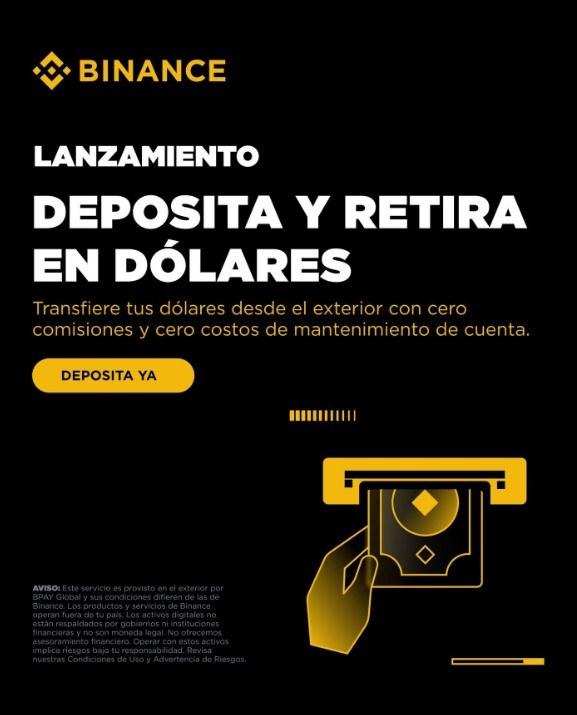
In this context, the enabling of BPay Global by Binance in Venezuela has emerged as a milestone for the sector. This tool allows you to buy bitcoin and other assets directly with debit or credit cards linked to local banking dollar accounts, eliminating intermediaries.
Although the measure seeks to professionalize access to digital currency, economists such as Daniel Arráez suggest that the impact on the exchange cycle could be limited. The critical points identified are:
- Transactional limits: Banking restrictions (approximately USD 1,000 daily and USD 8,500 annually) act as a bottleneck.
- Extreme surveillance: BPay requires rigorous verification requirements (RIF, tax returns and account statements), which increases exposure to regulators.
- Segmentation: a division is expected between users with access to international banking and those who will continue to depend on P2P commerce.
Operational risks and user security
The pressure of the «bicycle» has begun to take its toll on ordinary users. In March, complaints multiplied against the Zinli wallet due to preventive blocks and unaccredited funds after recharges from Venezuelan banks.
However, the terms of service warn that the company may suspend accounts without notice for suspicious activity, such as bulk reload patterns.
Specialists such as Daniel Peláez point out that these practices end up affecting «just as sinners,» limiting vital tools for the common citizen.
At the same time, Binance Latin America issued alerts about “account rental” scams. Criminals offer up to 40 USDT per hour in exchange for granting access to the platform, a practice that violates the terms of service and puts the user’s legal identity at risk.
The exchange stressed that sharing credentials violates its terms of service, can lead to permanent suspension and puts the holder’s legal identity at risk from possible illicit activities carried out by third parties.
USDT: the ubiquitous market reference
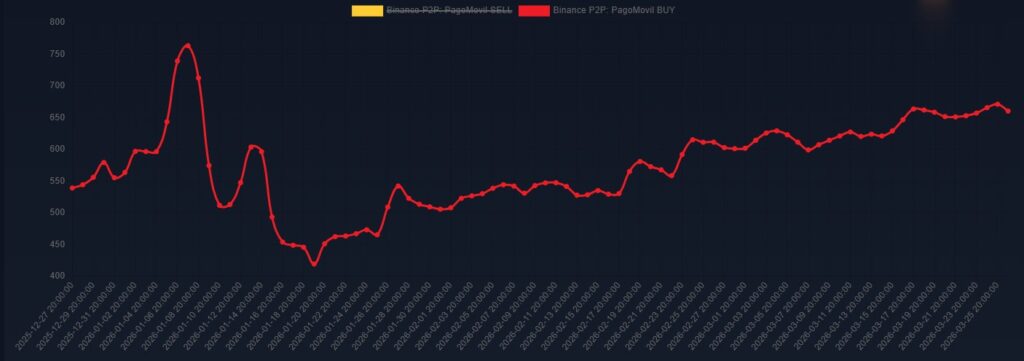
In this scenario of distortions, the USDT stablecoin has established itself as an omnipresent reference for trade and pricing in Venezuela. Its price has experienced a sustained rise, increasing 23% from January to dategoing from 539 bolivars to an average of 660 bolivars.
Along with this movement in the digital asset market, the official dollar arbitrated by the Central Bank of Venezuela (BCV) registered an even more aggressive increase of 61% in the same period, rising from 297 bolivars to 467 bolivars in just three months.
This exchange rate behavior occurs in a context of high monetary issuance. According to data from the BCV, liquidity in bolivars has increased by 60.5% since the beginning of the year, going from 93,991 million to 150,900 million bolivarswhich puts pressure on demand for safe haven assets.
The closing of the fiscal cycle: declaring bitcoin is mandatory
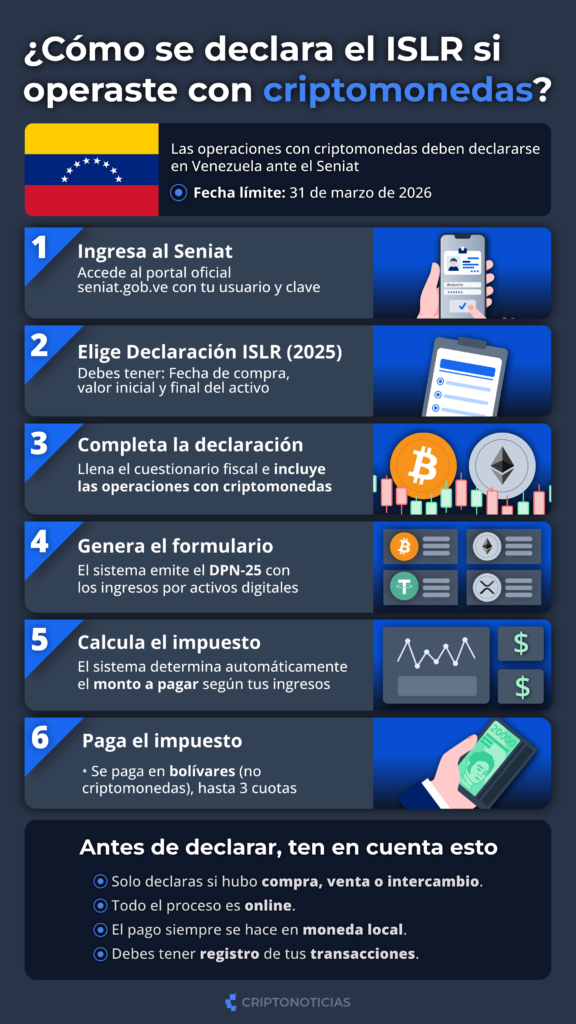
The quarter concludes with a reminder about tax obligations. Next March 31 expires the deadline to declare the Income Tax (ISLR) for the year 2025 before the National Integrated Customs and Tax Administration Service (Seniat).
Under current regulations, any natural person who has generated income greater than a monthly average of between 30 and 40 USDT while being in Venezuela for more than 183 days, must report their profits from the sale of digital assets. The omission of these income is considered fraud and may result in fines of up to 300% of the omitted tax.
The formalization of these incomes, according to specialists, It is the only way to guarantee legal security and traceability of funds before the traditional financial system, in a Venezuelan market that is necessarily moving towards greater regulatory transparency.
What to expect for the rest of the year in Venezuela?
The first quarter of 2026 closes with a clear message for the Venezuelan market: the “wild west” era in digital assets is coming to an end. The integration of regulated gateways such as BPay Global and the tax pressure of Seniat They are forcing users to professionalize their operations.
The outlook for the coming months of 2026 points to greater adoption of compliance tools and a consolidation of digital currencies as the central axis of the private economy in Venezuela.
This, even though economists such as Luis Oliveros, dean of the Faculty of Economics at the Metropolitan University (Unimet), as well as Luis Vicente León, director of the socioeconomic analysis firm Datanalisis, think that the cryptocurrency ecosystem will lose strength in Venezuela as a result of the oil agreements between the country and the United States.
The challenge for the average citizen will be, in any case, to navigate between the opportunity for arbitration offered by distortions and the need for formalization. which requires a State that is increasingly vigilant of digital wealth.