
-
The difficulty reaches 144.4T after an increase of 15%.
-
The Hashrate marks a downward trend consolidating 1 ZH/s of computing power.
Bitcoin mining difficulty recorded a 15% increase and reached 144.4 trillion (T), the largest percentage jump since 2021. The adjustment comes as the network hashrate recovers to 1 zettahash per second (ZH/s).
The current setting occurs after a previous 12% drop in difficultyrecorded after a decrease in hashrate, as reported by NoticiasVE. That contraction was linked to a severe winter storm in the United States that forced several large-scale operators to temporarily reduce operations. According to the data, that contraction represented the most pronounced decline in mining activity since the end of 2021.
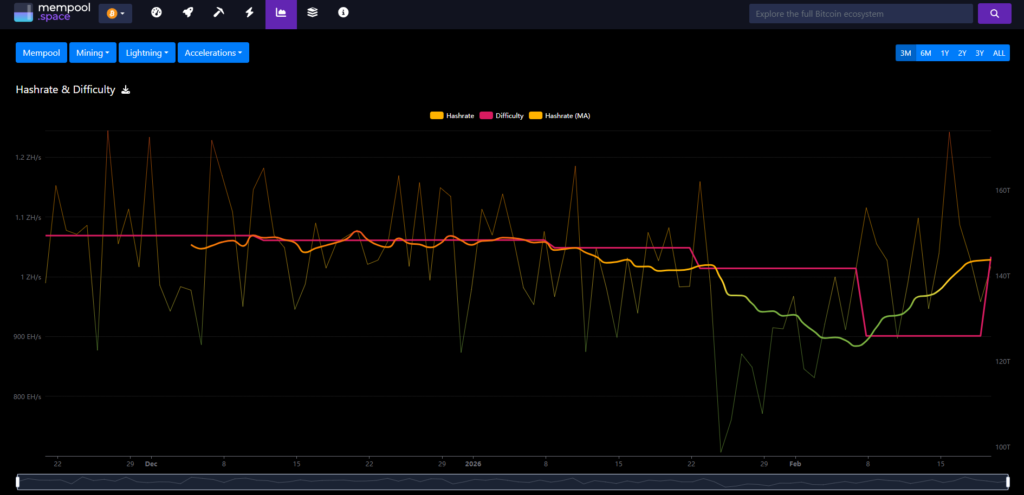
To put it in context, in October of last year the price of bitcoin reached an all-time high near $126,500, with the hashrate marking a peak around 1.4 ZH/s. After the price dropped to around $60,000 in February, the computing power dropped to 0.7 ZH/s.
After the correction in early February, the hashrate reached a new high above 1.24 ZH/s on February 15. However, since that point the hashrate has shown a downward trend.
Let’s remember that difficulty measures how complex it is to find a new block on the network. This parameter is automatically recalibrated every 2,016 blocks, approximately every two weeks, with the goal of maintaining an average interval close to 10 minutes per block, regardless of hashrate variations.
Miners face low income as part of the sector migrates to AI
The recent increase in difficulty increases the mining costsforcing operators to optimize their efficiency. Even so, those with access to cheap energy manage to stay active and preserve profit margins. For example, in a recent report, it was announced that the United Arab Emirates retains approximately $344 million in unrealized profits from its operations.
At the same time, so far this year several listed mining companies have been reallocating part of their energy and computing capacity towards artificial intelligence data centers and high performance computing (HPC).
An example is that Bitfarms recently announced a rebrand that removes the identity associated with Bitcoin of its name, in line with an increased focus on AI infrastructure. For its part, activist investor Starboard urged Riot Platforms to expand its foray into AI-oriented data center operations.
The hashrate recovery and difficulty increase show that the network remains robust, although mining appears to face tight margins. Diversification into AI, along with high-performance data centers, mark the next stage for the big players in the sector.