
-
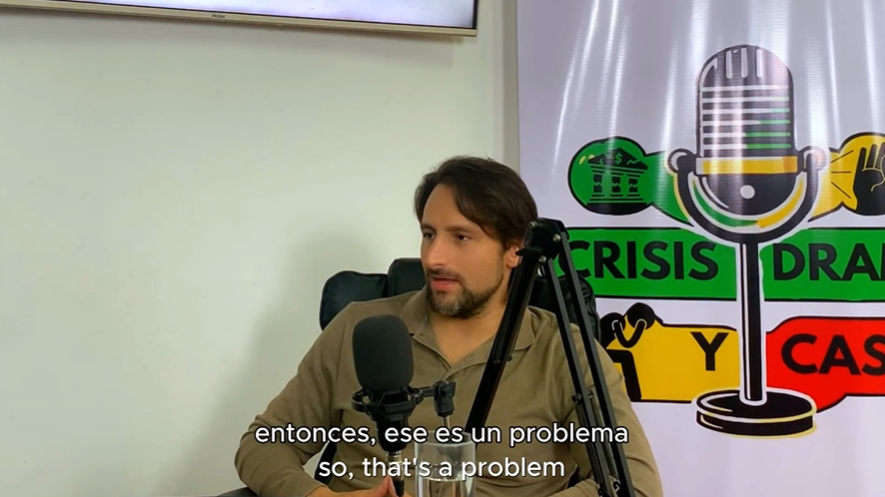
Analyst Diego Monroy maintained that geothermal energy would offer continuous and competitive energy.
-
Bolivia has gas, geothermal and hydroelectric energy that could support BTC mining.
Bolivia registers growing interest in Bitcoin, although the lack of a regulatory framework keeps mining outside the legal sphere and favors the expansion of informal operations.
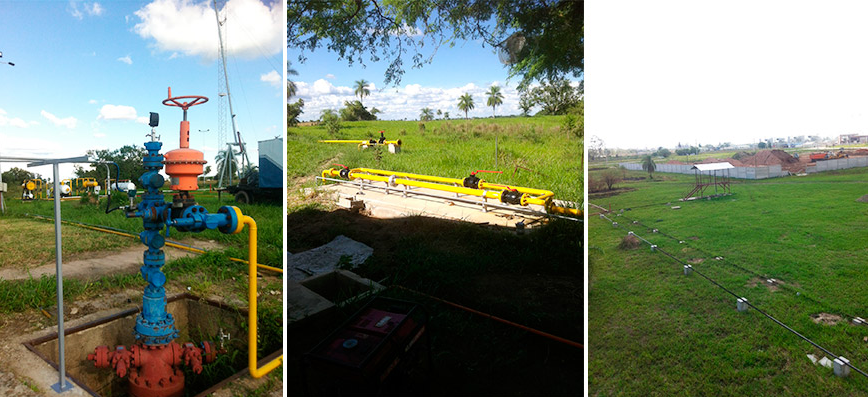
In this framework, reported by NoticiasVE, a pilot test that began in February 2025 and was carried out in a gas field made it possible to verify that there are technical and geographical conditions to mine Bitcoin with cheap and constant energy in Bolivia.
This was explained by Diego Monroy Marinkovic, a specialist in energy and finance, who was interviewed by NoticiasVE.
The expert provided details of that project, which was presented to the Bolivian Fiscal Petroleum Yacimientos (YPFB) agency.
The project was presented to YPFB as part of the annual Investment Plan proposed to the Corporation… Progress was made with a pilot test, interconnecting flare gas to a conditioning system and a 65 kW Capstone microturbine, which generated electricity for an array of Bitcoin miners that came into operation.
Diego Monroy Marinkovic, energy and finance specialist.
The objective was limited from the beginning. «This pilot allowed us to demonstrate the technical and financial viability of the concept»he explained, although he clarified that «it was a small-scale operation.»
Flare gas (also called vent gas or flare gas) is natural gas that is released as byproduct of oil extraction and that, due to the lack of infrastructure to transport or process it, it is usually burned in torches.
That process does not generate economic value and produces emissions, but Bitcoin mining offers an alternative: convert that wasted gas into electricity on-site to power ASIC equipment.
Thus, an energy source that would otherwise be lost is monetized.
In the Bolivian case, the project test was carried out «in a gas well in Warnes, 30 minutes from Santa Cruz, with an approximate production of 1 million cubic feet per day.»
Geothermal energy: the energy base with the greatest projection for Bitcoin mining
For Diego Monroy, Bolivia’s main energy potential to sustain Bitcoin mining on an industrial scale is not in intermittent sources, but in those capable of guaranteeing continuous generation.
From this approach, the specialist rules out solar and wind energy as central pillars of this type of projects.
«Solar and wind energy present important limitations for this type of projects due to their intermittency,» he explained.
In particular, he noted that «in the case of solar energy, the need for batteries to guarantee 24/7 supply considerably increases investment, reducing profitability.»
In contrast, Monroy identified geothermal energy as the alternative with the best structural conditions.
An alternative with greater potential is geothermal energy, since it allows continuous generation and, if costs below USD 30 / MWh are achieved, it could be highly competitive. Bolivia, as an Andean country, has a high geothermal potential that has not yet been exploited.
Diego Monroy Marinkovic, energy and finance specialist.
This potential, he clarified, also «demands deeper feasibility studies,» which places geothermal energy as a technically viable option for the medium and long term.
Monroy also highlighted the potential of hydroelectric energy in Bolivia, although he qualified by suggesting avoiding a single energy source.
The current impediment to Bitcoin mining in Bolivia is regulation
From that Bitcoin mining pilot project in Bolivia, growth scenarios were drawn up. According to Monroy:
The projection contemplates an installed capacity of 90 kW in the Warnes field and, based on this proof of concept, the possibility of replicating the model in larger fields, such as Montecristo, where a mining operation of between 1.5 and 2 MW could be developed, taking advantage of the flare gas that is currently wasted.
Diego Monroy Marinkovic, energy and finance specialist.
Likewise, “the investment plan, with all the engineering and financial projections, was presented in November,” said Monroy. However, the project did not advance. «YPFB did not approve the project due to regulatory limitations»he explained.
Also, the specialist explained that the contracts signed in 2006 «restrict the operators exclusively to the production of hydrocarbons, without allowing industrialization activities or generation of added valueeven when it comes to flare gas.
This restriction keeps the initiative on pause, according to Diego Monroy:
For this reason, the project is temporarily inactive, waiting for the regulatory framework to be updated and the regulatory green light to be granted that allows its execution without affecting the operation contract.
Diego Monroy Marinkovic, energy and finance specialist.
Despite the situation, Monroy maintained that «there is an expectation that, under the new administration, current regulatory obstacles will be eliminated and private investment will be encouraged.»
Finally, he raised a possible state role. «I consider the idea that the State can build a strategic reserve of Bitcoin to be very valid.» He added that it could be used as «financial collateral, value protection mechanism and long-term investment tool.»