
-
For the exchange manager, “Bitcoin is the basis of 24/7 commerce.”
-
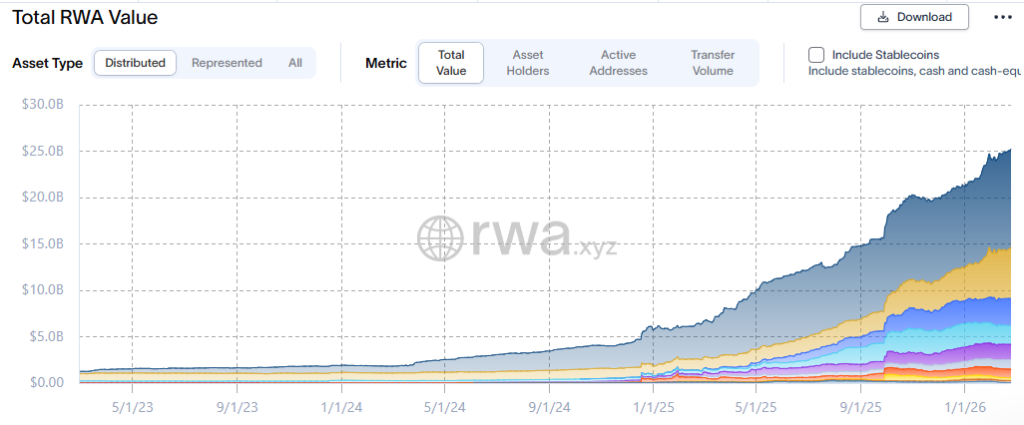
The real world assets (RWA) market grew more than 440% in the last 14 months.
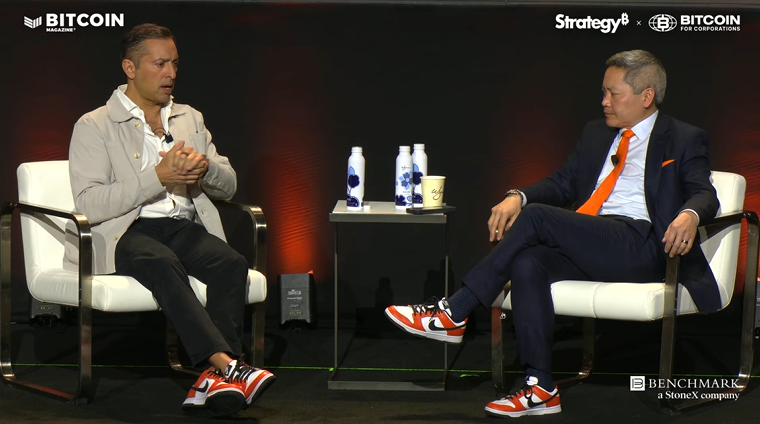
Brett Tejpaul, co-CEO of Coinbase Institutional, stated on February 25 at the Bitcoin for Corporations 2026 event that the tokenization of assets could mark the end of the traditional scheme of financial markets that open and close every day.
During his conversation with Phong Lee, president and CEO of Strategy, Tejpaul noted that blockchain infrastructure is driving a transformation where the trading of tokenized real-world assets (RWA) will operate globally and uninterrupted, 24 hours a day, 7 days a week.
For the exchange manager, this transformation “is already happening. “We are all moving towards 24/7 trading.”
«My friends at TradFi ask me: ‘Is this really true? How am I going to manage my work week?’” said the executive, alluding to the alleged concern generated in traditional finance by the possibility of eliminating trading hours.
In this scheme, public cryptocurrency networks function as a technological base that does not distinguish between business days and weekends or holidays. In addition, these systems expand investment channels: fractional assets, faster settlement and lower operational friction.
According to the vision of the Coinbase manager, «Bitcoin founded 24/7 commerce. For Tejpaul, once the technology demonstrates operational advantages, “there is no turning back,” referring to the progressive adoption of models based on cryptocurrency networks.
Tejpaul also suggested that tokenization could expand access to assets that today are restricted to large assets.
He highlighted use cases such as a user being able to acquire small fractions of private companies or assets that today are reserved for venture capital investors.
At this juncture, as NoticiasVE explained, last December the Coinbase exchange presented Coinbase Tokenize, an institutional tool aimed at real-world asset management.
According to its website, this platform is under development and without a specific launch date. It will allow companies ‘tokenize’ their own shares and other financial instruments with the aim of enabling continuous trading in environments based on blockchain technology.
Tokenized assets: an expanding market
A real-world asset or RWA refers to the physical or legal asset that exists off-chain (such as a company share or real estate), while the tokenized asset is its digital representation through smart contracts on cryptoasset networks.
The transformation indicated by the co-CEO of Coinbase Institutional finds support in the growing interest in RWA and adoption of these assets which, as NoticiasVE reported, is growing rapidly.
In December 2024 the total market value of RWA was around USD 4.6 billion, while currently The sector exceeds USD 25,000 million, according to data from the app.RWA website.
That jump implies an approximate growth of 443% in just over a year.
In addition to Coinbase, other entities work or already offer services related to tokenized assets.
For example, the financial platform Robinhood develops a network specialized in tokenized real-world assets. On February 10, the version was launched testnet of Robinhood Chain, a second layer (L2) network of Ethereum.
For its part, Ondo Finance, a leading decentralized finance (DeFi) protocol in tokenization of real-world assets, offers bonds and other tokenized instruments on chains such as Ethereum, Solana and BNB Chain, among others.
Likewise, other platforms such as xStocks enable the purchase and sale of tokenized shares of companies such as Google, Amazon and Apple, among others.
While tokenization still faces regulatory and integration challenges with the traditional financial system, the accelerated growth of RWAs and the pressure to operate without schedules suggest that the discussion is no longer theoretical.