
In recent months, aviation security in Europe has entered a critical stage due to the increase in unauthorized drone incursions that threaten the stability and normal functioning of key infrastructures.
According to Reuters information, Germany wants to authorize police forces to shoot down drones using various methods when they represent a serious danger to public safety.
This measure comes in a context of growing concern regarding unconventional air attacks attributed mainly to groups linked to Moscow, according to official statements from Berlin.
The approval of this law introduces the possibility of using firearms, laser systems or jamming drone signals, both on land, in the air or water, as long as there are no viable alternatives to neutralize the threat.
The recent episodes of disruptions at the main German airports, such as Munich, where dozens of flights had to be canceled or diverted, affecting thousands of passengers, have been a trigger.
Official data reported an increase to 172 incidents with drones recorded between January and September 2025, compared to 129 in the same period of the previous year, evidencing a notable increase in irregular aerial operations.
The German Chancellor Friedrich Merz noted that authorities assume that most of these flights are linked to Russian actionsalthough he highlighted that no armed drones have been detected, rather they are reconnaissance and surveillance missions. This phenomenon is considered a sophisticated form of hybrid warfare, which uses unconventional technologies to destabilize and generate uncertainty.
Europe prepares against the threat of Russian drones
Beyond Germany, other countries in the European bloc, including Poland, Romania, Norway and Denmark, have experienced similar incidents, even leading to temporary bans on civil drone flights in some cases.
NATO has responded with the launch of the program called ‘Eastern Sentinel’, aimed at strengthening air defense on the Alliance’s eastern flank, seeking to cover gaps against these new threats.
In response to the complexity of the challenge, the German army has advanced in the implementation of technologies that allow drones to be neutralized without resorting to the use of traditional weapons. In military exercises held in Hamburg at the end of 2024, techniques were demonstrated such as the deployment of larger drones that capture adversary devices with nets and the use of ground robots to detect possible explosive charges.
Likewise, the creation in Germany of a national center specialized in defense against drones facilitates coordination between federal and regional authoritiesseeking to maximize the effectiveness of operations and respond more quickly. This initiative is part of a broader effort to establish common protocols for the protection of critical infrastructure and airspace.
The European debate on an integrated anti-drone shield
Depositphotos
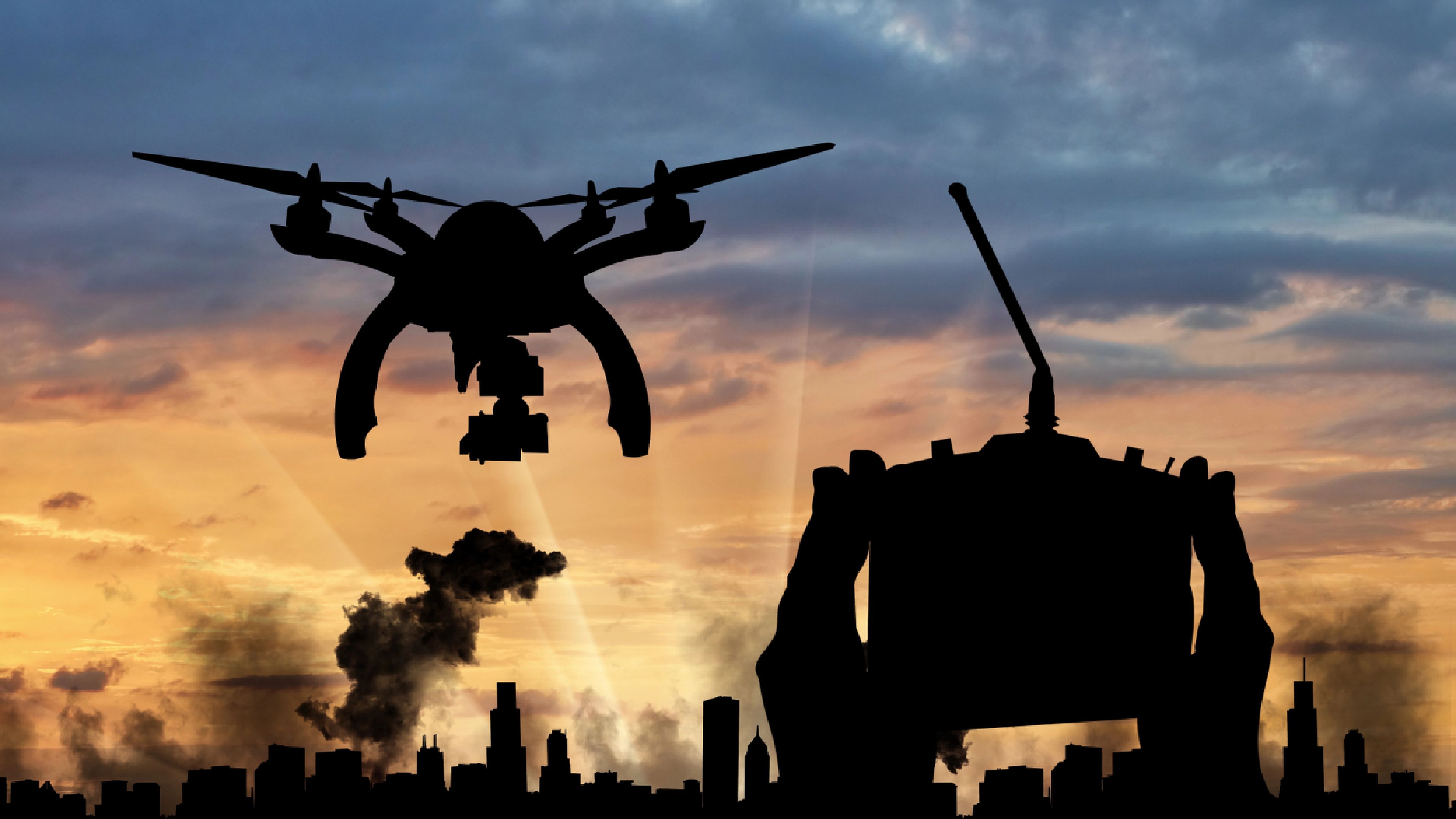
In Brussels, they are advancing in the construction of an ‘aerial wall’ or integrated defense network against drones, made up of detection, communication and neutralization systems distributed in the member countries of the European Union.
The proposal, which is part of the ‘Eastern Sentry’ project, has the support especially of Eastern European nations, although it faces questions about its technical feasibility, cost and the harmonization of national legislation.
The President of the European Commission, Ursula von der Leyen, warned about the significant increase in unidentified drones in European airspace, stating that it is a coordinated strategy to destabilize the European Union, question its unity and weaken support for Ukraine. Likewise, he highlighted the need for a comprehensive response that includes not only physical defense, but also specialized software, equipment to counter cyber attacks and information campaigns for the population.
Besides, Von der Leyen proposed that the anti-drone shield have 360-degree coverage, extending to the protection of the European southern flank and addressing complementary threats such as natural disasters, irregular migration and organized crime. This vision finds explicit support from countries such as Spain, Italy and Greece, which agree on the importance of protecting both airspace and internal security.
Get to know how we work in NoticiasVE.
Tags: drones