
José Luis Cava raises two main questions: why gold is falling sharply despite the widespread discourse that inflation will skyrocket, and why Chinese citizens are buying physical gold en masse.
To introduce his argument, Cava uses the statements of Olivier Blanchard, who warns of a possible scenario with oil at levels of “150–200”as well as the uncertainty recognized by Jerome Powell with his repeated “we don’t know”, and the alarmist tone of The Economist. From there, he maintains that the market is dominated by fear: fund managers have bought put options “at a historically high rate” and individual investors show high pessimism, with 50% being bearish.
However, from the theory of contrary opinion, he states that when the consensus is so negative and the S&P 500 is at the 200-session average, the market is most likely to rebound, even going so far as to suggest that “we have seen the minimums or we are about to see them”. He reinforces this idea by pointing out that the VIX has not broken through key levels, which contradicts the panic narrative. As for oil, despite extreme forecasts, both Brent and WTI show an upward but controlled trend, with no signs of loss of control.
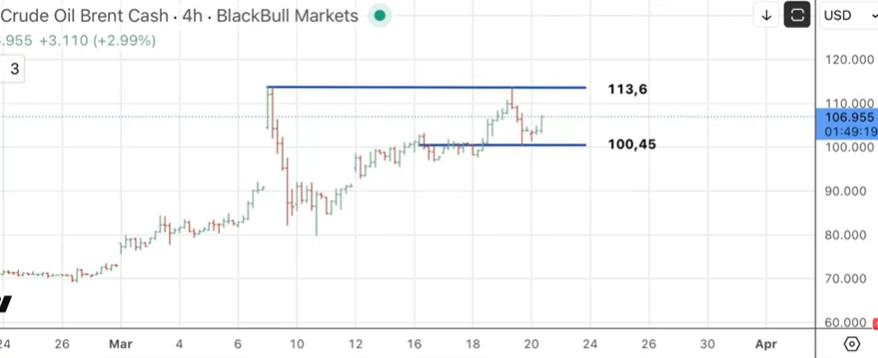
Regarding the fall in gold, he explains that it is due to technical factors: on the one hand, the forced closure of short positions in oil that forces gold to be sold to cover losses, and on the other, the sale of gold by Gulf countries to obtain liquidity.
Finally, he interprets the strong demand in China as a loss of confidence in its financial and real estate system, which pushes citizens to take refuge in gold. He concludes that, although the market discounts temporary inflationary pressures, the background remains one of monetary degradation, which in the long term favors gold.