
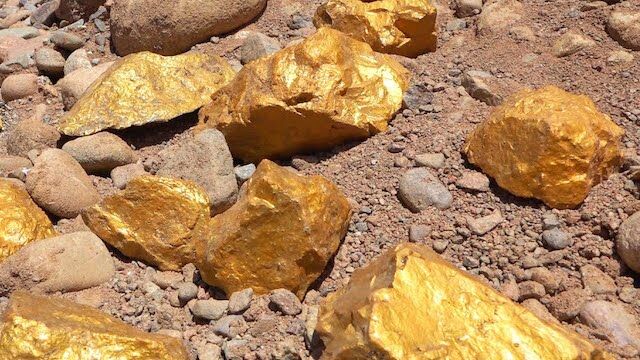
The estimated volume represents about 32 million ounces of gold, with a value exceeding 80 billion dollars at recent prices. However, turn that potential value into real production It requires decades of work, planning, engineering and huge financial resources.
Between the geological promise and the technical challenges
One of the elements that has generated more enthusiasm is the law of the site: the initial reports suggest 138 grams per ton, an impressive figure if compared to many modern mines that They operate with profit margins from 1 to 4 grams per ton. However, these types of figures usually reflect specific veins of high concentration, and not necessarily the global average of the mineral body.
The real field performance will depend on multiple studies that will determine the economic viability of extracting gold in safe and profitable conditions. The deposit is at a depth of 2,000 meters, which makes the project a high complexity mining operation. At these levels, rock pressure, high temperatures, the need for efficient ventilation and safety demands significantly increase the cost of any operation.
Phase development and exploitation strategies
In case of reaching production, the Hunan site will probably advance in stages. Initially the most accessible sectors and higher laws will be prioritized to maximize cash flow in the early stages. As infrastructure is built such as wells, cooling systems and processing plantsthe operation could expand towards other areas of the deposit.
The reports mention up to 40 high quality veins, which offers flexibility for mines engineers when designing a progressive extraction strategy. However, it also implies greater complexity in the programming of production, in geotechnical support and in the management of work fronts.
On the comparative plane, the finding does not exceed giants such as Muruntau in Uzbekistan, the Witwatersrand basin in South Africa or the famous Carlin Trend de Nevada. Even so, it places the new Chinese project in the League of the great discoveries of the 21st century.
What is its economic and geopolitical impact?
Beyond the technical, this new site reinforces a clear tendency: China continues to consolidate as a power in gold production. In 2023, he already led world extraction with about 370 tons. The discovery in Hunan strengthens its autonomy in terms of supply, which is key for both its national reserves and its internal demand in jewelry and investment.
Geopolitics also comes into play. By diversifying its value reserves and reducing its exposure to the dollar, Beijing gains greater independence in uncertain global economic scenarios. If the new project manages to develop efficiently, it could change the balance between global supply sources and reduce the need to promote more expensive initiatives in other regions.
Reality in terms of operational and sustainability
Not everything that shines is gold without consequences. A hard rock mine at that depth requires colossal energy consumption and raises significant environmental challenges. From tailings storage to water treatment and the management of the use of chemical substances such as cyanide, the project must meet strict demands to avoid irreversible ecological impacts.
There are also relevant labor considerations. When the investment accelerates faster than institutional supervision, working conditions can deteriorate. A responsible mining policy would require concrete measures such as environmental recovery bondsfiltered tailings technology and transparency in the use of water and chemicals. Is China for work?
For now, the discovery has a limited effect on the price of gold. Markets tend to react more to factors such as interest rates, real yields or geopolitical tensions.