
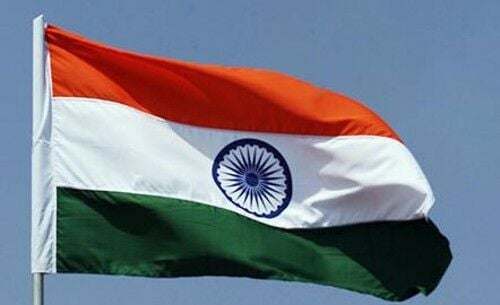
This move reinforces the perception of a double strategy on the part of New Delhi: benefit economically from the geopolitical contextwhile preserving an appearance of neutrality towards its Western partners.
The tender issued by the IOC confirms that the country seeks to guarantee the supply of crude oil in the medium term, avoiding interruptions in the energy chain. However, the document specifies that suppliers must certify that ESPO and Sokol grades from the Far East do not come from producers or terminals under sanctions in the United States, the European Union, the United Kingdom or India itself.
The accuracy of the text evidences the care with which the company attempts to maintain an image of compliancewithout giving up taking advantage of the opportunity that discounted Russian oil represents.
A balance between diplomacy and energy interests
The international context in which this operation takes place is complex. Since the beginning of the conflict in Ukraine, India has defended an ambiguous position: it has not openly condemned Russia, but it has not broken ties with the West either..
This diplomatic balance has allowed it to maintain fluid relations with both blocks, ensuring its access to diverse energy sources and key technologies.
The IOC’s decision to search for Russian crude outside the sanctioned framework is interpreted as an attempt to protect its economic interests without openly defying international restrictions.
According to industry sources, The refinery had recently acquired five shipments of Russian oil from non-sanctioned entitieswith arrival scheduled for December 2025.
In total, it is estimated that he has purchased about 3.5 million barrels of ESPO crude oilequivalent to prices similar to Dubai quotes, destined for the port of Paradip, in the east of the country.
Impact of sanctions and market readjustment
The sanctions imposed by the United States on Rosneft y I locked itthe two largest Russian producers and exporters, have altered the dynamics of global oil trade.
The Indian refineries, which until were recently preferential customers of discounted Russian crude oil, they have been forced to readjust their purchases. The US move sparked a race to find alternative suppliers, both inside and outside Russia, through unsanctioned intermediaries.
This readjustment not only affects India, but also to the East Asian and Middle Eastern marketswhere the demand for substitute barrels has increased prices.
The IOC, aware of this pressure, seeks to secure its supply to avoid future tensions. At the same time, it has shown interest in acquiring 24 million barrels of oil from the Americas during the first quarter of 2026, an attempt to compensate for the loss of Russian volumes.
A pragmatic strategy with political implications
The Indian government has insisted that it is fully complying with international sanctions, but its energy policy continues to prioritize security of supply over political considerations.
This pragmatism, which has been key to the stability of its economy, has generated criticism in western capitalsespecially as the country continues to increase its dependence on Russian crude oil while maintaining cooperation agreements with the United States and the European Union.
Statements by senior Indian officials reflect a narrative focused on national development. According to the official version, oil imports are a strategic necessity and not a political gesture.
However, the insistence on separating both levels is becoming less and less credible as the figures reveal an active participation in the trade of Russian barrels transported through intermediaries or non-transparent routes.