
Among the methods to unlock a mobile phone there are always the traditional numerical or alphanumeric patterns, the first line of security in case of loss or theft of the device.
Although operating systems such as Android and iOS have a limit number of attempts to unlock the terminal with this option, they are not the most secure, even though a 6-digit PIN would have 1 million possible combinations.
If you have a 4-digit numeric PIN, the password becomes much weakereven more so if the chosen one is one of the most typical, such as «1234», «0000» or the year of birth of the user in question.
Another traditional unlocking method is the pattern, with lines drawn around 9 points. Unfortunately, this is the weakest of all in case of mobile phone theft.
This is due to what is known as smudge, which is the trace left by the smudge when the pattern is completed, a characteristic that could lead to data loss. A study from the Universidad del Noroeste (Mexico) was able cheat a pattern on Android in just 5 attempts.
The way to achieve this was very similar to a dictionary attack on traditional passwords: using the most common patterns, such as the letter L, Z and others widely used by users.
It is clear that facial and fingerprint unlocking are the most secure, the so-called biometric identification, although in the era of artificial intelligence new threats have appeared for the security of mobile phones.
Apple and its face unlock are practically invincible
To compile a list of technically safer methods, false positive rates (FAR) and false negative rates (FAR) are often used.
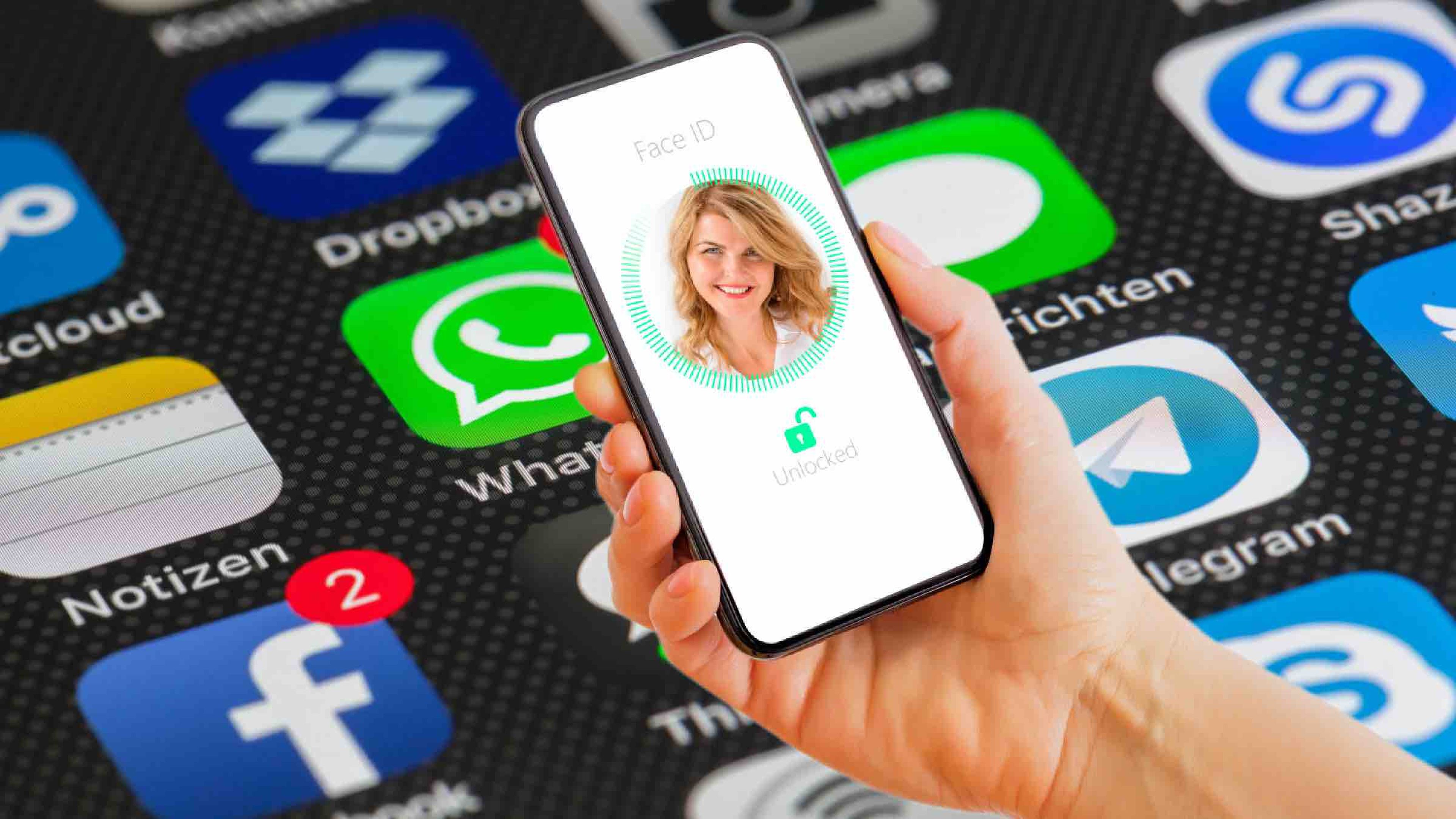
All Apple iOS devices, in this sense, are the most secure in terms of Face ID, the company’s facial unlocking, since according to the data shared by the company, you only accidentally unlock another user in 1 in 1,000,000 cases.
For their part, Android manufacturers also have to meet requirements such as offering a FAR rate of less than 0.002%, although a terminal with this operating system can be unlocked by another user in 1 in every 50,000 cases, far behind iOS.
Depositphotos
Additionally, Apple has what is known as liveness detection, analyzing gaze and other sections, while face unlock on Android is weakeras occurred with false positives when using 3D silicone masks based on photos.
Now, some reports do point to the possibility that videos created with artificial intelligence, deepfakes, can bypass this type of security method, through modifications to a user’s face.
Be that as it may, it is very difficult to circumvent facial unlocking and no cases have been identified on iPhone beyond identical twins or children under 13 years of age whose facial features are not yet developed.
The fingerprint is the safest method, but it is not infallible
Unlocking the phone using your fingerprint also has a limited number of attempts, to avoid possible identity theft.
However, in recent years forms of attack have appeared, such as the well-known BrutePrintwhich researchers from Tencent and Zheijang University (China) discovered, a typology of a brute force attack.
This attack achieved Unlock the attempt limit on Android and HarmonyOS phones –from Huawei– to then test different fingerprints from a kind of dictionary, in a period of between 40 minutes and 14 hours, as shared by Panda Security.

The success of BrutePrint was based on the way of unlocking the mobile with a fingerprint, which does not require a completely exact match, but rather uses a reference threshold. And, although an iPhone was more secure, it also became vulnerable.
In this last case, BrutePrint managed to increase unlock attempts to 15; that is, tripling the number that Apple allows.
In conclusion, the best solution to avoid this type of attacks is to have different complementary security methods, as well as a 6-digit alphanumeric pattern, to increase the number of possible combinations.
Get to know how we work in NoticiasVE.
Tags: Privacy, Cybersecurity