
-
Wuille sees risks in the decreasing subsidy and institutional concentration of BTC.
-
Pieter Wuille implemented cryptographic improvements in signatures and developed deterministic (HD) wallets.
“I do not want to get involved in future consensus changes in Bitcoin.” This was the phrase with which Pieter Wuille, former maintainer of Bitcoin Core and lead developer of SegWit (Segregated Witness) and Taproot, stated that it will no longer actively participate in Bitcoin consensus changes.
The consensus defines under which rules Bitcoin operates and modifying it involves altering the technical conditions of the network. In this framework, Wuille specified what his participation will be from now on:
If there is a strong push for a particular change and there is code, I will review it, but I don’t want to be the person pushing it anymore… I feel like I’ve already had more than my fair share of influence there.
Pieter Wuille, bitcoin developer.
The phrase, expressed in an interview broadcast on February 11, suggests a partial withdrawal of the technical decision center, not an exit from development. In a network where rules are coordinated through code review and social acceptance, their reduced participation in consensus changes does not eliminate their historical influence, but it does. reduces its direct role in promoting new rules.
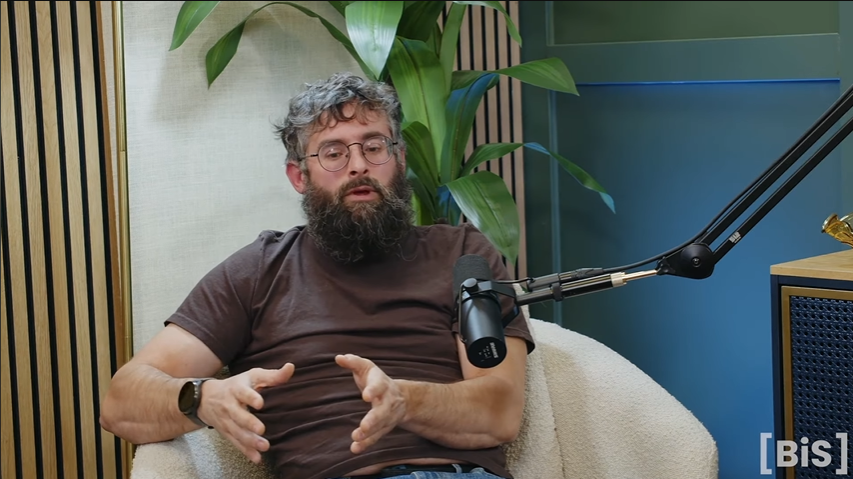
Pieter Wuille is one of the most influential developers in the technical history of Bitcoin.
In addition to the SegWit and Taproot updates, Wuille was involved in the development of the crypto library libsecp256k1 what protects public and private keys; introduced early key import and export features in the Bitcoin Core client and contributed to the design of hierarchical deterministic (HD) wallets, which allow multiple addresses to be generated from a single seed.
Wuille’s announcement comes weeks after Gloria Zhao resigned as Core maintainer and amid allegations made by mathematician and web developer Melvin Carvalho, who accused Core collaborators of manipulating the debate on the elimination of the limit of opcode OP_RETURN, as reported by NoticiasVE.
The risks Wuille sees in Bitcoin
Asked about the current challenges in Bitcoin, Wuille responded: “There are many.”
In the short term he said he is «concerned about aspects of centralization that make more «difficult for new miners to compete»as large farms have “scale advantages” and access to cheaper power and cooling.
He also warned about a potential risk, referring to «third-party mempools», where «a single company or entity» can concentrate transactions and negotiate with large miners.
In terms of custody, he warned about the institutional bitcoin concentration (BTC): “all this massive purchase of bitcoins by BlackRock is a risk”; If “such a large portion of the currency” remains in few hands, “systemic risk or political influence” could arise.
He clarified that the problem he sees in this concentration «is not about killing Bitcoin, but about turn it into something that loses interesting properties».
In the medium and long term, Wuille pointed to the “decreasing subsidy”that is, to the programmed reduction of the emission, through halving. Currently, the subsidy per block is 3,125 BTC, which today makes up almost the entire mining reward.
«In a world without subsidies, the security of the system will be directly proportional to the commissions that people are willing to pay,» he stated, alluding to the fact that the rates should replace that subsidy. If the commissions are not enough to sustain profitability, the computing power (hashrate) that protects the network could decrease, straining the economic model that guarantees its security.