
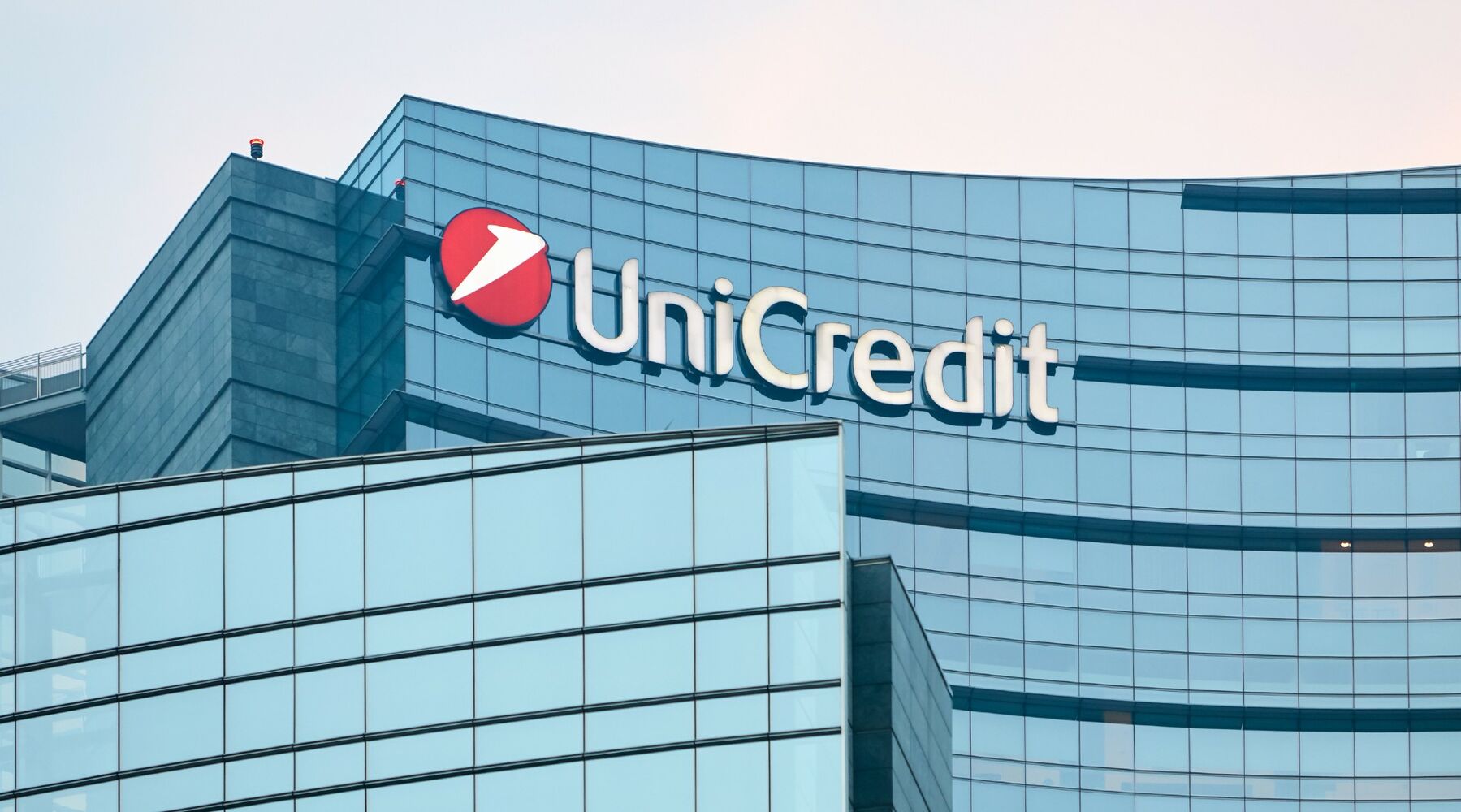
In this context, Unicredit has decided to highlight the Polonia Among the markets with greater potential to boost their growth strategy through mergers and acquisitions.
The interest of the Milanés Bank reflects not only the opportunities of profitability, but also the increasingly relevant role that Warsaw plays as a business center in the region.
Unicredit outlines your road map
Andrea Orcel, CEO of Unicredit since 2021, has put Italy, Germany and Poland on radar as countries where a corporate operation can provide significant change to bank profitability. During a conference organized by Bofa Securities, He pointed out that an integration into these territories would generate a remarkable impact on the history of the entity and in their position in European markets.
Although Italy and Germany currently represent the main pillars of Unicredit, The interest in Poland opens a new chapter. The entity left the country in 2019 after completing the sale of Bank Pekao, but now analyzes the possibility of returning with a renewed strategy.
Poland, a booming economic environment
Poland’s attractiveness as a destination for mergers and acquisitions is no accident. The country has maintained an economic growth higher than the average of the European Union during the last decade, even resisting with greater strength than other countries to global financial turbulence. According to Eurostat data, Polish GDP recorded an annual growth of 5.3 % in 2022driven by internal consumption and investment in infrastructure.
Besides, Its banking sector presents a good capitalization and low delinquency indiceswhich generates confidence among international investors. This panorama makes Poland an ideal environment for Unicredit to value a strategic operation that allows you to recover presence in a market in full expansion.
The challenge of competing
Despite the opportunities, Orcel acknowledged that Poland represents a major challenge compared to Italy or Germany, since Unicredit currently does not have direct operations in the country. This means that any advance would have more limited synergies and would require additional effort to consolidate its position against already established competitors.
Commerzbank, owner of Mbank in Poland, and other local entities dominate part of the sector, which forces Unicredit to design a careful strategy. However, the possibility of acquiring an existing institution or associated with national actors is emerging as a feasible way to accelerate its entry.
European and capital strategy available
The interest in Poland is part of Unicredit’s vision of consolidating in its thirteen key markets. After the failed attempt to acquire BPM Banco in Italy and the limited opening of the German government to an agreement with Commerzbank, the entity seeks alternatives to deploy its surplus capital.
In recent months, Unicredit has invested between 6,750 and 7.5 billion euros in participations and in the total acquisition of its life insurance business. However, the benefits obtained have raised excess capital to a range of 10,000 to 11,500 million euros. This margin gives ORCe flexibility to analyze fusion opportunities and acquisitions in markets such as Poland, where the bet can be translated into sustainable returns.
A key piece on the regional board
The renewed interest in Poland not only reflects Unicredit’s appetite to diversify, but also the strategic importance of the country in central Europe. Warsaw has become a financial and logistic bridge between the west of the continent and the Eastern countrieswhich increases its appeal for banking entities with cross -border ambitions.
With a population of more than 37 million inhabitants and an expanding middle class, Poland offers a large market for financial services. In this scenario, the return of Unicredit would mark a decisive step in its objective of positioning itself as a reference in mergers and acquisitions in the region.