
-
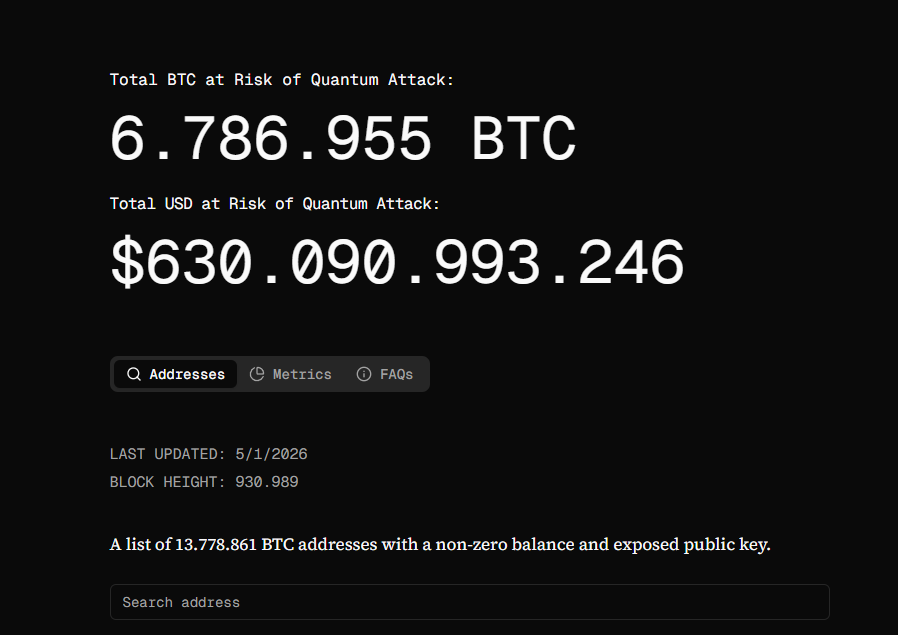
It is estimated that there are more than 6.8 million BTC that could be at quantum risk.
-
The firm believes that Bitcoin could easily be protected against quantum computing.
The digital asset ecosystem is facing a technical debate over the advancement of quantum computing and its risks for Bitcoin. In this sense, the investment firm Franklin Templeton points out that what is commonly considered an existential threat could actually be an opportunity for improvement for the industry.
In a recent report titled “Digital Asset Security in the Quantum Era” (Security of digital assets in the quantum era), the firm analyzes the impact of this technology on cryptocurrency networks.
The conclusion is clear: far from representing the end of current cryptography, the quantum challenge is a catalyst for a strategic modernization of global infrastructure.
The report identifies that the vulnerability does not lie in the structure of the blockchain itself, but in the digital signature algorithms. At the moment, Bitcoin uses the Elliptic Curve Digital Signature Algorithm (ECDSA).
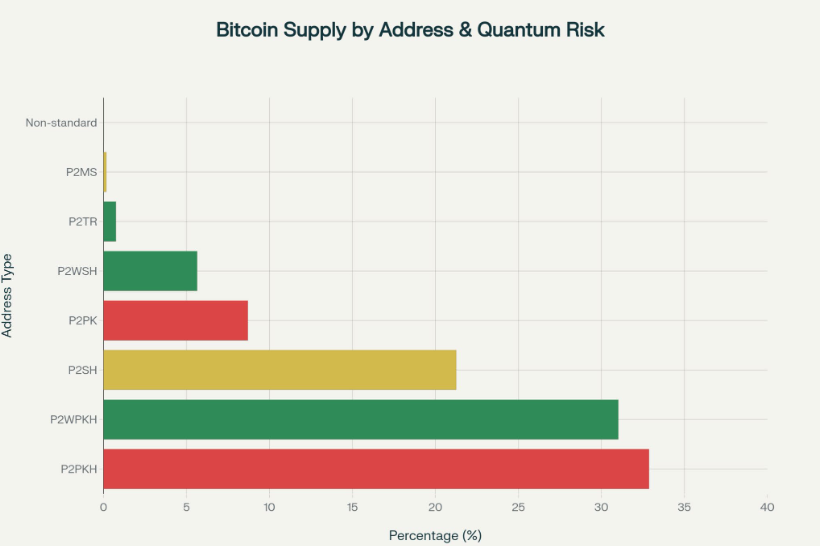
A quantum computer with enough power, running the Shor’s algorithmyou could perform the reverse calculation to derive a private key from a visible public key. This targets addresses that have already revealed their public key on the network, such as those that have been reused or transactions that remain in the mempool.
As previously reported in this medium, approximately a third of all BTC in circulation could be at quantum risk under this scenario; we talk about almost 6.8 million bitcoins hosted in old or exposed address formats.
Lessons from history: SegWit and Taproot
The report notes that protocols must be updated to achieve post-quantum protection (PQC). While it is difficult to define when “Q Day” will occur, response times can be estimated using historical Bitcoin updates as an example.
Franklin Templeton highlights that improvements such as SegWit (2017) y Taproot (2021) They required a period of between three and four years from their initial proposal to their final activation. This cadence, often criticized for its slowness, is for the firm a guarantee of consensus. The quantum transition will force the network to execute a similar process that includes:
- Software updates: introduction of new signature schemes resistant to quantum attacks.
- Key rotation: Users will need to proactively migrate their funds to new secure address formats.
- Consensus governance: a technical debate process to ensure that migration does not compromise decentralization.
“Crypto-Agility” as an institutional standard
For Franklin Templeton, the quantum threat will function as a quality filter. Those infrastructures that demonstrate that they are capable of rotating certificates and keys without interruptions—the so-called crypto-agility— will be the ones that capture institutional capital in the future.
The report suggests that regulators and standardization bodies will begin to require quantum readiness as a due diligence criterion. This implies that custodians and developers must no longer only deal with security against classical attacks, but also maintain infrastructures ready to implement post-quantum cryptography.
In conclusion, according to the report, the quantum era will not wipe Bitcoin off the map. On the contrary, the networks that lead this technical transition will convert a systemic vulnerability into a competitive advantage, consolidating themselves as pillars of a modern and truly resilient financial system.