
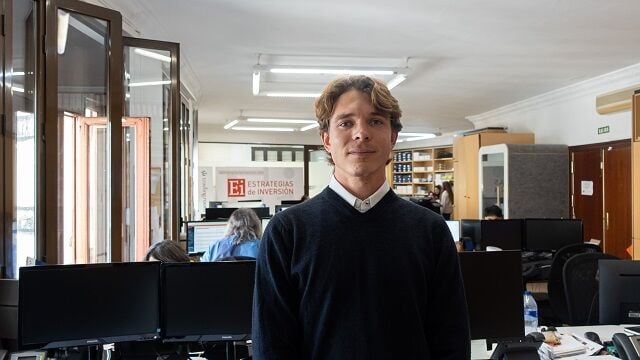
How can the current economic cycle, with persistent inflation, affect the different crypto segments such as DeFi, NFT, Layer 1 or Layer 2?
I think inflation is the main narrative for Bitcoin to continue rising. Bitcoin is understood as a store of value, and when inflation remains high, investors seek to protect themselves against loss of purchasing power. This explains the entry of many young investors who see Bitcoin, and to a lesser extent other assets, as an alternative to traditional stock portfolios, which are finding it increasingly difficult to beat the market.
From there, Bitcoin acts as a safe haven asset, while Ethereum and other layers 1 and 2 represent the infrastructure on which DeFi protocols or NFT projects are built. The latter are more speculative and depend more on market liquidity than on inflation itself.
What macroeconomic signals do you consider most decisive in anticipating trend changes in cryptocurrencies?
Without a doubt, global liquidity. The crypto market is extremely sensitive to liquidity. Right now we are in an expansionary environment: the United States is pursuing accommodative monetary policies, China is injecting capital, and central banks are maintaining stimulus. That liquidity translates into momentum for crypto assets.
In a scenario of greater international regulation, what advantages does a European exchange like Bitvavo have over global competitors?
Our great advantage is to operate directly against the euro. This eliminates frictions that do exist on international platforms, where operations usually involve stablecoins or dollars. In addition, we are adapted to the European user: local payment methods, simple interfaces and regulation under MiCA. This gives us security, closeness and trust compared to other exchanges that distribute their liquidity between different jurisdictions.
What impact are Bitcoin and Ethereum ETFs having?
They have marked a before and after. Many institutional investors who could not enter crypto due to regulatory issues now do so through ETFs. And they have also attracted more traditional investors – the so-called boomers – who saw the crypto market as too risky. Investing through vehicles such as BlackRock or Fidelity generates confidence. Additionally, ETFs have driven records of capital inflows and greater liquidity.

What role will stablecoins play in an environment of high rates and possible financial crises?
Stablecoins are more important than many believe: they function as global electronic money. They allow capital to be moved between countries in seconds and with much lower costs than the traditional banking system. Furthermore, they are mostly backed by short-term US public debt, making the US a direct beneficiary of their issuance: it needs buyers to refinance its debt, and stablecoin issuers are already key players. The future of international finance depends, in large part, on them.
What metrics do you use at Bitvavo to measure risk in crypto?
We monitor the liquidity of order books. We operate more than 400 markets 24/7 and it is essential that any user can buy or sell at any time with minimal spreads – typically less than 0.1%. To guarantee this we work with several market makers. In addition, we monitor transactions with tools such as Chainalysis to detect possible funds of illicit origin.
Looking at the short term, what expectations do you have for the next Bitcoin halving?
The halving has lost relevance over time. The mining reward is increasingly lower and now factors such as the entry of institutional capital weigh more. That buying pressure, which analysts see extending into 2026, is the real catalyst. I am optimistic, although there will always be natural corrections after rapid rises due to market leverage.
Let’s move on to the personal: what training do you have and how did you get into the crypto world?
I studied a degree in Economics at the University of Barcelona, spent a year in Maastricht and then completed a master’s degree in Business in Grenoble. Still, my entry into crypto was more self-taught. The academic training helped me in macroeconomics, which is key, because Bitcoin is a macro asset: it is not analyzed as a company, but based on global liquidity.

What skills would you recommend to students who want to enter this sector?
It depends on where you want to focus. If it’s the technical side, learning programming — for example, Solidity on Ethereum — is very valuable. In the legal field, specializing in crypto regulation opens up many outlets. There is also space in business, marketing or compliance. The important thing is to have a solid foundation of how the industry works and apply your knowledge from there.
So, do you think that specific training in blockchain to enter the sector?
Exact. Specific training helps, but is not essential. Experience and knowledge applied from other fields are also valid. In fact, at Bitvavo we are hiring very diverse profiles in various departments.
What importance do you give to legal and regulatory knowledge in this sector?
Very much. More and more companies are looking for regulatory experts. The entry into force of MiCA in Europe or regulations such as the Clarity Act in the US will make specialized legal profiles in high demand. It is a field of great professional opportunity.
Finally, what books or resources would you recommend to someone who wants to learn crypto?
Three basic readings: The Bitcoin pattern, to understand the origin and future of this asset; Blockchain for Businesson practical applications of technology; and The debt cycleby Ray Dalio, very relevant to understanding the macro context and the role of stablecoins. In addition, I recommend training with courses on platforms like Coursera or Udemy, and even on YouTube, as long as it is with serious creators who truly educate.