
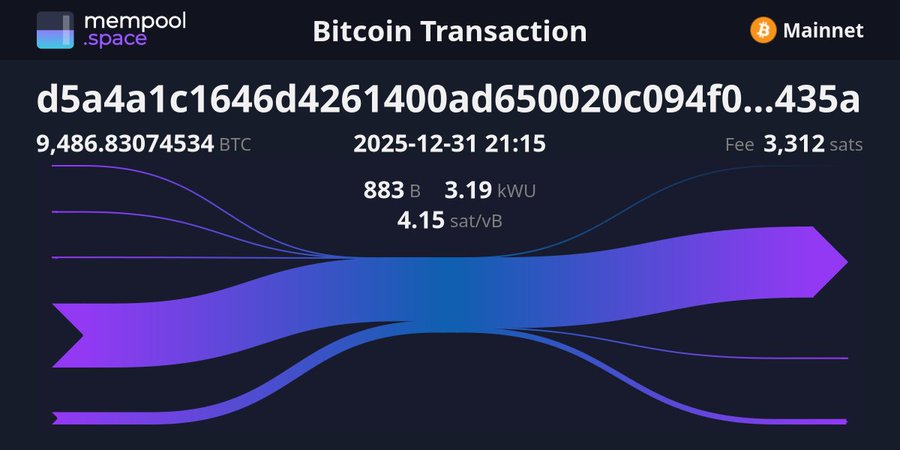
There are purchases that speak louder than any headline: 8,888.8888 BTC entered Tether’s treasury at the end of 2025 for an approximate value between USD 778 and 780 million, reinforcing its position as a strategic player in bitcoin. Behind the figure, there is a sustained strategy that combines intelligent reserves and predictable cash flows that we are going to review in this note.
Tether, as a company, has designed a comprehensive business and operations model to generate predictable cash flows, allowing it increase your bitcoin reserves without depending on external financing and without taking on additional financial risks.
Starting in 2023, Tether allocates up to 15% of its net operating profits to purchasing bitcoin. And although the company does not make public its consolidated net profits in detail, the company’s latest report estimated that its annual profits have far exceeded USD 10 billion until September 2025, which by applying the percentage, this could translate into BTC acquisitions for more than USD 150 million per year, reinforcing its strategic reserves and ensuring a constant flow of accumulation.
“Large Beneficiary” Structure
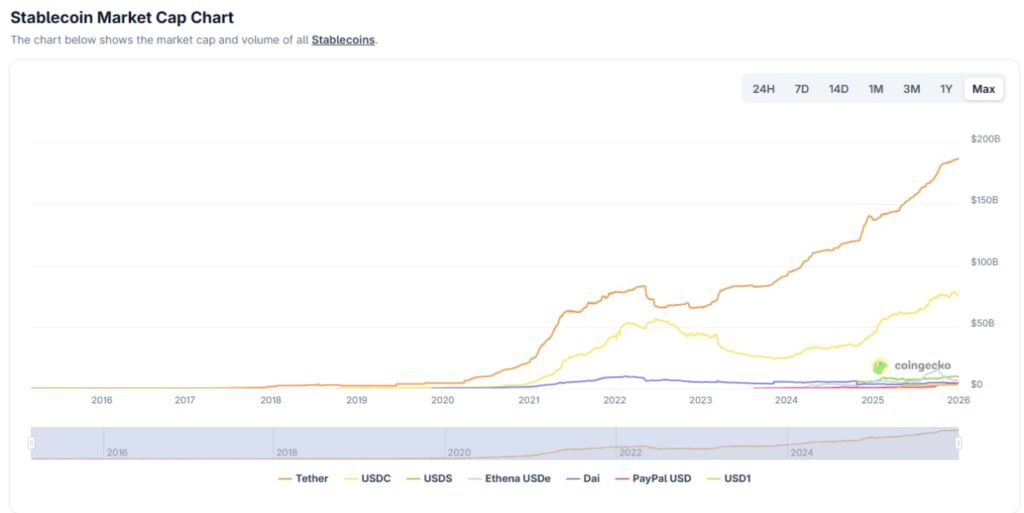
As is publicly known, Tether issues 1:1 backed tokens and maintains corresponding reserves in liquid and relatively low risk assets, primarily short-term US Treasuries, repos and cash equivalents.
In a high interest rate environment, This structure makes Tether a big beneficiary of money returns: Every dollar issued and properly backed not only maintains the parity of USDT, but also generates constant interest, transforming the circulation of the token into a recurring source of operating income.
Unlike a traditional bank, Tether does not pay users interest for holding USDT. This creates a key asymmetry: while users use the stablecoin as a medium of exchange, temporary store of value or liquidity tool, Tether almost completely captures the reserve yield. This differential makes the business a structurally profitable scheme, even without aggressive supply growth. In simple terms, Tether makes money by simply existing as a widely used financial infrastructure.
Regarding the above, the company’s CEO Paolo Ardoino explained in an interview for Bloomberg that this structure allows Tether to capture a profit margin of 99%, making its model highly profitable and predictable, even without depending on the speculative activity of the bitcoin market and with moderate costs that allow it to achieve a greater scope in its annual profits.
Broadly speaking, the company has an income stream that is not dependent on the price of bitcoin, active trading, or speculative market conditions. It is a predictable and recurring operating income, which allows the company to plan capital allocations without resorting to external financing.
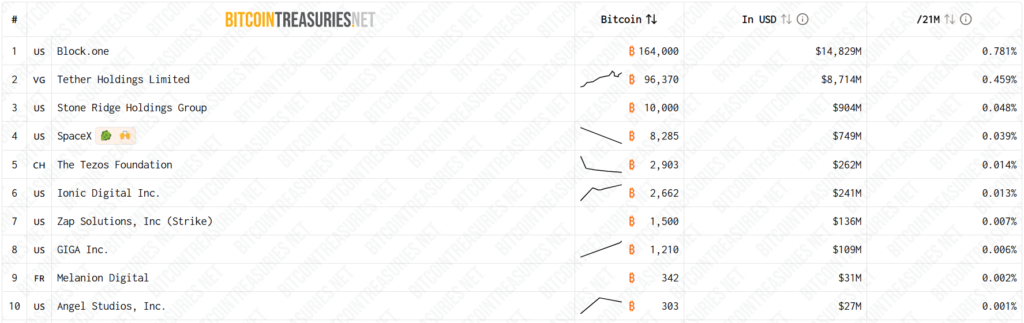
On the other hand, the stablecoin market continues to expand – driven by the dominance of USDT and a more defined US regulatory framework that has reinforced the confidence of investors and institutions, such as the GENIUS law. In this context, Tether has established itself as the second private company with the most bitcoin reserves: At the end of 2025, its BTC reserves exceeded 96,000 bitcoinsvalued at more than USD 8.4 billion, which reinforces its strategic investment capacity within the ecosystem.
Tether goes beyond USDT
Through its strategic arm, Tether Investments, The company has channeled capital into areas such as bitcoin mining, energy infrastructure and technology. It has built an ecosystem that diversifies income and reduces external dependencies. This strategy positions Tether more as a financial holding company than as a simple issuer of stablecoins, capable of reinvesting real profits in strategic assets.
For example, its exposure to bitcoin mining allows Tether to participate directly in the production of the asset that it also accumulates in treasury, closing the cycle between generation, acquisition and custody.
Unlike other companies in the sector, such as Strategy, which resort to debt to grow or accumulate bitcoin, Tether uses its own capital generated by its operation. This allows you to purchase BTC without issuing debt or assuming additional financial obligations, avoiding dilution, interest, and refinancing risks.
In parallel, the company has diversified its exposure to bitcoin through Twenty One Capital, a treasury vehicle backed by Bitfinex and other partners, by transferring significant amounts of BTC to it as part of its asset expansion strategy. This additional avenue of accumulation allows Tether to complement its direct reserves, consolidating a diversified approach that combines immediate liquidity with specialized treasury tools.
Their model is especially resilient: in both bull markets and sideways scenarios, USDT demand and reserve performance continue to generate profits, sustaining your ability to continue accumulating bitcoin in the long term.