With hundreds of billions of dollars invested in the last few years alone, The development of artificial intelligence has occurred at a dizzying pace. And the trend continues. Which companies might be best positioned to benefit from it in the long term?
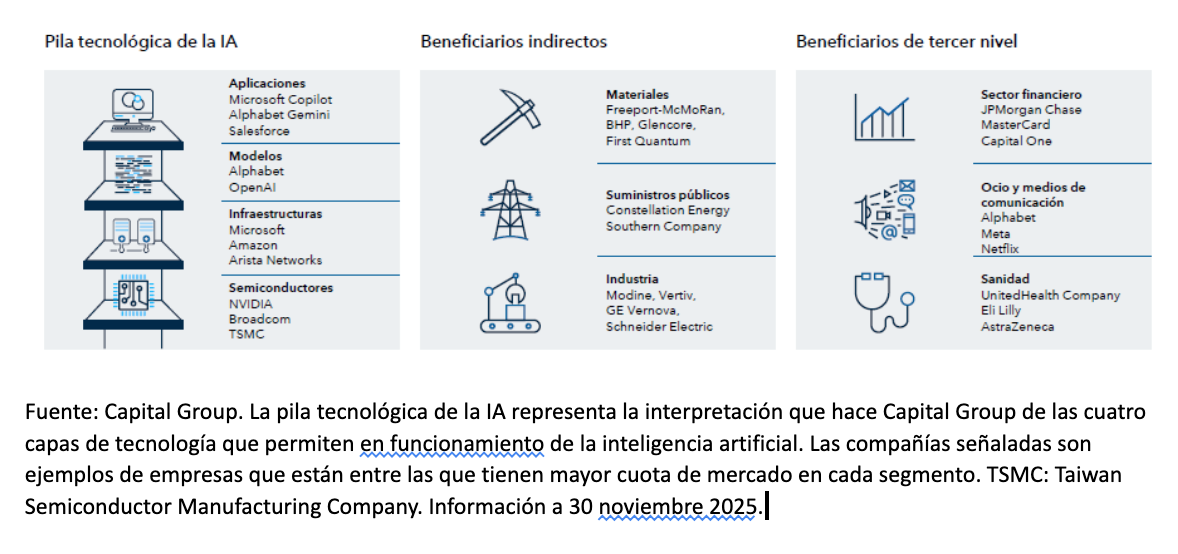
Three distinct areas of investment opportunity in artificial intelligence: The four-layer technology stack that underpins AI systems, companies that provide the infrastructure needed for operations, and organizations that adopt applications to increase productivity.
Microsoft, Alphabet, Meta and other companies have the incentives and resources to continue making large investments in this space, which will increase demand for advanced infrastructure and semiconductors.
Artificial intelligence developers are also looking for alternative energy sources to meet their growing needs. For example, the market for small modular reactors is expected to reach $13.8 billion by 2032, which would favor manufacturers such as Rolls-Royce, GE Vernova and Hitachi.
Companies from sectors as diverse as finance, healthcare and the media have already adopted artificial intelligence solutions in search of competitive advantages. For example, JPMorgan Chase reported $2 billion in savings in May through the use of technology to generate operational efficiencies.
We are still in a very early phase of both the development and implementation of artificial intelligence. I believe that, over the next ten years, artificial intelligence will be integrated into most software and hardware products, and that we will also use all types of robots in our daily lives.