
The rapid development of artificial intelligence is causing unexpected effects on the United States energy system. As the country advances (or so it hopes) in its transition towards cleaner sources, the operational reality of the electrical grid is forcing us to reconsider decisions that seemed definitive.
Fossil fuel plants that had a closure date are extending their useful lives in the face of a demand for electricity that continues to grow.
This shift does not respond only to an ideological change in the Trump era, but to a technical need. The expansion of AI-linked data centers, coupled with increased overall electricity consumption, has strained regional networks.
Ensuring stability, flexibility and continuous supply has become a priority, even if this means delaying the removal of highly polluting infrastructure.
The pressure on the country’s largest electrical grid
The phenomenon is especially visible in the market managed by PJM Interconnection, the largest electric grid operator in the United States. Its coverage area covers thirteen Mid-Atlantic and Midwestern states, plus the District of Columbia, concentrating a key part of the country’s industrial, technological and urban activity. In this environment, the system’s safety margins have been significantly reduced.
Data from business presentations analyzed by Reuters indicate that about 60% of plants that use oil, natural gas or coaland who were scheduled to retire in the short term, have postponed or canceled those plans.
Many of These facilities are known as peak units.designed to come into operation only during times of maximum demand. However, the exceptional has become commonplace.
Data centers and structural energy consumption
The accelerated construction of data centers to support AI modelscloud computing and digital services has changed the nature of electricity consumption. Unlike other industrial uses, These infrastructures require constant, reliable energy in large volumes, with no room for interruptions.. This has led operators to draw on all available capacity.
The situation has forced us to rethink closure schedules that were designed under very different demand assumptions. Today, the grid needs firm power capable of responding quickly, a feature that many fossil plants still offer better than other alternatives.
This technical reality explains why the withdrawal is slowing, despite climate commitments.
A political and economic context favorable to continuity
The Trump Administration has publicly advocated a pragmatic approach based on the use of all available energy sources to sustain economic growth.
In this framework, coal has experienced an unexpected rebound in 2025, driven both by the increase in the price of natural gas and by the need to ensure supply during consumption peaks.
The US Energy Information Administration has indicated that the increase in coal production responds to several combined factors. Among them stand out the delay in the decommissioning of plants, a greater demand for heating during the first months of winter and the volatility of the energy markets.
Nuclear energy returns to the center of the debate
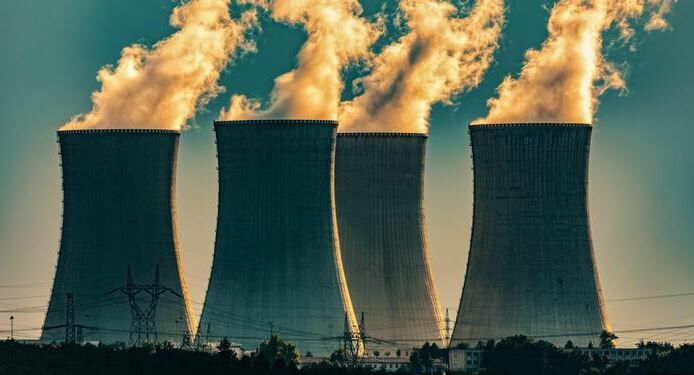
At the same time, the US Government is strengthening other sources capable of providing base energy. The Department of Energy recently granted a $1 billion loan to facilitate the restart of the Three Mile Island Unit 1 reactor, operated by Constellation Energy. The objective is to add stable capacity to the network and support technological development linked to AI.
Nuclear energy thus appears as one of the great beneficiaries of the new context. Its ability to generate electricity continuously makes it a strategic complement both for renewables and for a system that needs to reduce emissions without compromising reliability.
A complex balance between transition and operational reality
The rise of artificial intelligence is accelerating an energy transformation full of contradictions. While investments in renewables and nuclear are reinforced, the United States is forced to keep fossil plants active to avoid systemic risks.