
-
“The debate was constructive, fact-based and solution-oriented,” said the businessman.
-
The two industries had very different approaches in the initial negotiations.
In a meeting held at the White House this Monday, which lasted two hours, representatives of the cryptocurrency sector and traditional banking sat down to discuss the future of the regulation of digital assets in the United States.
The meeting, defined as a technical work session, had as its main objective trying to unblock the debates on the CLARITY law proposal that is currently in Congress and whose main blocking stone is stablecoins.
According to sources close to the process, Donald Trump’s administration would have issued an ultimatum: An agreement on the returns (interest payments) on these assets must be reached before the end of February.
The government’s urgency lies in the need to move forward with the bill which establishes a structure for the market and defines powers between the Securities and Exchange Commission (SEC) and the Commodity Futures Trading Commission (CFTC).
If the conflict over interest payments or rewards associated with digital currencies linked to the dollar is not resolved, the chances of the legislation succeeding during the current fiscal year would be slim.
A technical debate between two opposing industries
Unlike other high-profile meetings, this summit did not have the presence of executive directors or CEOs, but with policy and compliance specialists.
Among the attendees were representatives of companies such as Coinbase, Kraken, Ripple, Circle and Fidelity, who faced delegates from the main banking associations. The American Bankers Association (ABA) and the Bank Policy Institute were included.
Patrick Witt, executive director of the Crypto Council and leader of the meeting, called the meeting “constructive, fact-based and solutions-oriented.” Witt noted that, after months of work, progress has been made on points that previously seemed intractableshowing confidence that the current dispute can be resolved.
However, reports from attendees suggest that initial positions were markedly different. While industry representatives for bitcoin and other digital assets sought to propose specific technical solutions to enable returns, banking spokespeople avoided going into operational details, focusing on the need to “close legal loopholes”.
The stablecoin yield conflict
The core of the friction lies in whether stablecoins will be able to legally offer rewards or interest to their users through companies in the cryptocurrency sector. For these, This functionality is key to promoting mass adoption of digital assets and to compete with the traditional financial system.
On the contrary, traditional banks maintain their reservations, arguing that allowing non-bank entities to offer returns similar to those of a savings account could destabilize the financial system and create unfair competition.
Institutions such as those represented by the ABA insist that allowing cryptocurrency companies to offer incentives for holding digital assets is a “loophole” that must be closed. That entity stated in recent days that stablecoins had to be prevented from «destroying deposits,» as reported by NoticiasVE.
For its part, the digital asset industry maintains that these rewards They are fundamental for the efficiency of the new digital economy.
The geopolitical context and the administration’s position
The pressure to regulate digital currencies not only responds to internal dynamics, but also to a global competition strategy.
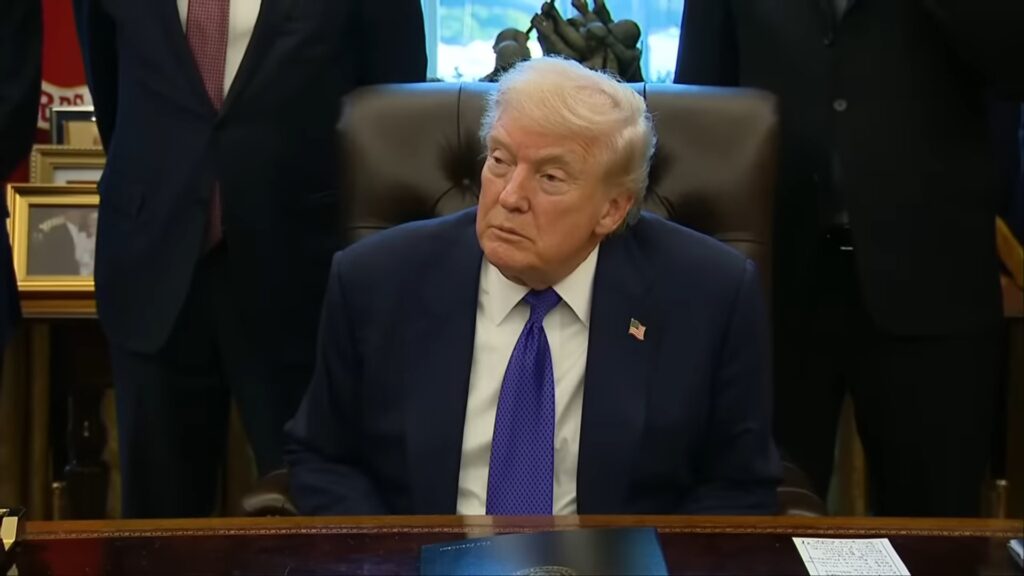
President Donald Trump stated this Monday, hours after the meeting between bankers and cryptocurrency entrepreneurs, that This sector must be led by the United States to prevent nations like China from taking the lead.
«I am a big fan of cryptocurrencies. I am the one who has probably helped cryptocurrencies more than anyone else because I believe in them (…) If we do not adopt digital assets, then China will,” said the president, drawing a parallel with the development of Artificial Intelligence (AI).
For his part, Scott Bessent, who is the Secretary of the Treasury of that country, highlighted that the administration’s intention is to consolidate the United States as the «world capital of digital assets.»
In his opinion, the implementation of regulations such as the GENIUS Law and the CLARITY bill They are part of this effort to provide legal security to the market.
The result of the next meetings, which are expected to be smaller in scale and with greater technical depth, will determine the direction of the industry in the United States.
The resolution of this conflict will not only affect stablecoin issuing companies, but will set a precedent for the integration of Bitcoin technology into the regulated financial system.
Now, if the parties do not reach a consensus before the deadline imposed at the end of February, the legislative landscape for digital assets in 2026 could face a period of prolonged uncertainty, affecting innovation and the country’s competitiveness on the international stage.