
Donald Trump’s nomination of Kevin Warsh to chair the US Federal Reserve (FED), announced on January 30, 2026, opened an intense debate in the bitcoin (BTC) community over whether a central banker with a restrictive history could, paradoxically, benefit the pioneering digital currency.
Warsh, who was governor of the FED between 2006 and 2011, is identified with a «hawk» profile, which means that he is a hard liner, that prioritizes controlling inflation through higher interest rates and an aggressive reduction of the FED’s balance sheet (QT or quantitative tightening, the opposite of quantitative easing).
He has harshly criticized post-2008 quantitative easing and post-2020 inflation management, describing these policies as a “Robin Hood in reverse” that favors financial markets and worsens inequality without boosting the real economy.
Such an approach would mean less liquidity in the system, which traditionally puts downward pressure on risky assets like bitcoin. It means that when money becomes more expensive, investors reduce leverage and stop holding high valuations.
The immediate market reaction supports that reading. Bitcoin fell to around $81,000 on January 29, as reported by NoticiasVE. That happened precisely when Warsh’s nomination odds on Polymarket reached 94%. This movement suggests that Participants are already pricing in a lower liquidity environment.
Bitcoin, an important asset for Warsh
Warsh’s relationship with bitcoin is not reduced to that monetary orthodoxy. In a July 2025 interview with the Hoover Institution, titled, “Inflation is a Choice: Kevin Warsh on Fixing the Federal Reserve,” described bitcoin as an “important asset” that serves as a signal for those responsible for monetary policy and that can act as a “good policeman” of the policy itself.
He also explained that bitcoin’s price movements would reflect mistakes by the FED—for example, ignoring inflation—and that, far from threatening the dollar or the central bank, it provides external discipline.
He recalled a 2011 dinner with Mark Andreessen where he saw the Bitcoin White Paper for the first time and regretted not having grasped its transformative potential then.
However, beyond the words about bitcoin, Warsh has been involved with the digital asset ecosystem in other ways. On the one hand, he even invested as an angel in cryptocurrency projects. Among them Basis (an algorithmic stablecoin that failed) and Bitwise Asset Management (a provider of cryptoasset index funds).
On the other hand, he defended requests to relax banking restrictions to allow greater private sector participation in digital assets. And, as if that were not enough, Michael Saylor has called him “the first pro-bitcoin president of the FED”, while Mark Andreessen highlighted his understanding of technology and economics. Still, his approach to digital assets remains that of a traditional economist with selective exposure to the sector.
The dollar, bitcoin and the paradox of the current market
However, in this context of conflicting visions, it is crucial to analyze how these dynamics could impact the price of bitcoin. That, focusing on the fact that theoretically, lower interest rates tend to weaken the dollar by reducing the attractiveness of assets denominated in that currency for world investors.
Historically, a weak dollar (with an inverse correlation to the DXY Dollar Index) has boosted risk assets and safe havens like bitcoin. However, the current 2026 scenario presents a deviation from this pattern in the one where the dollar has lost strength, but at the same time, bitcoin has fallen 13% in the same period, while gold and other assets have been showing an upward trend.
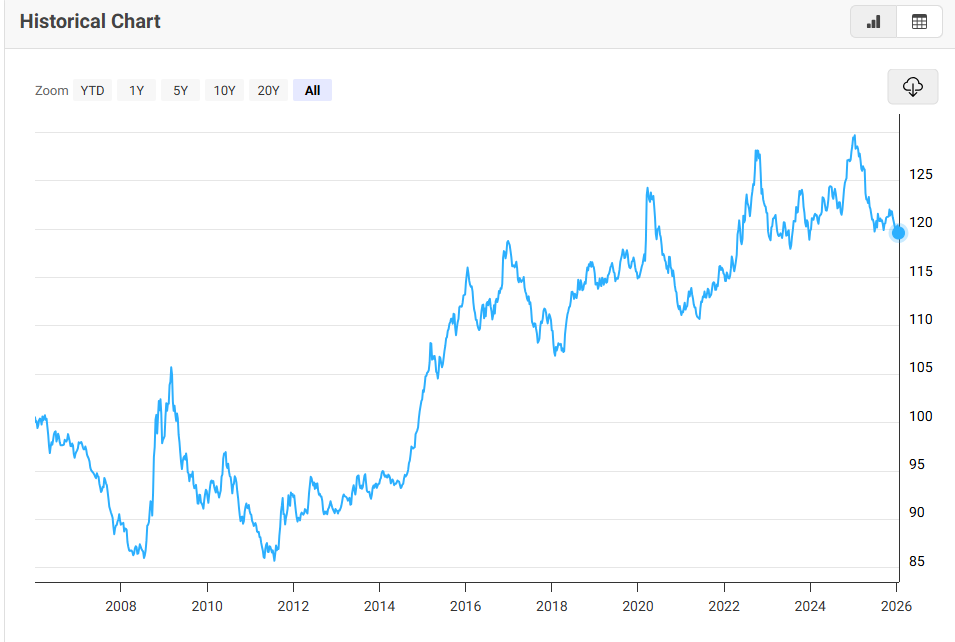
This suggests that in the current landscape, the market perceives bitcoin more as a liquidity-sensitive risk asset than as a pure hedge against fiat currency devaluation.
Although Warsh supports rate cuts, his combination of “cuts without balance sheet expansion” — lowering rates, but without injecting liquidity or maintaining an ample balance sheet — would reduce the money available in the system. That would limit leveraged trading and rallies driven by excess liquidity.
As for Trump’s potential push for low rates to stimulate growth, Warsh—with his profile of monetary discipline—could resist or moderate those demands rather than give in completely, maintaining a more restrictive approach that prioritizes inflationary control over immediate stimulus.
This, in the short term, could put downward pressure on the price of bitcoin and other risk assets by maintaining or increasing the cost of money (higher rates or reduced liquidity), as opposed to a scenario where it gave way and rates were reduced, which would theoretically drive risk assets like bitcoin up.
A contrasting reading comes from Markus Thielen, founder of 10x Research, who sees Warsh’s nomination as bearish for bitcoin. In his analysis, Thielen argued the following:
Markets generally view the resurgence of Warsh’s influence as bearish for Bitcoin, as his emphasis on monetary discipline, higher real rates, and lower liquidity frame cryptocurrencies not as a hedge against devaluation, but as speculative excess that fades when easy money is withdrawn.
Markus Thielen, founder of 10x Research,
This perspective reinforces the risk of downward pressure in the short term due to lower liquidity, although it does not address Warsh’s favorable statements towards bitcoin.
Between volatility and clarity, what to expect?
Instead, my perspective leans toward a nuanced balance. I agree that its «hawk» profile, that is, its emphasis on high rates and reduction of the balance sheet to attack inflation quickly and strongly, generates the risk of volatility and price drops in the short term. However, I take issue with the exclusively negative tone.
I think that the statements explicitly favorable to bitcoin, His personal investment in the ecosystem and his defense of a more open regulatory framework constitute a real counterweight.
That is why I see that a FED chaired by Warsh could, in the medium and long term, contribute to an environment of greater monetary stability and openness to innovation that, indirectly, benefits the stronger institutional adoption of bitcoin, especially if it balances anti-inflationary discipline with openness to technological innovation.
Be careful, of course the FED does not directly provide regulatory clarity — that function falls mainly to Congress, the SEC and the CFTC — but its banking stability and supervision policies can facilitate a more predictable and friendly framework for the industry.
The final result will depend on his Senate confirmation — a process that could be complicated by obstacles such as the blockade announced by Senator Thom Tillis — and how he manages Trump’s pressure for low rates.
Although there is no direct historical precedent for a scenario like this, Warsh’s nomination is a clear reflection of a growing trend in which bitcoin can no longer be ignored in US monetary policy discussions.
If the FED under his leadership evolves toward a more balanced approach between financial stability and technological openness, Bitcoin could consolidate its position as a relevant store of value in the global economy.
Disclaimer: The views and opinions expressed in this article belong to its author and do not necessarily reflect those of NoticiasVE. The author’s opinion is for informational purposes and under no circumstances constitutes an investment recommendation or financial advice.