
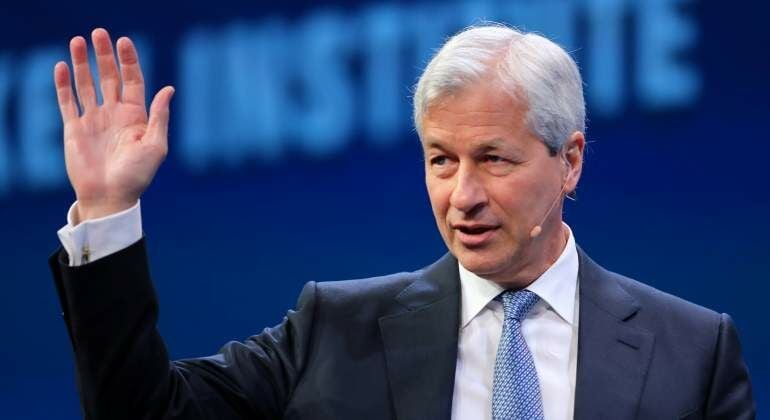
There is a growing concern about credit in the US economy by the CEO of JPMorgan ChaseJamie Dimonwho has pointed out the presence of cockroaches. While investors punished regional banks and an investment bank exposed to the bankruptcy of an auto parts manufactureraccording to David Hollerith en Yahoo Finance.
The regional banks that collapsed on Thursday were Western Alliance, based in Phoenix, and Zions Bancorp from Salt Lake City. Zions shares fell 13% and Western Alliance shares fell nearly 10%, although both recovered some of that loss in Friday’s pre-market session.
Their setbacks came after Zions announced Wednesday that it had accepted a cancellation of 50 million dollars (a measure of unpaid debt that is recorded as a loss) for two business loans made through its division California Bncrp.
The regional bank said it made the decision after learning of legal actions brought by several banks and other lenders affiliated with two of its borrowers, as well as an internal review of its own portfolio.
The fall in Western Alliance occurred after it announced on Thursday the presentation of a demand for fraud by the borrower in connection with a revolving line of credit to the entity Cantor Group V LLC.
These revelations are the latest in a series of developments that have worried Wall Street, as investors look for signs of a weakening credit among commercial customers.
The concern began with two recent, sizable bankruptcies in September: that of subprime auto lender Tricolor and that of the largest auto parts supplier First Brands.
A Zions spokesperson said the disclosed loans «in question are not related to First Brands or TriColor.» A Western Alliance spokesperson said its disclosed loan «is not related to First Brands or TriColor and is an isolated credit incident.»
The fallout revealed a web of exposures among big Wall Street firms, including Jefferies Finl. A fund controlled by Jefferies’ asset management unit has 715 million dollars in accounts receivable owed by First Brands customers, according to court documents released earlier this month.
Executives have tried to assure investors that the impact on the company will be manageable.
The company published a letter to shareholders of the Jefferies CEO Richard Handlerand the president, Brian Friedmanwhich noted that Jefferies’ exposure was «easily absorbed» and that the impact on the company’s stock and credit perception was «significantly overstated.»
“The company’s investment exposure effectively amounts to 43 million dollars in accounts receivable and 2 million dollars in interest on First Brands’ bank loans,» according to executives.
However, investors sent the company’s shares down more than 10% on Thursday.
«We take this crucial issue very seriously and will work to optimize results for our shareholders and also to learn how we can improve,» he said Thursday. Richard Handler, veteran CEO of Jefferiesduring the firm’s annual investor day.
«Personally, I talk to a lot of investors, CEOs and operating companies. I think the environment, overall, is pretty positive. I don’t see it as a red flag,» Handler added.
Another event that may have spooked some investors occurred during earnings day. JPMorganwhen the CEO of the largest US bank issued a mea culpa and a harsh warning when talking about the losses his bank suffered from the collapse of Tricolor Holdings, stating that «it was not our best moment.»
The bank announced on Tuesday that it suffered a loss of 170 million dollars related to its wholesale loans to Tricolor.
«I get alert when things like that happen,» Dimon told analysts Tuesday morning. «I shouldn’t say this, but when you see one cockroach, there are probably more. Everyone should be aware of this,» Dimon added.
Several analysts asked the big banks this week about the risk of your exposure to non-bank financial institutions. This category of loans has been the area of greatest credit growth in the U.S. banking industry so far this year, according to Federal Reserve data.
«Following the significant bankruptcies of Tricolor and First Brands, bank investors are rightly on high alert for any changes in asset quality trends,» wrote the KBW analysts in a note.
“Nonbank loan exposures are receiving attention, but we believe the way these loans are structured should protect banks and lead to strong credit results overall,” he wrote on Thursday. David Chiaverini, regional banking analyst at Jefferies.
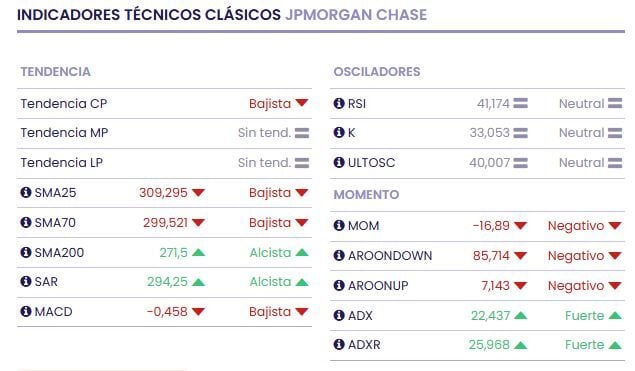
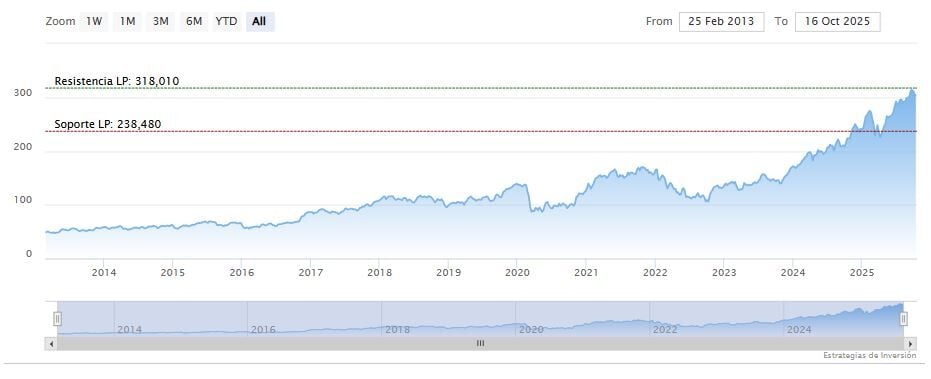
JPMorgan Chase It is trading lower on Friday afternoon at $297.46. The 70-period moving average is above the last candle, RSI is down at 40 points and the MACD fast line (blue) is below the zero level.
Medium-term support is at $284.36. Meanwhile, Ei indicators are mixed.