
-
Five new businesses accept payments in satoshis through the Lightning network.
-
Santa Cruz, the country’s commercial engine, processes these digital payments without banking intermediaries.
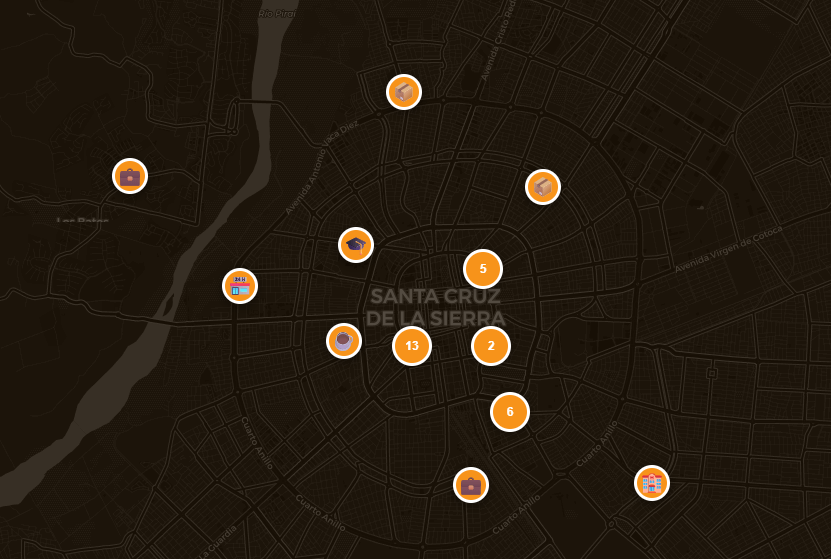
In the streets of Santa Cruz de la Sierra, described as the economic and commercial engine of Bolivia, bitcoin (BTC) becomes an instrument of daily exchange. This week, five new establishments joined the global payment network in the pioneering digital currency, consolidating a phenomenon that advances faster than state bureaucracy.
The initiative, promoted by the Bitcoin Lab Bolivia collective, allowed businesses such as the supplement store Pura Vida con Luna and the technology company D&J Tech to begin processing transactions in satoshis (or sat), which is the smallest unit of a bitcoin.
By registering on the open source platform btcmap.org, These businesses are already detectable under the radar of the international community. And with this they formalize the trend of adoption of a parallel financial system in a country that has not yet fully defined the regulation for the industry that is developed in the country.
The current expansion occurs in an ambivalent legal scenario. Although the Central Bank of Bolivia (BCB) lifted the general ban on crypto assets in June 2024, the country still lacks specific regulations that govern the operation of companies in the sector.
In itself, Bolivia has marked historic progress towards the institutionalization of cryptocurrencies in banking, but it is still in the implementation phase. It does not convert digital assets into national legal tender (only the Bolivian is), but rather enables them as a regulated instrument within the supervised financial system.
However, the regulatory framework for virtual service providers continues to develop. This regulatory effort is supported by technical cooperation agreements signed with El Salvador in 2025, aimed at strengthening monitoring mechanisms in a market that, until recently, operated in the shadows, as previously reported by NoticiasVE.
A legal loophole encourages bitcoin adoption in Bolivia
Meanwhile, the businesses that integrate bitcoin for payments. These primarily work through the Lightning network, a secondary layer of Bitcoin that allows for fast, low-cost transactions. Customers transfer satoshis from their digital wallets to the merchant’s point of sale.
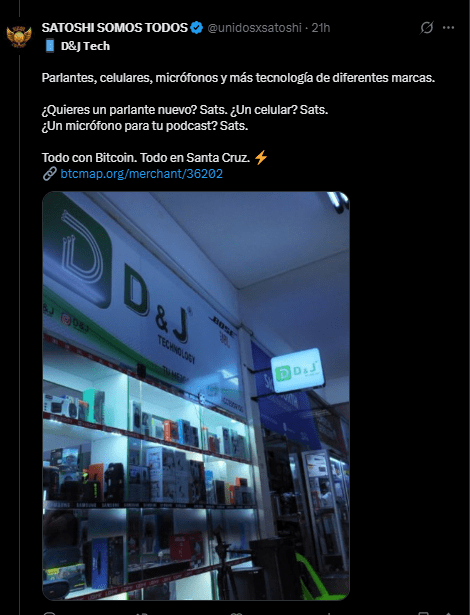
«In Bolivia they are not asking for permission. «They are using Bitcoin,» they pointed out from the UnidosXSatoshi account, on X, highlighting the decentralized nature of a movement that does not wait for validation from the State.
This rebound in the adoption of bitcoin and cryptocurrencies has been experienced since 2024, driven largely by the scarcity of foreign currencies and the need for alternatives for commerce. In this scenario, Tether’s stablecoin, USDT, also emerges as a lifeline in the face of high and constant inflation.
And although since October 2025, the country has Rodrigo Paz Pereira as president, considered by a potential ally of bitcoin, The ruler has not commented specifically on these new 34 listed businesses on the global map.
For now, as the government cautiously moves forward with drafting regulations, entrepreneurs in Santa Cruz and other communities have decided that Bitcoin technology is their best regulator.