
Having traditional investments has become an increasingly distant goal for the new generations of today and, in that scenario, Bitcoin (BTC), as well as other digital assets, have begun to occupy a relevant place in the financial decisions of the youngest.
This is stated by Matthew Bartlett, Web3 Chief and NFT Community of the Vaneck investments firm, who points out that millennial and Z generations rethink the role of money, property and value in an economy where traditional roads towards wealth seem limited.
Bartlett warns that the difficulty of accessing the real estate sector, the concentration of public markets in the hands of institutions and the constant loss of purchasing power of the traditional fiat system, have led to these groups to seek alternatives. It is not a rejection of finances, but in a different way of relating to them; They seek accessible, transparent and aligned assets with their daily lives, says the analyst.
Right there, cryptocurrencies and collectible digital tokens fit, since they are able to offer flexibility, portability and cultural belongingaccording to Vaneck’s manager.
Bartlett’s analysis remarks that digital shortage continues to be a value signal among younger investors. He sees that, what was previously applied to art, classic cars or exclusive wines, now translates into collectible cards, limited editing shoes or tokens with fixed supply.
«Digital shortage does not replace physical property. It expands what is possible, creating hybrid experiences that are both cultural and invertible, ”says the specialist.
Recent examples illustrate it. The NFT Pudgy Penguins project evolved from simple profile images to a brand with a presence in toys, licenses and popular culture. Also, companies like Orange Cap Games They took an additional step by creating collectible letters that combine physical and digital in verifiable experiences in decentralized networks.
Tokenized assets are also extended, which, as defined in cryptootic cryptopedia, allow to invest in watches, art or cards, as well as any other value of value, without physically guarding it, guaranteeing authenticity by linked digital tokens.
The phenomenon is not just financial. This, considering that a wallet can reflect identity and social belonging, becoming a cultural signal as much as an investment portfolio. According to Bartlett, for those who grew in digital environments, wealth is also measured in participation and meaning.
«It is easy to concentrate on noise, but below there is a clear signal. There is a genuine demand for assets that combine scarcity, utility and cultural relevance. It is unlikely that this demand fades soon, ”he said.
Attentive to risks
In this process risks appear. Bartlett explains that prices volatility, fraud and speculation are present factors, and not all projects have the same solidity. However, Recognizes that the sector advances in areas of custody, regulation, authentication and compliance.
The global context adds weight to this change. A report by Xapo Bank identifies what he calls the great transfer of wealth: the transfer of patrimonies of the Baby Boomers to Millennials and generation X, which in the United States could reach 84 billion dollars in 2045. According to digital galaxy calculations cited in that study, between 160,000 and 225,000 million they could go to Bitcoin during the next two decades as a result of this relief.
The analysts of that banking entity argue that, unlike their predecessors, millennials and members of the Z generation are inclined with greater force towards alternative assets, decentralized models and technological innovation. The former grew with the expansion of the Internet, while The latter developed in a full digital environment, which explains their affinity with Bitcoin and other cryptoactives.
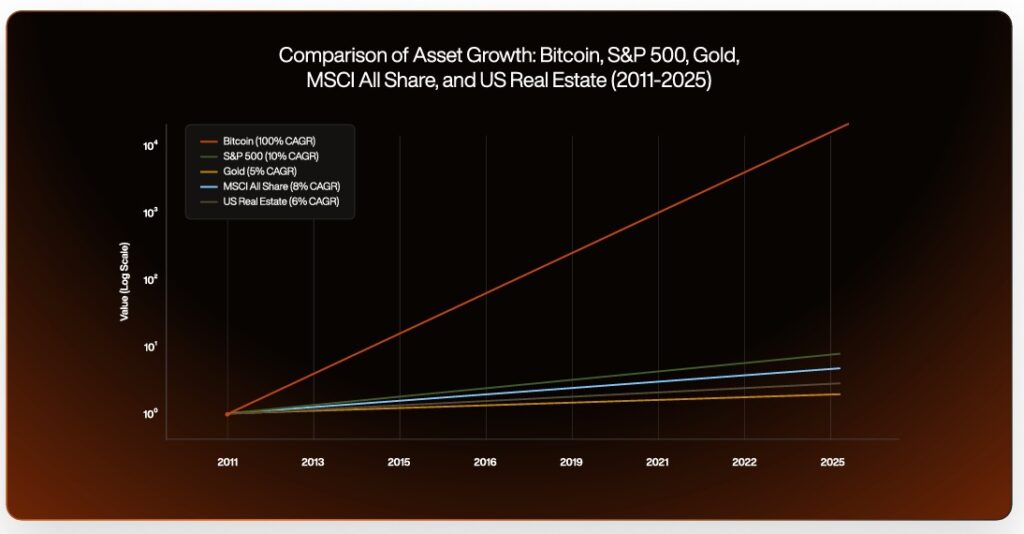
Bitcoin’s performance history reinforces that preference. Between 2011 and 2025, the asset maintained an annual compound growth of more than 100%, exceeding traditional stock market rates such as the S&P 500. This evolution led to that managers such as Blackrock recommend a minimum exposure of 1%in diversified portfolios, and that Grayscale Investments suggest allocations of up to 5%.
To Vaneck, what is at stake is more than a passing trend. There is a generation that seeks scarce, verifiable and globally negotiable digital assetswith property models that reflect their life and interaction habits. They do not abandon the financial system; They are reacing it to their measure.