
At a time when automation begins to make their way into educational and scientific environments, a group of students has surprised with a project that combines ingenuity, functionality and technology available to everyone.
It is an assistant robot, developed in just 24 hours during a university hackathonAble to follow a person, avoid obstacles and transport tools autonomously. The most striking is not only its usefulness, but everything is built on a Raspberry Pi.
Was Created at Manchester University by Rooman Waheed and Astha Shresthawho participated in a development event in which the objective was to solve a real problem with limited means. They chose to design a robotic assistant for laboratory environments, and succeeded.
A personal assistant that follows you, dodges obstacles and looking for tools
The robot, which they baptized as Labassist, is designed to function as support in collaborative work spaces, especially in laboratories where personnel usually handle delicate tools and substances.
Thanks to an artificial vision system, Android can identify a specific user, follow him at a constant distance and maneuver between obstacles without stumble. In addition, it integrates a load capacity, ideal for transporting materials from one point to another of space.
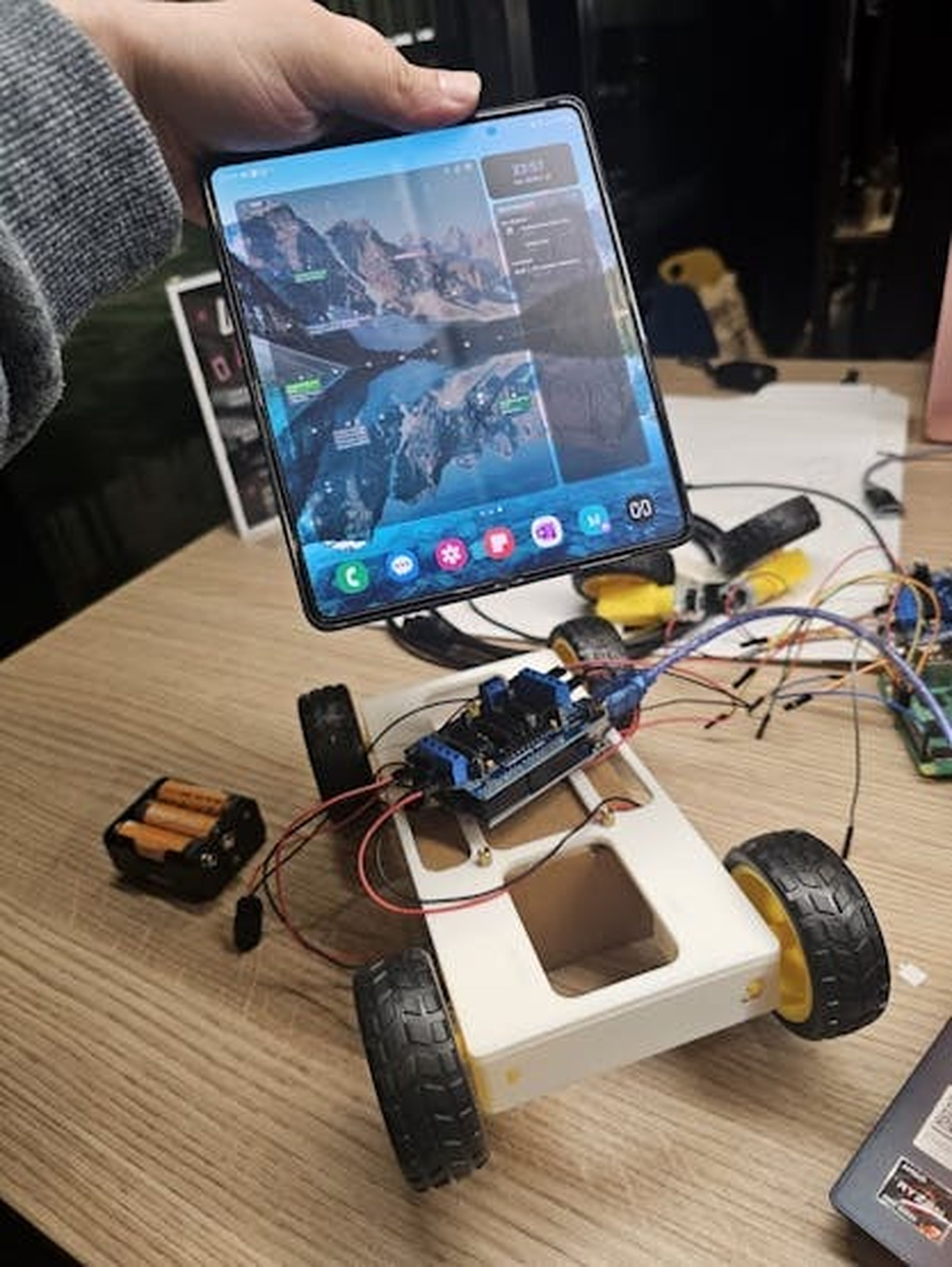
LabAssist
This allows the user’s hands, to gain time and reduce unnecessary displacements. The robot also includes a small screen that serves as an interface to consult information or even guide new users through basic safety and laboratory use protocols.
It is, in essence, a digital assistant with movement, which combines practical functions with a simple interaction. His approach is far from that of great industrial developments, but precisely why it is especially attractive: It is functional, realistic and affordable.
One of the keys to this project lies in its combination of low -cost and open source technologies. The robot’s heart is a raspberry pithe most popular low cost monopaca in the world. To her are added lidar sensors to detect the environment, a Sony IMX500 sensor for facial monitoring and a set of algorithms that manage the autonomous movement.
Everything was assembled in just one day, within the Hackathon of the University of Manchester, the United Kingdom, where the result shows that sophisticated laboratories or large budgets are not needed to create real solutions with immediate impact.
The project also allows to continue evolving it, adding new functions or adapting it to other environments. In a scenario where automation is usually associated with large industries or exorbitant budgets, projects such as this claim the value of accessible technology, capable of offering practical responses in educational and scientific contexts.
Raspberry Pi: The microordor that helps you believe any project
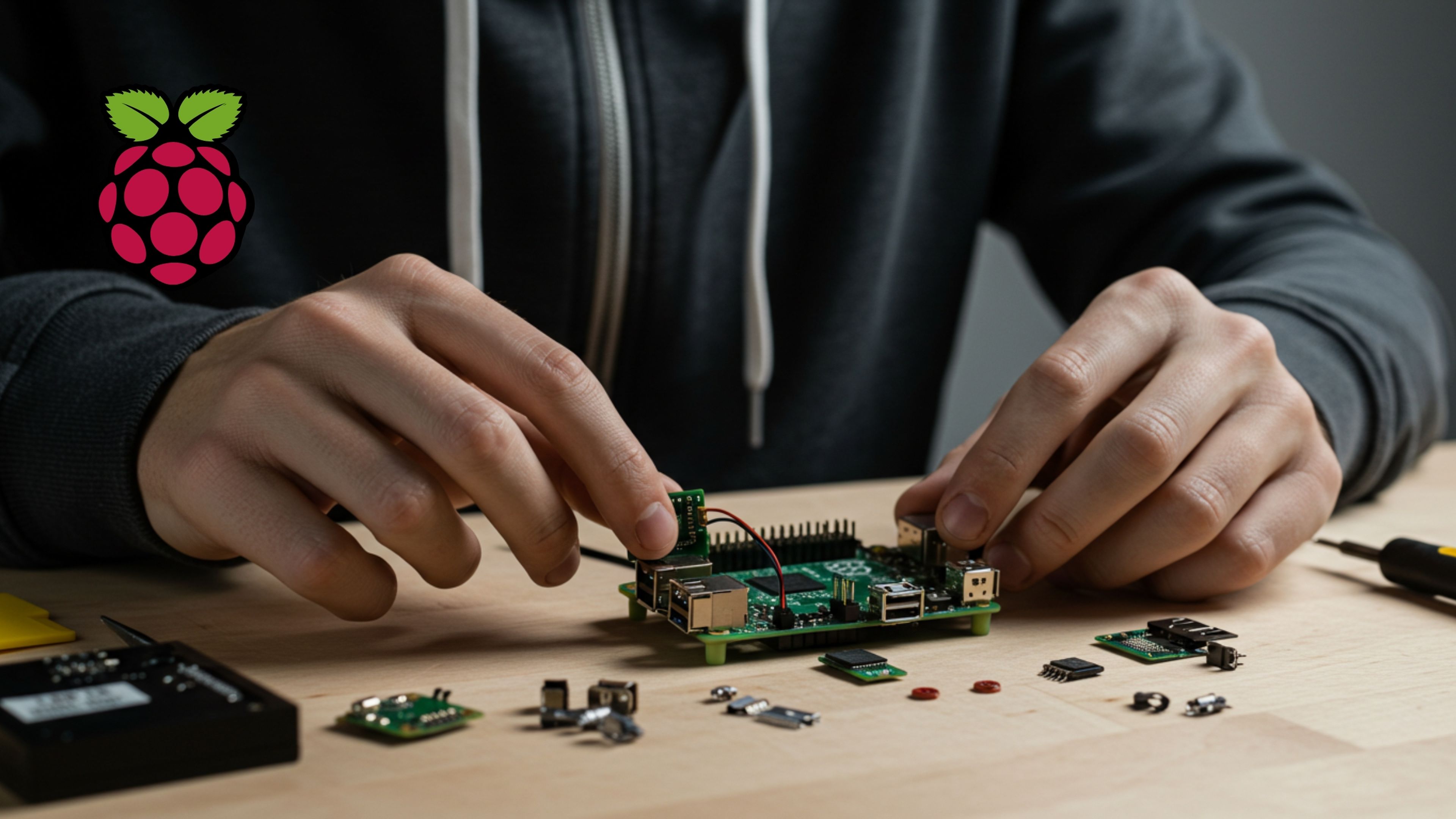
Image generated with AI
The case of Labassist is just one of the many examples that demonstrate what can be achieved with a Raspberry Pi. This reduced size plate, originally created to teach computer science at low cost, It has become a tool for programmers and technology enthusiasts.
It works as a complete computer, capable of running operating systems, such as Windows or Linux, manage sensors, process images and connect to the Internet. Her versatility makes her ideal to build from weather stations to home automation systems, through household robots.
Similarly, it is so capable that you can even set up a retro console with emulators to play classic Nintendo, Sega or PlayStation titles. Obviously, for these cases you must have previous knowledge.
Raspberry Pi is a clear example of how an economic tool can boost technological developmentallowing small ideas to become real solutions. Its low cost and compatibility with languages such as Python have made it the basis of thousands of projects worldwide.
Whether in educational, business or as prototype in startup environments, this small plaque demonstrates that with creativity and knowledge, that there is no need for great investment to do great things, and the butler robot is a clear example of this.
In an era in which robotics seems reserved for large laboratories or multinationals, this small robot made with pieces within reach of anyone demonstrates that innovation can also begin with a simple idea and a Raspberry Pi.
Know How we work in NoticiasVE.
Tags: Raspberry Pi, robot