
-
The Clarity project defines the jurisdiction between the SEC and the CFTC, and regulates stablecoins.
-
Witt warned that the political “window” to pass the law is closing.
Patrick Witt, executive director of President Donald Trump’s Advisory Council on Digital Assets, stated in an interview on February 13 that the Clarity Act project is partially advancing in the Senate and highlighted that the law would protect the industry against a «future Gary Gensler or, God forbid, a Treasury secretary (with) Elizabeth Warren.»
The reference to Gary Gensler is not coincidental. The former chairman of the Securities and Exchange Commission (SEC) was perceived by much of the digital asset ecosystem as an aggressive regulatoras explained by NoticiasVE, after filing lawsuits against exchanges and projects under the argument that numerous crypto assets were unregistered securities.
For Witt, clear legislation would prevent future authorities from reinterpret the legal framework and apply similar measures.
The Clarity Act, for its part, is a bill in the United States that seeks to establish precise rules on which body regulates each market segment (the SEC or the Commodity Futures Trading Commission, CFTC), in addition to setting guidelines for stablecoins and granting protections to developers.
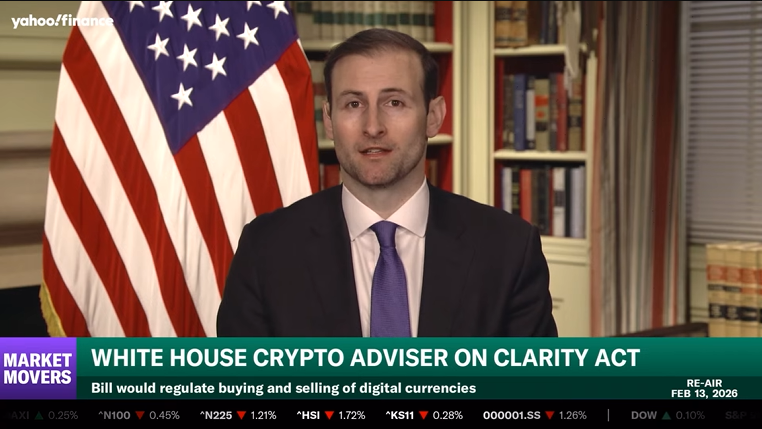
Witt highlighted Congress’ passage of the House version last year; The Senate is now working on its own, he assured.
The part under the agriculture committee (related to the CFTC) has already moved forward, while the section under the banking committee (linked to the SEC) remains pending after the postponement of a vote in January, according to Witt.
Witt indicated that, once that obstacle was overcome, both versions will have to be reconciled before a final vote.
In this context, he maintained that the project contains «clear lines of jurisdiction between the SEC and the CFTC» and regulatory protections that, in his opinion, are essential to provide stability to the sector in the face of future political changes.
Political window and banking pressure
Although on February 4 NoticiasVE reported that Witt assured that Donald Trump would sign the Clarity Law on April 3, the advisor on this occasion warned about legislative timing: «We are against the clock. There is a window here, but it is closing quickly.».
In relation to stablecoins, he explained that the debate involves both retail and institutional banking.
As more and more liquidity is added to Treasury markets, with stablecoins backed by Treasury bills, the largest banks recognize what an opportunity this is.
Patrick Witt, White House cryptoasset advisor.
After the interview, Witt reinforced his position on X by stating: «There are trillions of dollars in institutional capital on the sidelines waiting to enter this space. “Regulatory clarity is the key.” With this, he maintained that a law like the Clarity Act would be the decisive factor in attracting massive investment to the cryptocurrency market.
Likewise, he noted that the traditional financial sector perceives the growth of the sector as a disruption: «Cryptocurrencies are a new product, which is somewhat threatening for community banks, global systemic banks and large entities.»
The future of the Clarity Act will now depend on Congress’s ability to reach consensus before that political «window» mentioned by Witt closes.
For now, The project continues under negotiation in the Senatewhile the White House insists that the regulatory framework is key to consolidating the development of the cryptocurrency market in the United States.