
-
Almost half of 2025’s solitary blocks were mined with rented hashrate.
-
On January 20, a miner rented hashrate for $90 and found a block.
In an ecosystem dominated by large pools and industrial companies, Bitcoin mining seems to be out of reach of the common user.
However, a practice that puts solo miners back on the scene began to consolidate: hashrate rental. That is, the possibility of lease computing power to try to solve a block without having their own equipment.
During January 2026, NoticiasVE reported two cases of miners processing a block by renting hashrate.
One of them, for example, invested just $90 in the Nicehash platform and obtained a reward of $289,000. a profitability of more than 300,000%.
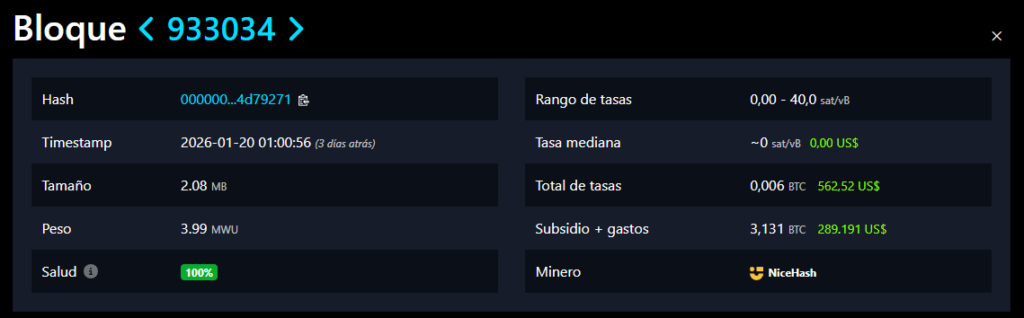
Added to these episodes are other antecedents recorded in September and December 2025. In this last case, a user managed to mine a block after investing only 86 dollars for hashrate rental.
The data that confirms the trend
To put the phenomenon in perspective, during 2025 approximately 52,560 Bitcoin blocks were mined. Of that total, just 36 were solved by lone minerswhich confirms how marginal that profile is today within the network.
However, as reported by NoticiasVE, 17 of those 36 blocks were obtained through Nicehash’s EasyMining servicewhich allows you to rent hashrate directly.
That is to say, half of the blocks mined solo in 2025 did not come from proprietary hardwarebut of rented power.
Although the statistical probability remains extremely low, the repetition of similar cases began to transform these isolated events into a trend signal.
The Nicehash Retail and Wholesale Marketplace
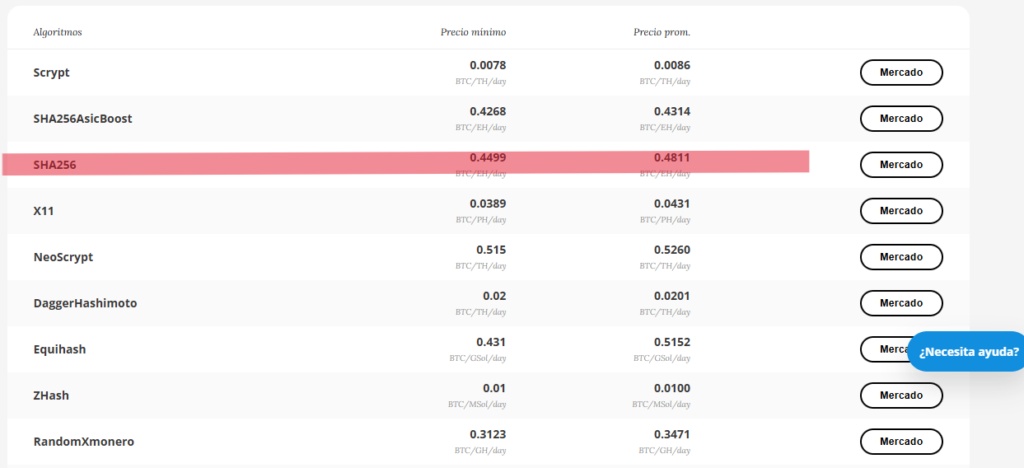
The price on these platforms is standardized under the BTC/EH/day metric. This means that the values are set based on how many BTC it costs to rent one exahash (EH) of power over a 24-hour period.
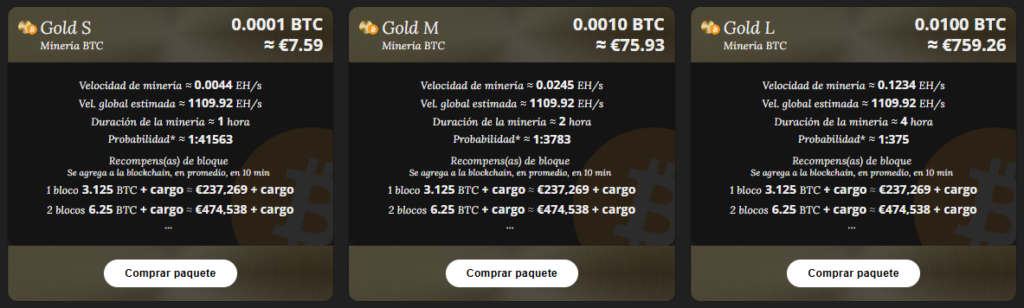
For the retail user, like the cases mentioned at the beginning of this article, Nicehash offers the EasyMining section.
There, every time a miner processes a block, gets the full reward: 3,125 BTC per block subsidy, plus transaction fees.
In that section, the platform allows you to rent hashrate through closed packages, for example, a total of 0.0044 EH/s for one hour for a value of 7.99 euros ($9.40).
On the other hand, in the NiceHash wholesale market, prices reflect the global competition for computing.
With bitcoin trading around $89,000, the average price to mine under the SHA-256 algorithm stands at 0.4811 BTC/EH/day (almost $43,000). The minimum entry point for buy orders is 0.4499 BTC/EH/day (around $40,000).
In addition to bitcoin, Nicehash allows you to rent power to mine Litecoin, Zcash, Kaspa, Dogecoin, among others.
Brainins’ proposal: Hashpower
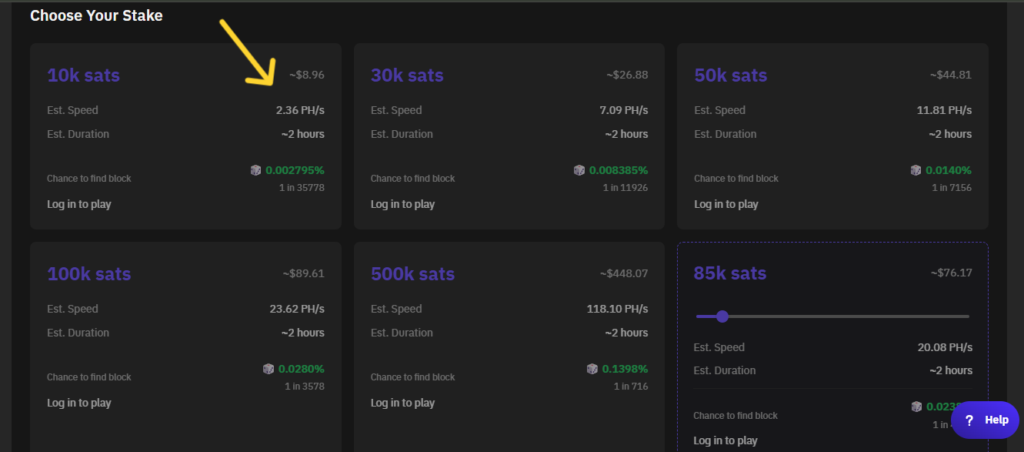
The recently launched Hashpower platform, from Braiins, introduces a modality called «Try your luck», the equivalent of Nicehash’s EasyMining.
In that section, the user can purchase pre-configured packages designed for solo mining.
An example is the package $8.96, which gives a power of 2.36 PH/s (0.00236 EH/s) during a period of 2 hours with an estimated probability of success of almost 0.0028%, according to the platform.
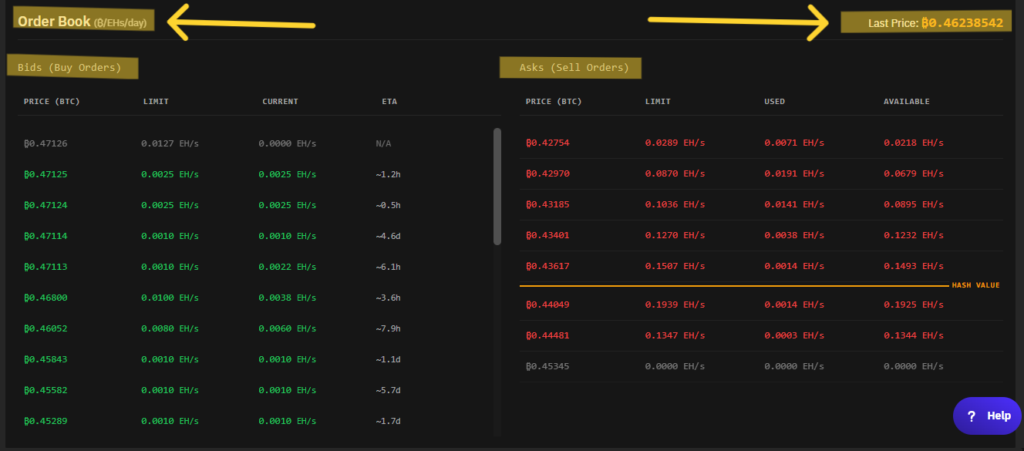
With bitcoin trading around $89,000 and at the time NoticiasVE reviewed Hashpower, the «last price» (last price) equilibrium of 0.46238542 BTC is approximately equivalent to about $41,000 for each daily exahash.
Purchase orders (bids) more aggressive attempts to capture power at levels of 0.47126 BTC (almost $42,000), while sell offers (asks) most competitive are positioned from 0.42754 BTC (about $38,000).
The Democratization of Computing: Rental or Own Hardware?
To measure the power that a user acquires when using services such as EasyMining or Try your Luck, it is necessary to compare them with the cutting edge of physical hardware.
Currently, the Bitmain Antminer U3S23H (scheduled for launch in March 2026), is the most powerful ASIC on the Bitcoin market, capable of generating 1.16 PH/s (approx. 0.00116 EH/s).
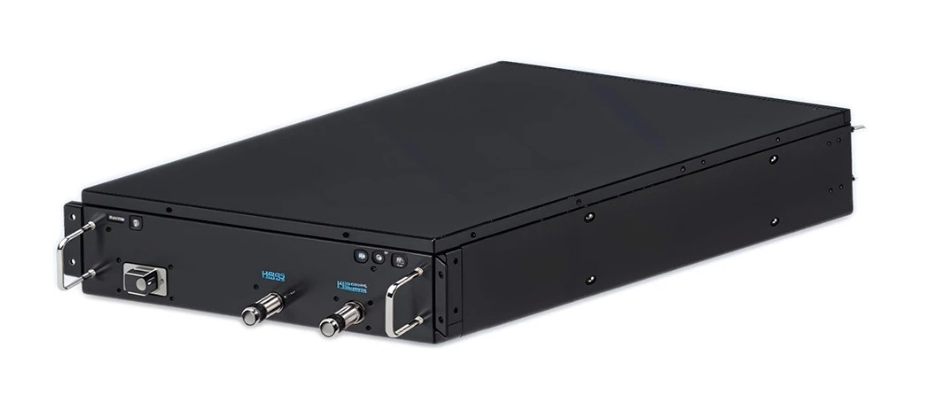
Purchase one of these units It represents an investment of almost $35,000.not counting the costs of import, maintenance and the complex electrical infrastructure necessary to operate it.
In contrast, Hashpower allows a user, with less than $9, to take control of 2.36 PH/s (more than twice the power of that ASIC) for a two-hour period.
That is, any person can momentarily possess a computational muscle greater than that of the most powerful machine.
Statistical reality: David versus Goliath
However, it is vital to maintain rigor about the probabilities. Although renting 2.36 PH/s sounds impressive against a single ASIC, the solo miner is not competing in a vacuum.
When trying to solve a block, the user faces Industrial farms and centralized pools that have massive operations that connect hundreds of thousands of computers similar to the U3S23H simultaneously.
Even so, in a context where the hashrate is concentrated in few handsthis modality works as an access valve. It does not change the overall structure of the network, but it does restore prominence to individuals who would otherwise be excluded.