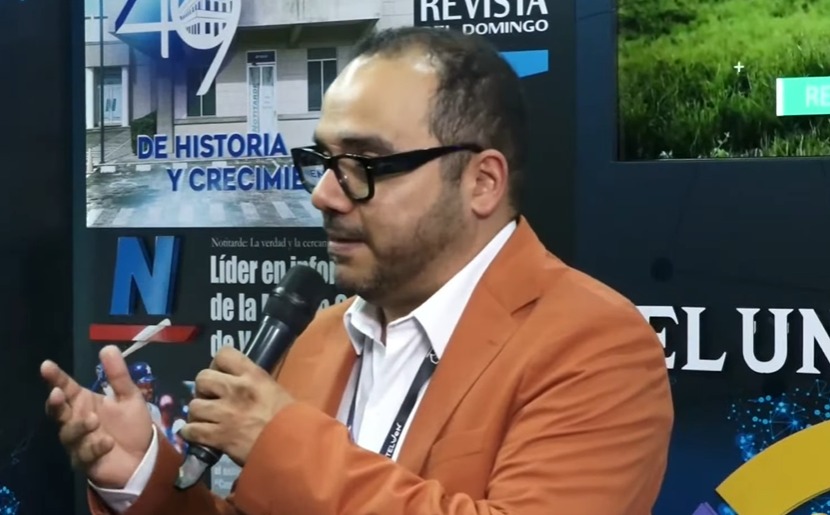
Aníbal Garrido, founder of BTC Techno and director of the Blockchain, Trading and Cryptoassets Academy of the Andrés Bello Catholic University (UCAB), assures that the cryptoasset ecosystem in Venezuela will persist as a structural financial infrastructure in 2026, after the political events that occurred on January 3, which modified the economic dynamics.
Garrido attributes this permanence to functional needs derived from macroeconomic instability of recent years. A situation that is expected to change after the greater entry of dollars into the country. This, due to a new flow in oil trade with the United States.
In this panorama, Garrido predicts that the country will continue to be among the largest P2P markets on the continent, with figures of 150 to 300 million dollars per month in USDT. And although it projects that there will be a rebalance between cryptoassets and fiat in the first quarter of 2026, driven by greater foreign exchange inflows, rules out a relevant decrease in the use of digital assets in the country.
For the analyst, users have already incorporated cryptocurrencies as a transfer mechanism outside the traditional financial system, thanks to their transactional ease, competitive commissions and immediacy. Nothing will change radically in this regard.
However, it allows for temporary adjustments, as greater demand for physical dollars (“traditional”) versus USDT. A change derived from a moment of greater fiat liquidity.
The specialist aligns his vision with the global trend, in which Cryptocurrencies are no longer a temporary episode, but an integrated infrastructure to the global financial system.
With a greater influx of dollars into a market that was dry, the crypto-fiat ratio will naturally tend to seek a new balance. But it is key to understand something: the macroeconomic effects of recent measures will not be seen for days or weeks. They will be gradually reflected during the next quarter and subsequent months as long as the new dynamics do not deteriorate or deteriorate.
Anibal Garrido, specialist in crypto assets.
Aníbal Garrido analyzes the irreversible paradigm shift and structural permanence of Venezuela in the digital asset ecosystem. Source: Screenshot – Youtube (@GlobovisiónVídeosenVivo).
Garrido adds that those who have already learned to move value outside the traditional financial system hardly “unlearn.” Transactional ease, competitive commissions and immediacy in execution have generated a profound mental change among users.
“It’s like wanting to ride a bicycle after learning to use a motorcycle.” His phrase illustrates that the experience of speed and autonomy makes a massive setback unlikely.
At a global level, the trend strongly supports this permanence. According to various estimates updated to 2026, between 560 and 650 million people in the world own crypto assets, which represents around 7-9% of the global population and shows a sustained growth curve.
In this scenario, Venezuela remains among the countries with the highest relative adoption, taking into account that it occupies prominent positions in indices such as Chainalysis 2025 (18th overall and top per capita in Latin America).
According to these statistics, the annual volumes They exceed $44 billion in transactions, driven mainly by stablecoins and remittances.
Venezuela hopes for a 2026 of gradual balance
For his part, the Venezuelan economist Asdrúbal Oliveros agrees with Garrido that Venezuela is going through a process of gradual transformation of its economy. They attribute this to the fact that in 2026 there will be a greater weight of fiat dollars thanks to the oil opening.
Oliveros describes the scene as a “precarious stability” where dollars enter via guarded accountss, strengthening the intervention capacity of the Central Bank of Venezuela.
Consider, therefore, that the macroeconomic effects of these actions will be perceived between 30 to 45 days. The result would be a gradual reduction of the exchange gap (currently around 30-38% between official 393 Bs/dollar).
Real stability? We are in “precarious stability.” The dollars are there, but the structural distrust after the events of January 2026 continues to weigh. In Venezuela, stability is not decreed, it is financed with constant cash flow. For stability to arrive, concrete facts must occur. In my opinion, the reduction of the exchange rate gap and the inflation rate will be the key indicators to see how all this evolves.
Asdrúbal Oliveros, Business Consultant.
In such a way that, in accordance with what both specialists mention, Venezuela is going through a rebalancing process where digital assets and oil policy dictate the new rules.
On the one hand, there is the view that the use of cryptocurrencies is an immovable trend, being part of a global digital infrastructure of which the country is already a part. On the other hand, the reactivation of traditional financial channels in the country, now under strict international custody, has an influence.
What these two sides show is a hybrid model that is not being moved by decrees or laws, but by the system’s ability to reduce structural distrust. Something that, according to analysts, continues to weigh on the national economy.