
What can the FED do with interest rates in 2026?
Oil continues to be the asset on which the economic world revolves at this specific market moment. And it will also be the initial watchword for the next meetings of the Federal Reserve, which has the line to follow in common with the rest of the central banks.
A relatively outgoing Jerome Powell will be more than attentive this time to not ignore inflation, something that was overlooked with the so-called ‘transitional’ of unfortunate memory for which he still holds the presidency of the Fed. If you remember throughout 2021, meeting after meeting, he kept indicating that the price increase at that time would be temporary, and in November he withdrew the word when inflation began to get complicated in such a way that, in 2022, it reached levels not seen in 40 years in the United States. the result, aggressive rate hikes to regain control.
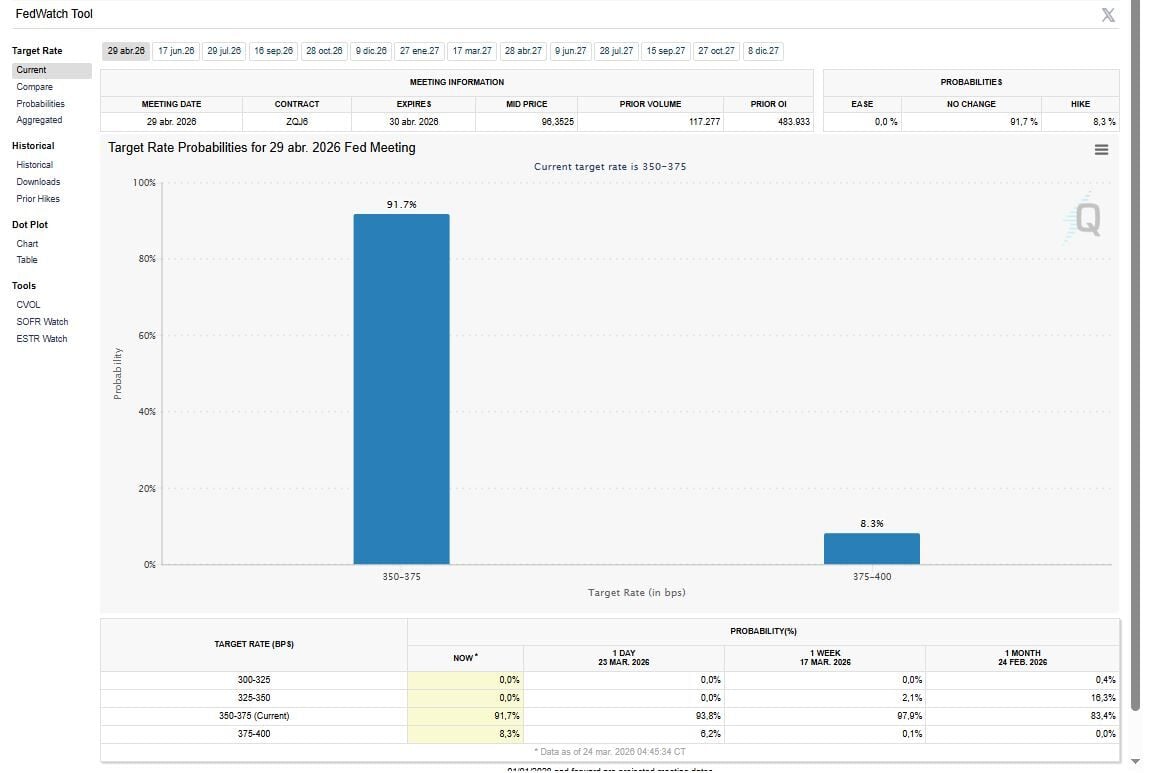
It seems that now, that will not happen. For now, the market, With 35 days left until the next FOMC meeting, It does not envisage any cuts for the rest of the year, but neither increases, as market estimates repeatedly show us. Only for the meeting that ends on April 29, 8.3% think about increases and 91.7% think about maintaining the current range: between 3.50 and 3.75%.
From Fidelity, his senior strategist Max Stainton highlights that «the evolution of rates will inevitably be dominated by what happens in the Middle East. In our central scenario, with high oil prices, but moving in a range between $90 and $110 per barrel, we would expect the Federal Reserve to keep rates unchanged for longer, raising the bar for cuts in the short term.
But «that being said, We do not believe that this environment, by itself, is sufficient to justify a new cycle of increasessince the impact on growth should be manageable and the shock would have a punctual effect on prices, rather than a generalized inflationary impulse.»
But, it indicates that everything would change if oil rebounds above $120, «It would reinforce a stance of high rates for longer, especially if the prices of transportation and goods in general began to rise along with rising fuel prices. «However, the medium-term monetary policy path would also be expected to be less linear, as a deeper energy shock would increase the risk of demand destruction and recession towards the end of the year.»
But from Fidelity they affirm that «If our central scenario holds true, we would still expect between one and two cuts by the Fed this year.»
Already since Alliance Bernstein, its chief US economist, Erik Winograd, does not see rate increases close » why only one of the 19 FOMC members foresees a hike in 2027.»
«I believe that evidence that long-term inflation expectations are rising or a sustained period of acceleration in core inflation without weakening of the labor market would be needed for an increase to be considered. Much more likely is a scenario in which inflation remains stable but stabilizes and growth is sustained; In that case, I anticipate that the Fed would simply keep rates unchanged for an extended period«says the expert.
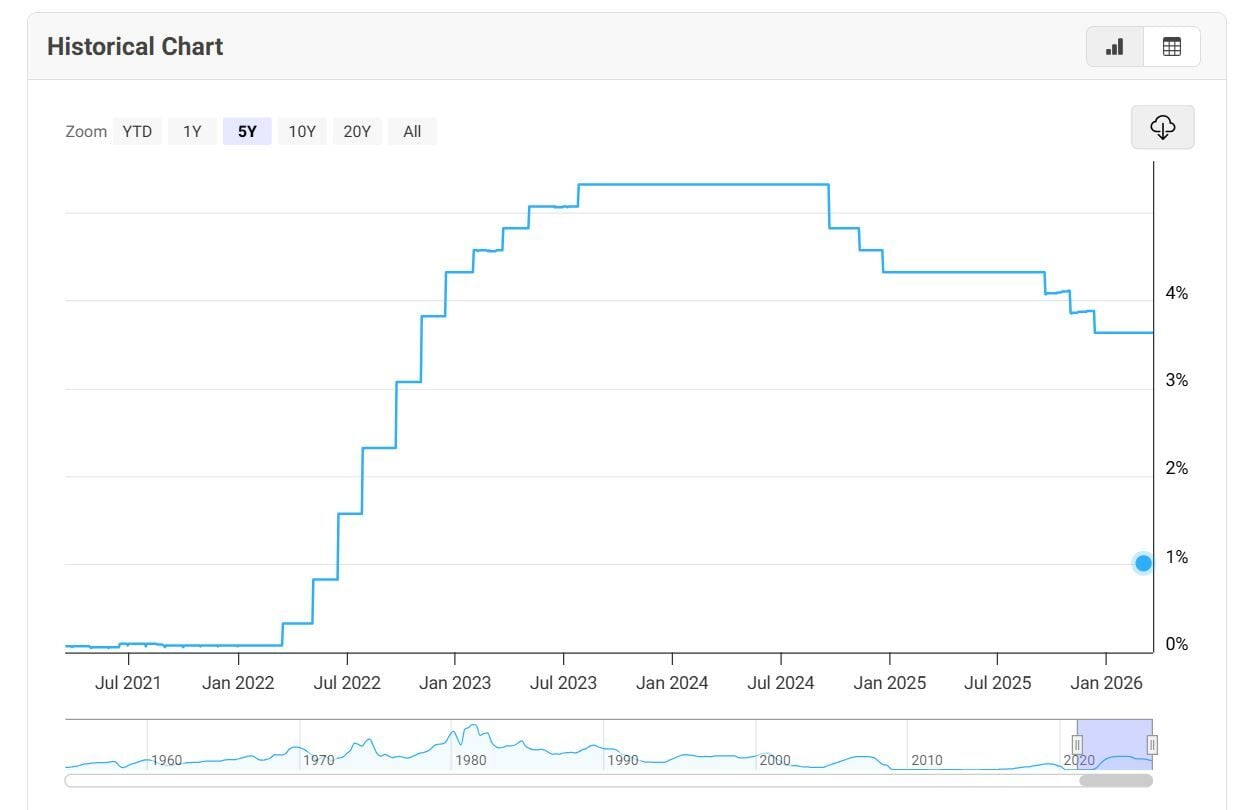
Meanwhile, Alliance Bernstein highlights, «I still expect a total drop of 50 basis points in the medium term, which would reduce the official interest rate to between 3.00% and 3.25%, a reasonable estimate of the neutral rate. I don’t have a very strong opinion on the timing of those declines in the coming quarters. I certainly hope that if the crisis persists, the Fed will keep rates frozen longer than it otherwise would. But it’s still too early to make that decision with certainty.»
And from JPMorgan they consider that «the appointment of a new president of the Federal Reserve in May – Kevin Warsh – and the evolution of the situation in the Middle East make the second half of 2026 a crucial period to follow closely. «Our strategists continue to forecast a 25 basis point cut by the end of the year.»
What can the ECB do with interest rates in 2026?
The case of the European Central Bank is clearly different: although the energy shock is global, lThe impact on the eurozone would be clearly greaterand even the monetary cycle is very different as it has been manifested throughout the past year. Without crude oil production and as clear consumers, the effect of inflation and the increase in energy costs is already being felt.
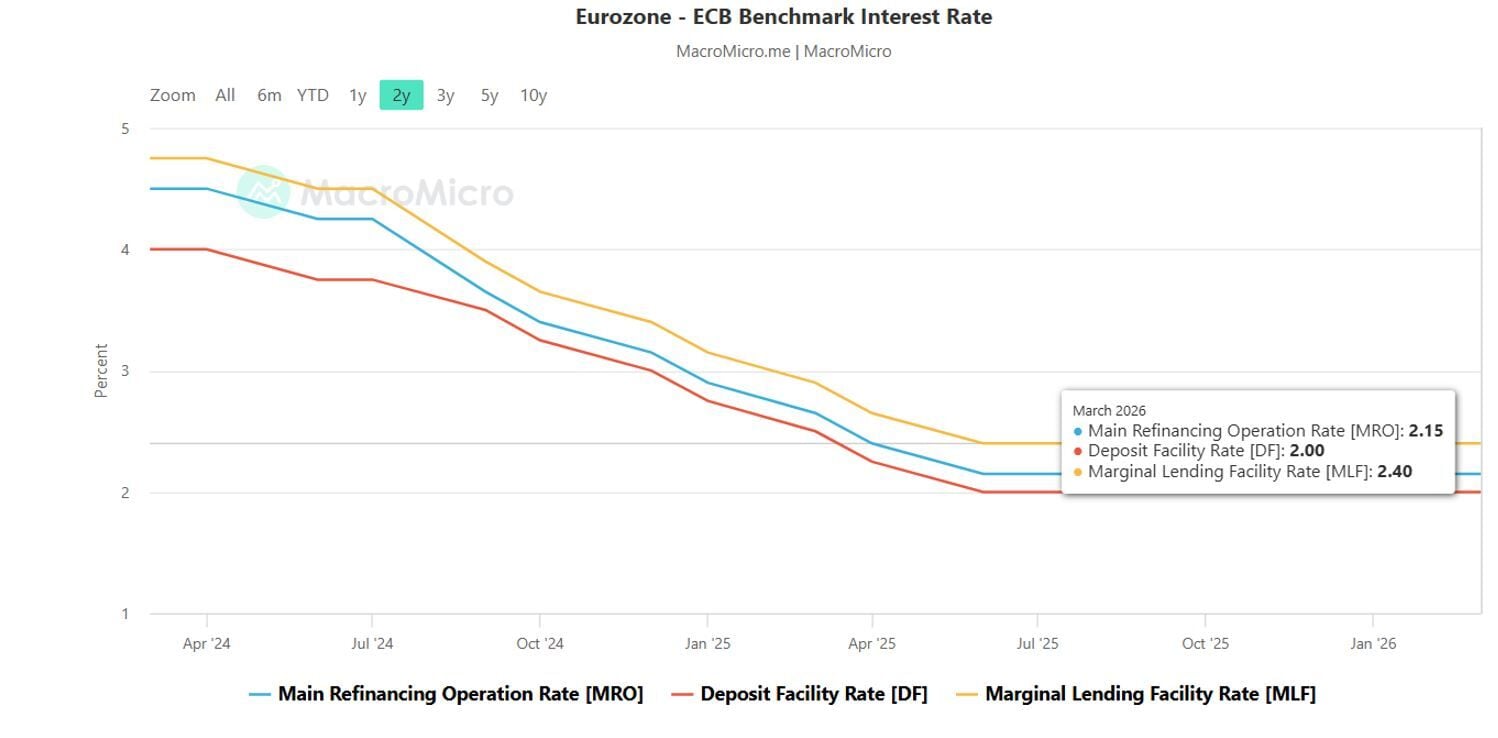
After up to eight rate cuts, stability had reached levels at 2%, which is considered in the market, right now as the neutral rate or in the words of Christine Lagarde, its president, ‘a good place’, a good place or in financial language, a good situation in which to stay. In fact, there have been six consecutive months, until the March meeting, in which rates in the eurozone have remained unchanged.
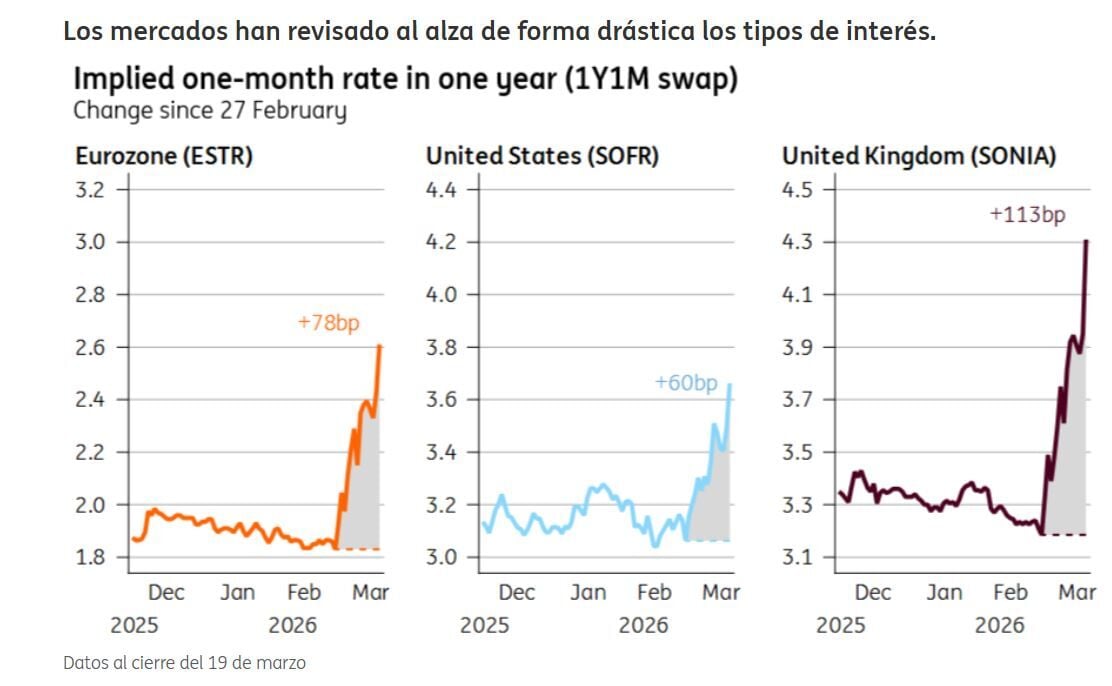
But oil and geopolitical tension rule the entire economic landscape. For Goldman Sachs, the ECB will apply two moderate rate increases, of 25 basis points each, in the April and June meetings, with an eye on rising inflation, even with the current situation, which many in the market consider, despite the fact that we have already entered the fourth week of conflict, conjunctural. Until now, Goldman expected rates to remain unchanged throughout 2026.
While, Madison Faller, Global Investment Strategist at JP Morgan Private Bank, highlights that «for Europe has more at stake in this energy crisis, and the ECB knows it. (…) «He doesn’t commit to raising rates, but he also doesn’t reject or rule out the aggressive shift in market expectations.»
And he adds that «the ECB still has room to be patient. And although there is now an inclination towards raising rates, a sustained cycle of increases is not necessarily guaranteed.. What happens next depends on the second round effects, on whether the energy crisis is transferred to wages and prices in general. That is the key test. Until then, flexibility is intentional.”
From ING they highlight that «in the most extreme energy price scenario that our team contemplates, where oil averages 120 USD/barrel in the second quarter, We expect the ECB to raise rates twice this year. «Markets are right on one point: if central banks raise rates, they are unlikely to do so just once.»
And they also highlight that it is one thing to talk and shuffle about potential increases in interest rates, on both sides of the Atlantic, and quite another to raise them.